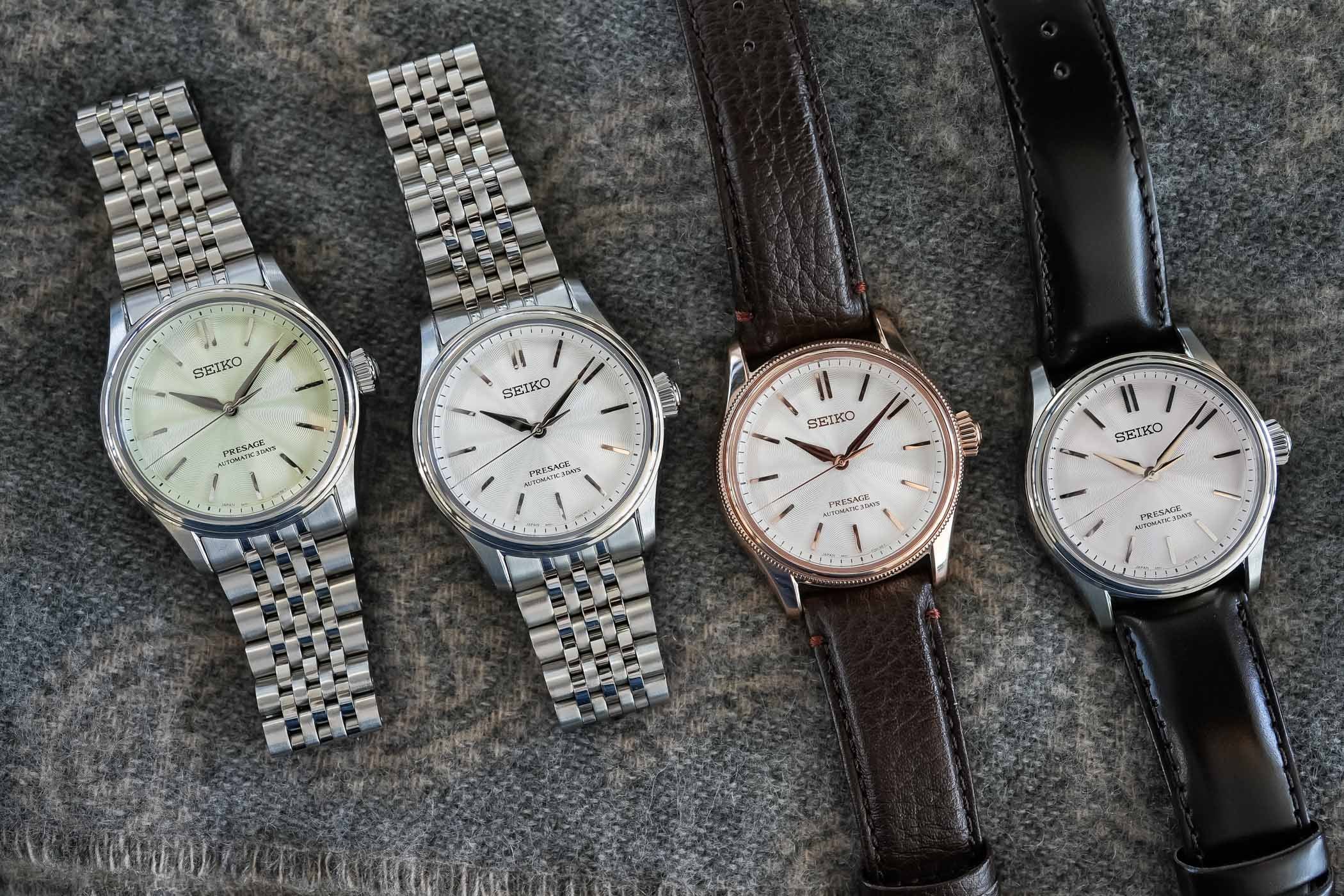
The Presage Classic Series is the part of Seiko's catalogue where the conversation starts with the dial. Porcelain from Arita, urushi lacquer, the open-heart references, and most recently the 36mm Edo Silk models. Case, bezel and movement are rarely the story.
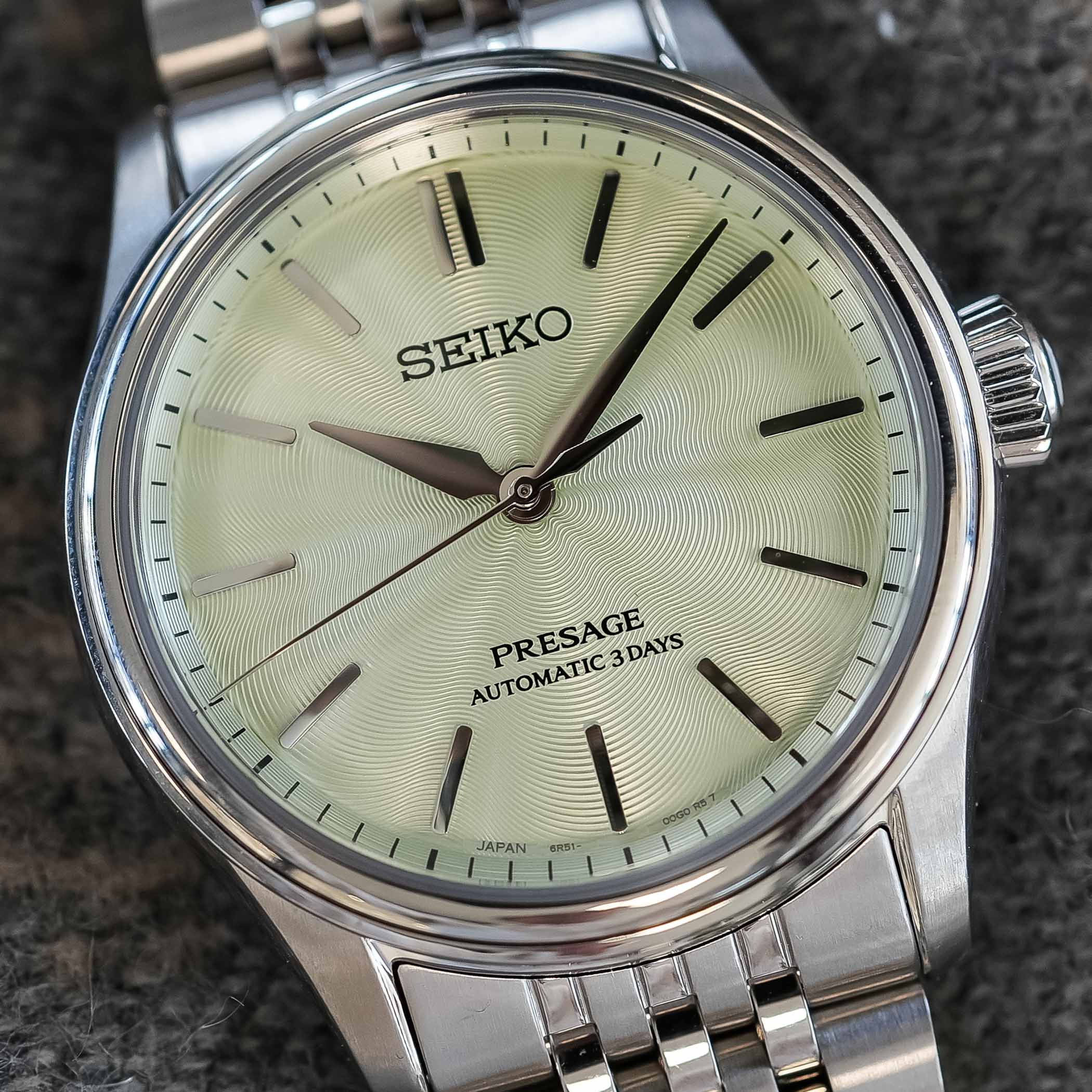
The four references introduced in June and reaching boutiques this month keep the dial at the centre. They take their texture from Tomioka silk, produced in Gunma Prefecture. But the two more consequential changes are structural: a 38mm case, and a movement with no date.
The size gap closes
The Classic Series has run 36mm for the three-handers and 40.2mm for the date models. Between those two numbers sits the range where most dress watches actually live, and it has been empty.
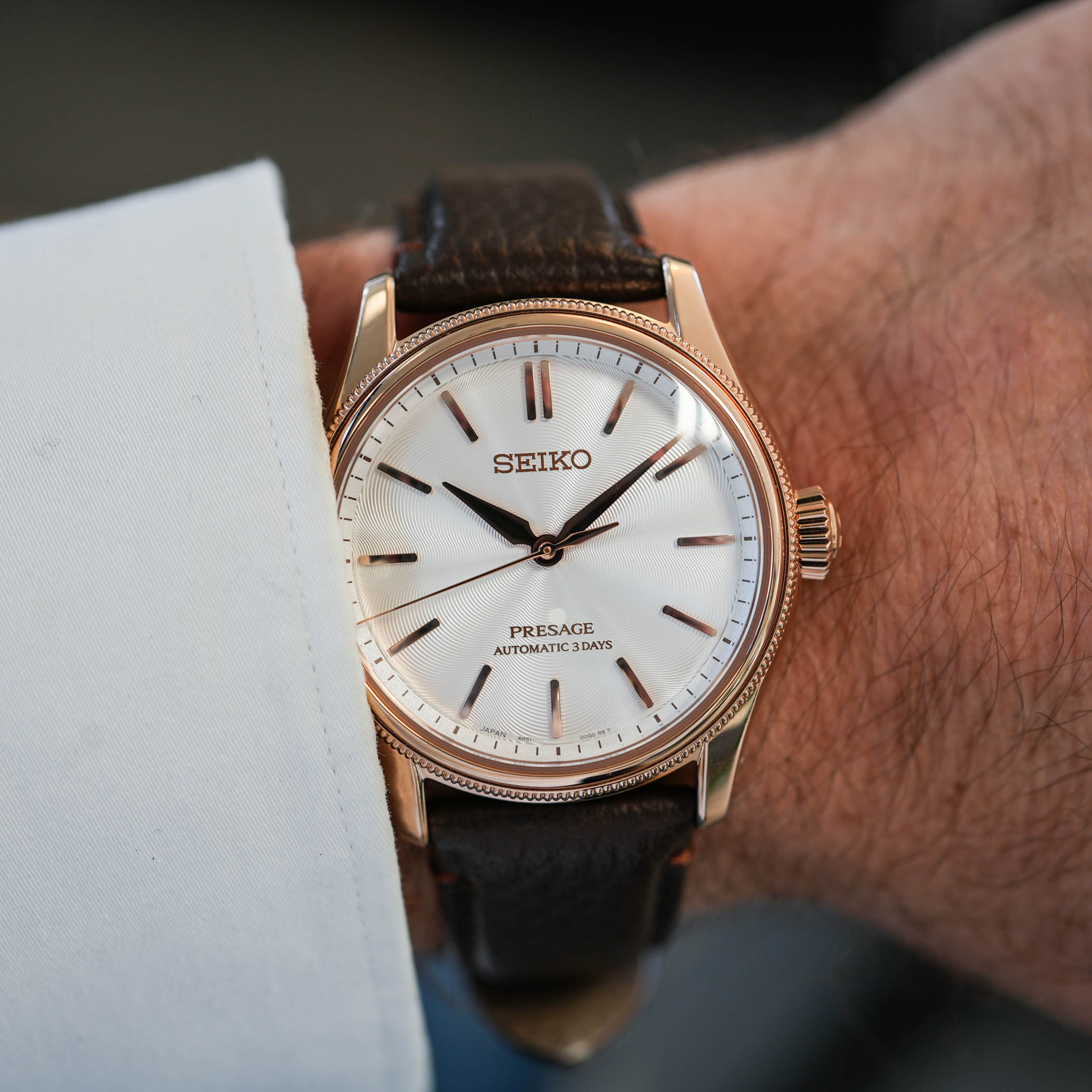
The new case is 38mm across and 12.9mm thick. That thickness is worth stating plainly rather than glossing: 12.9mm on a 38mm dress watch is not slim, and it's the one specification here that invites a caveat. The rest of the construction is straightforward. A dual-curved sapphire crystal with anti-reflective coating on the inner surface, a see-through screwed caseback, 4,800 A/m of magnetic resistance and 100m of water resistance.
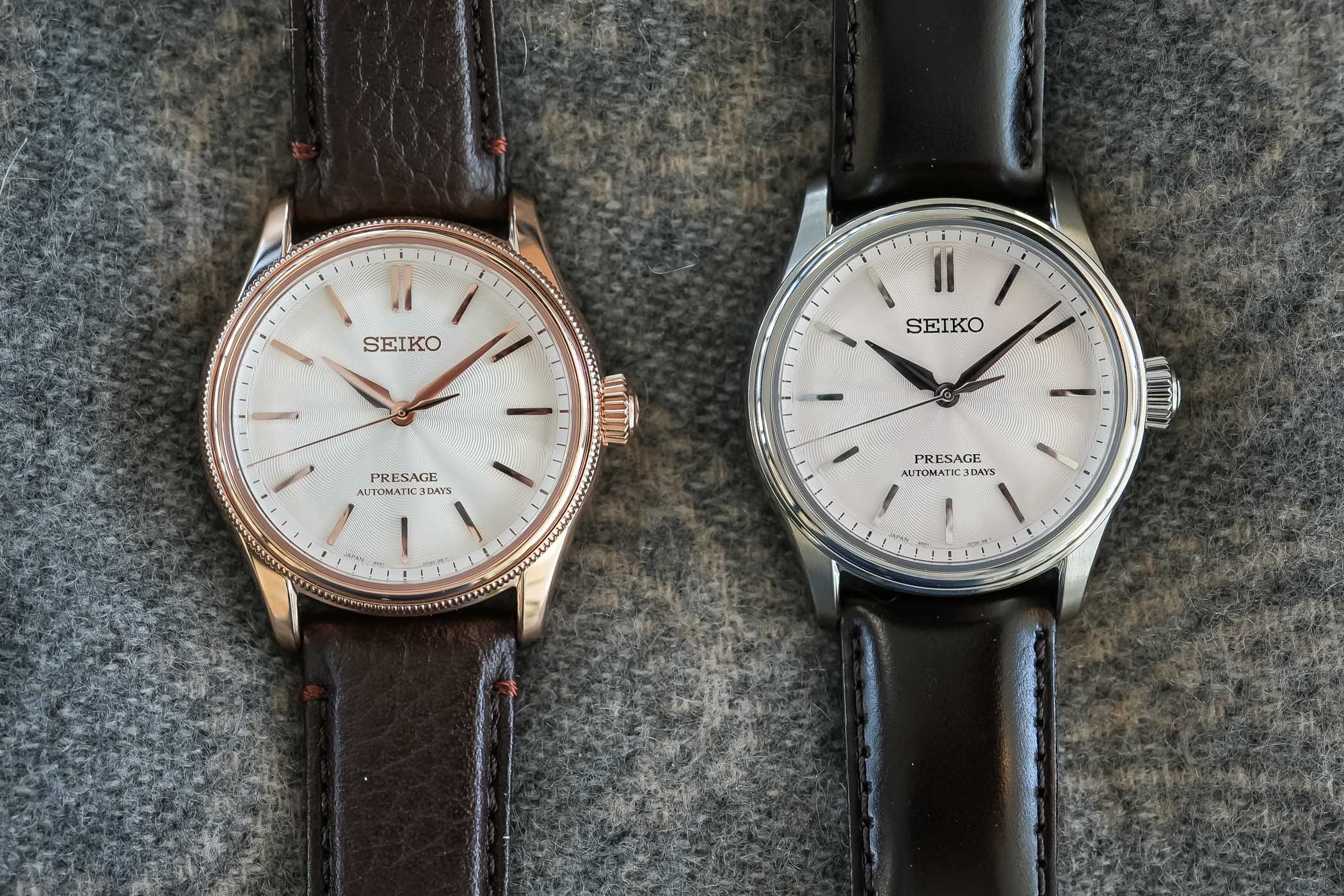
HCC001, HCC002 and HCC003 use stainless steel with Seiko's super-hard coating. The limited HCC008 uses steel with pink-gold-coloured plating and a beaded bezel.
No date, and the dial knows it
Inside is the calibre 6R51: in-house, automatic, 24 jewels, 21,600vph, 72 hours of power reserve, hacking seconds, and hours, minutes and seconds only. No date.
This matters more than the marketing does. The 6R family's more common members carry a date, and on a dial built around a single continuous texture a date window is a hole punched through the pattern. Remove it and the silk figuring runs uninterrupted from the centre to the flange, which is the point of the exercise. It also means the applied baton markers sit at even intervals with no gap at 3 o'clock. Seiko has been criticised for years for putting date windows where they damage a dial. Here it simply didn't.
Seventy-two hours of reserve, at this price, remains the strongest argument the 6R makes.
The dials
The texture is stamped, not engine-turned, and Seiko describes the result as guilloche-like, which is honest, because it isn't guilloche. It's a die-struck pattern, and at 38mm and this price it would be unreasonable to expect otherwise.
HCC001 is shironeri white, HCC002 wakatake-iro green, HCC003 sakura-iro pink. The limited HCC008 draws on a rarer silk from Gunma and adds a pearl-like coating for shimmer. It's the only one of the four in a pink-gold-coloured case.
The strap colours are chosen with more care than they need to be. The HCC008's dark brown leather is taken from the brick facade of the Tomioka Silk Mill, the HCC003's from the trunk of the cherry tree. Both come from Leather Working Group-certified tanneries. HCC001 and HCC002 come on a steel bracelet with a super-hard coating and a push-button deployant.
Prices
HCC001 and HCC002, on bracelet, are EUR 1,050. HCC003, on leather, is EUR 1,030. The HCC008, limited to 2,000 pieces, is EUR 1,200. All four reach Seiko Boutiques and selected retailers worldwide from July 2026.
For a 38mm no-date automatic with 72 hours, a sapphire crystal and a display back, the numbers are difficult to argue with. The thickness is the compromise, and whether 12.9mm is one you can live with is the question this release leaves open.
More at seikowatches.com.