Ferdinand Berthoud is the part of Chopard that behaves least like a business. Karl-Friedrich Scheufele revived the name in 2015 with the Chronomètre FB1, a tourbillon with a fusée-and-chain, and followed it with the FB2. The Chronomètre FB 3SPC, launched in 2022, is the technically interesting one. It won the Chronometry prize at the GPHG in 2023 on the strength of a combination that had not appeared in a wristwatch before: a variable-inertia balance, a cylindrical balance spring, and a COSC certificate.
The FB 3SPC has since been through white gold, pink gold, black, titanium and platinum. The new reference is the FB 3SPC.2-1, shown at the opening of Art in Time Tokyo and reported by Monochrome on 7 July. It is a rose gold case around a nickel silver movement, and the interesting part is how much that changes.
The porthole is the point
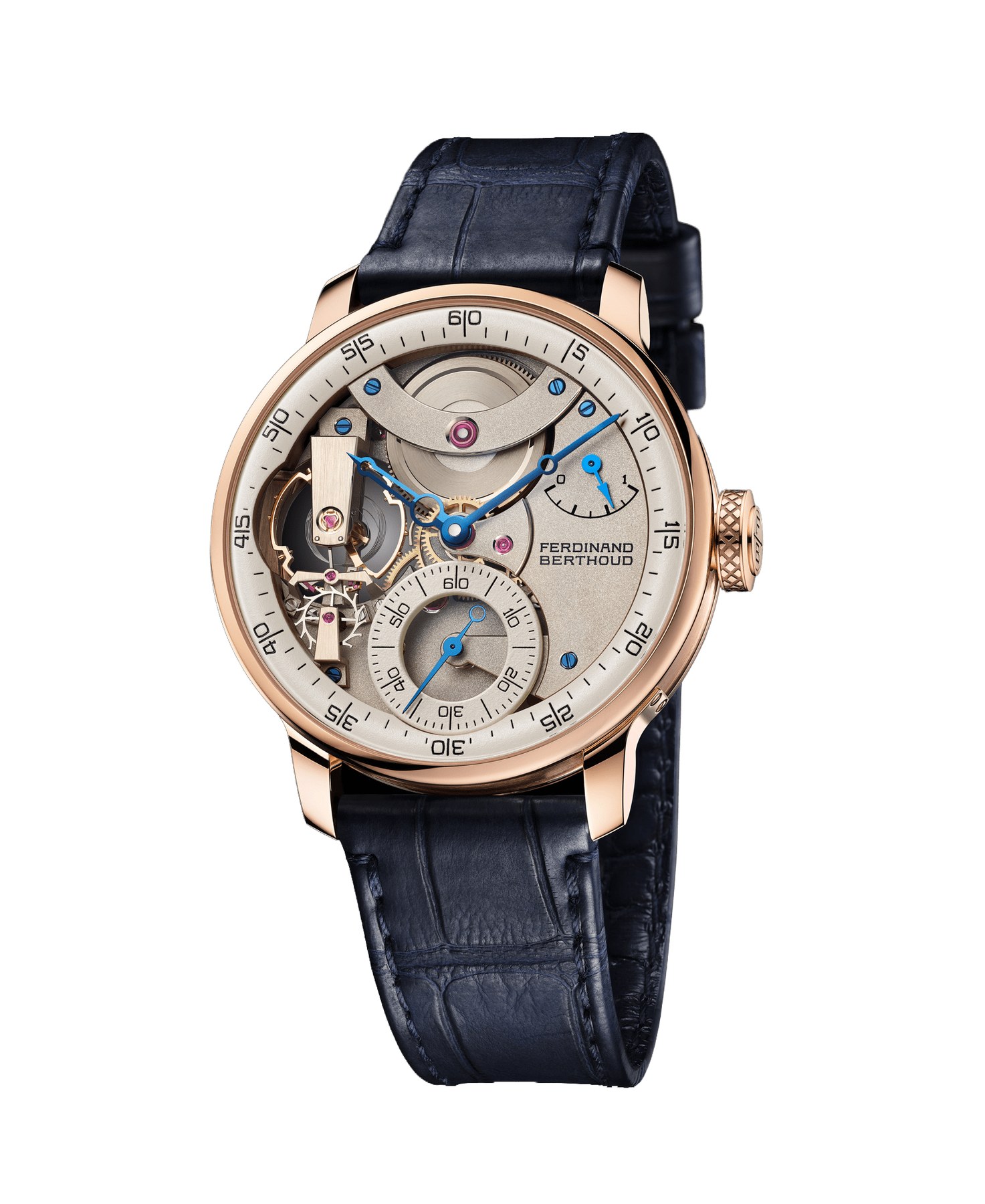
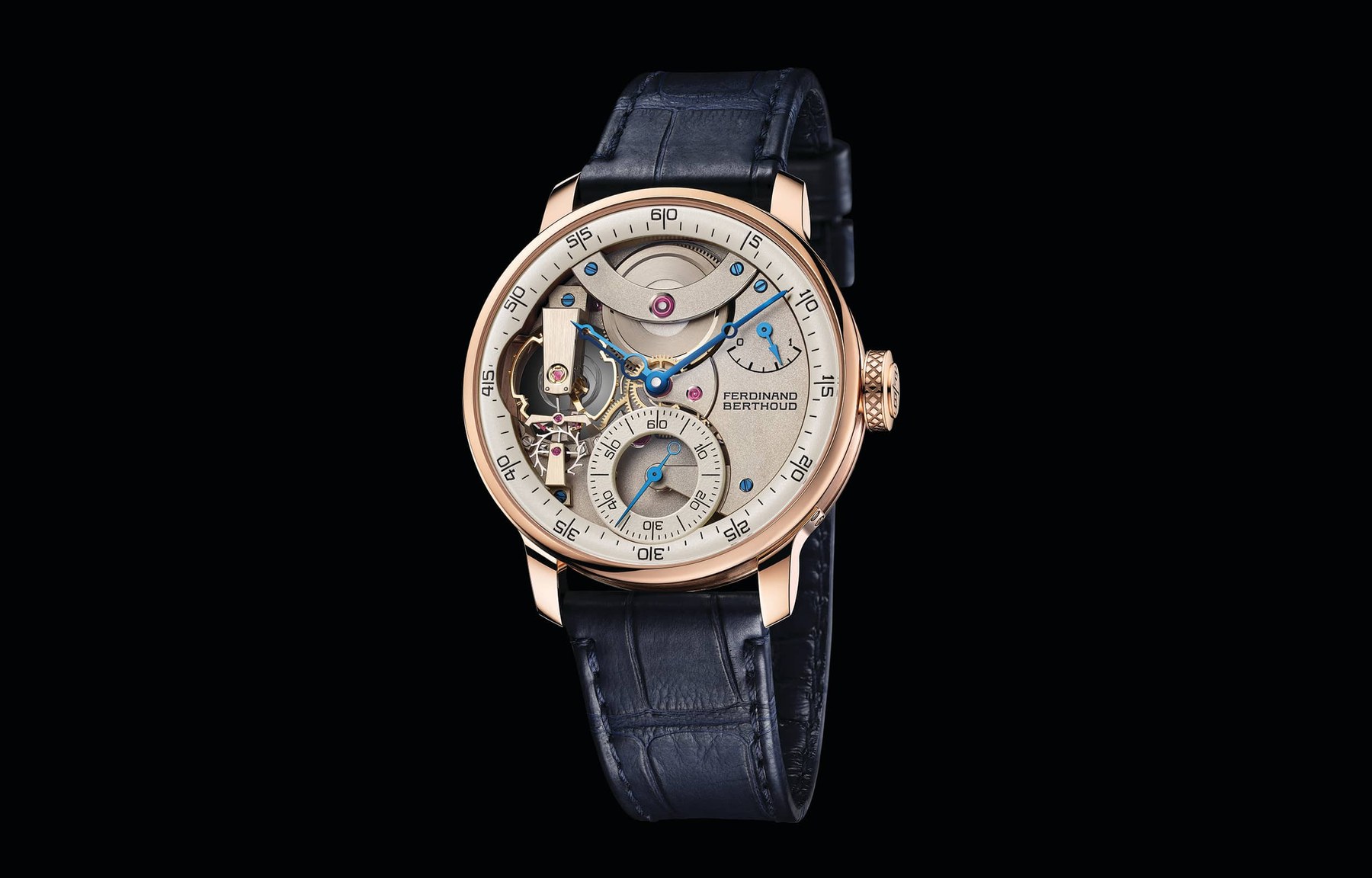
The case is 18k 5N rose gold, 57 parts, 42.3mm across and 9.43mm thick, water-resistant to 30m. That thickness is the number to hold onto. A 42mm watch under 9.5mm sits in dress watch proportions, and this one is carrying a chronometer regulating organ that is taller than the usual flat hairspring arrangement.
The crown is 8.5mm, oversized on purpose. There is a rectangular sapphire porthole cut into the left flank of the case at 9 o'clock, and through it you watch the cylindrical balance spring work. This is not a display caseback gesture. A cylindrical spring breathes concentrically around the balance axis instead of spiralling outward in a plane, which keeps its centre of gravity on the axis and is where its isochronism advantage comes from. It is also taller, harder to make, and needs two terminal curves formed by hand, which is why almost nobody uses one. Berthoud cut a window in the side of the case so you can see the thing that justifies the watch.
Nickel silver, everywhere
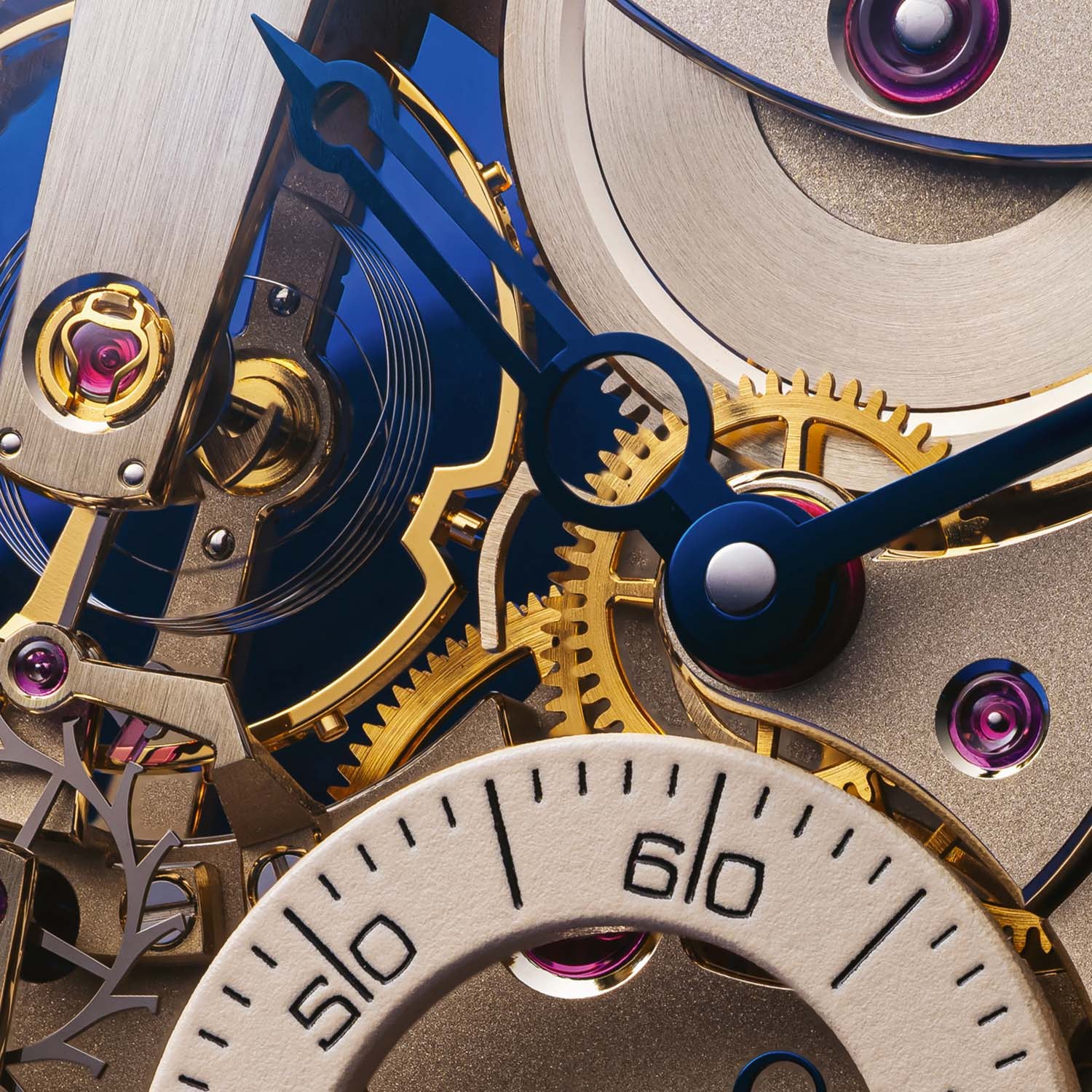
There is no dial here in the conventional sense. What you look at through the crystal is the movement. For the .2-1 every visible movement element has been executed in nickel silver, also called German silver or maillechort, and given a sandblasted finish. The peripheral inner bezel ring and the small seconds subdial are velvet-finished beige brass, and the barrel cover is brass too.
The result is a watch that runs at one colour temperature: warm gold outside, warm untreated alloy inside, matte almost throughout. Against that much matte, the polished bevels have somewhere to be seen, which is the practical argument for the finish rather than the poetic one. The hours and minutes hands are skeletonised, open-tipped, 18k gold with a blue CVD treatment, and the blue repeats on the seconds hand, the power reserve indicator and several screws. It is the only colour in the watch.
The movement
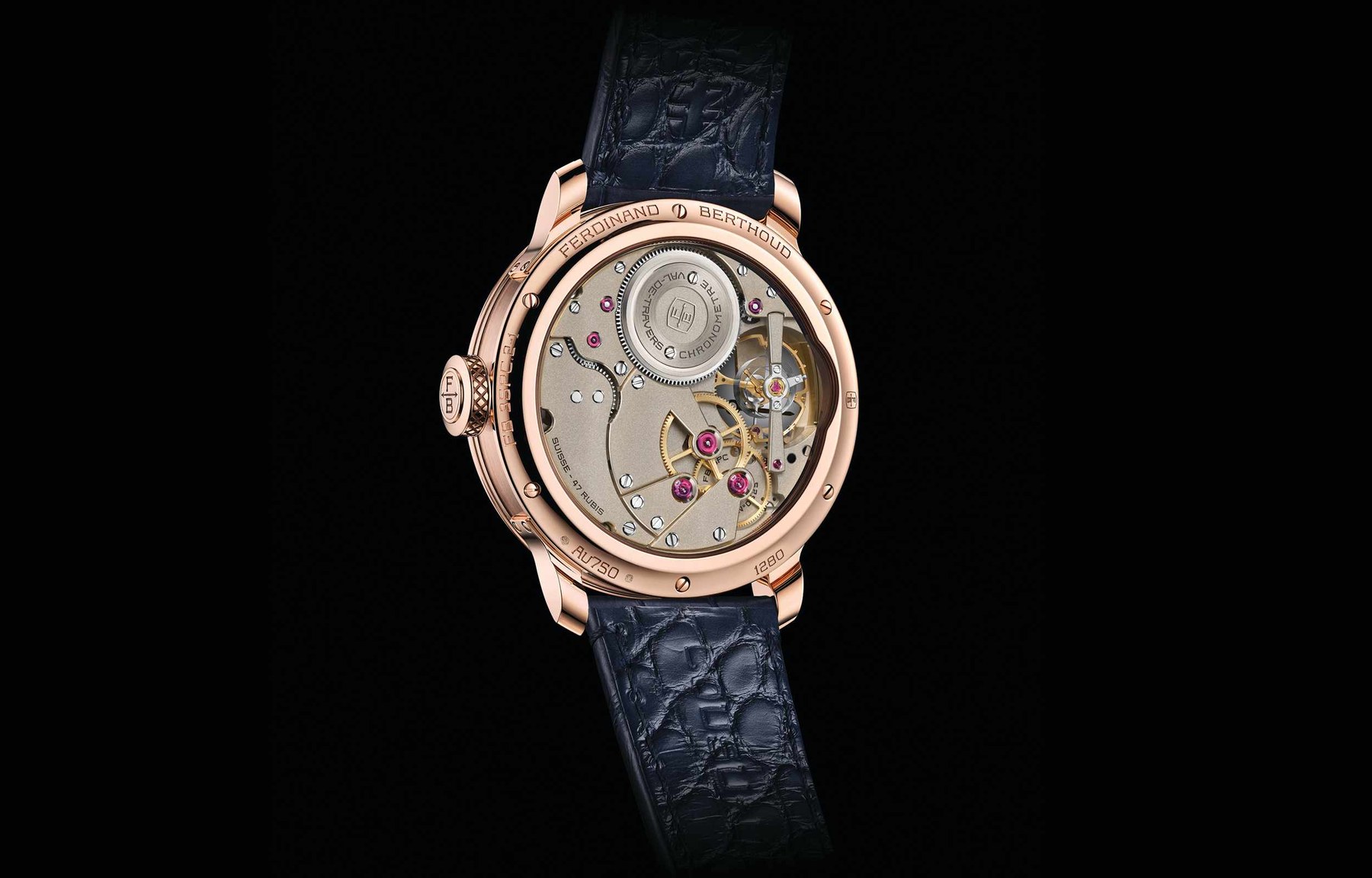
Calibre FB-SPC is in-house, hand-wound, 34mm by 6.84mm, 230 components, 47 jewels, 21,600vph, with 72 hours from a single large barrel under an arched bridge. It is COSC-certified, which at this price is less about the paper than about what the paper implies. The cylindrical spring and the variable-inertia balance are not decorative choices. They are there to pass a test.
There is also a stop-seconds mechanism, which sounds minor and is not. A chronometer you cannot set to the second is a chronometer in name only.
The back matches the front: nickel silver bridges, manual fine sandblasting, hand-polished bevels, gilded gear trains, straight-grained bridges over the regulating organ. The consistency between dial side and movement side is the design argument, and it is why this reads as a different watch rather than a colour swap.
Price
Berthoud has not published a figure. Monochrome reports approximately CHF 160,000. It is a non-limited edition, though at this brand that word carries less weight than it would elsewhere. Details at ferdinandberthoud.ch.