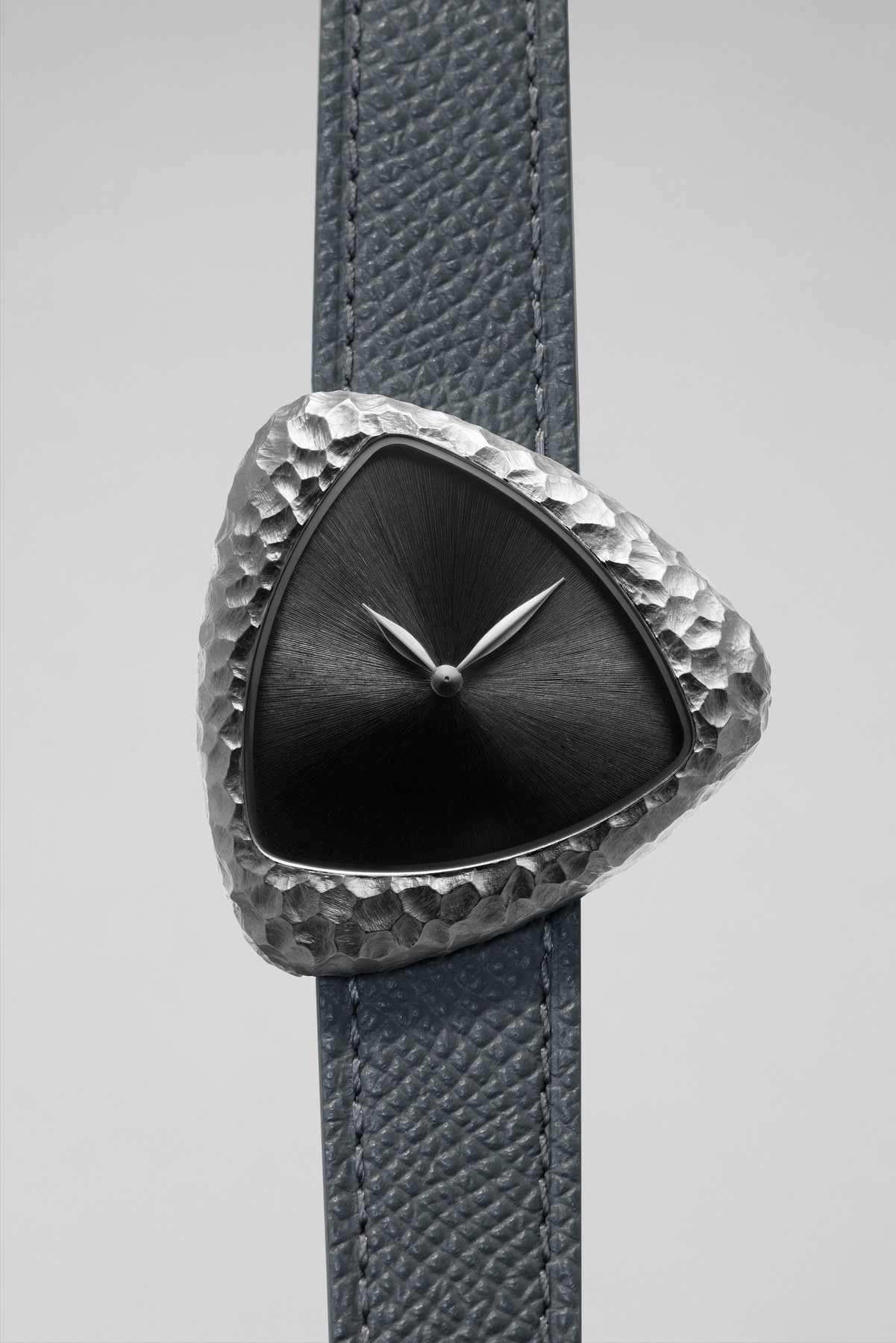
Anoma was founded in 2024 and has released, so far, one model. The A1 is a rounded triangle, 39mm by 38mm, with no lugs, a recessed crown you operate from the back, and a shape taken from a free-form table Charlotte Perriand designed in the 1950s. It has been through the Slate, the Optical, and most recently the permanent Abyss and Stone. Every one of those was a dial and finish exercise on a fixed case.
The A1 Prehistoric, introduced on 6 July, is the first time the case itself has changed, and it changes in the least scalable way available.
Five hours per case
Founder Matteo Violet Vianello says the idea came from a Brancusi exhibition at the Centre Pompidou, and specifically from the primitive artefacts Brancusi collected. What he wanted was a watch with the surface of worked flint: uneven planes, tool marks, a face that looks struck rather than machined.
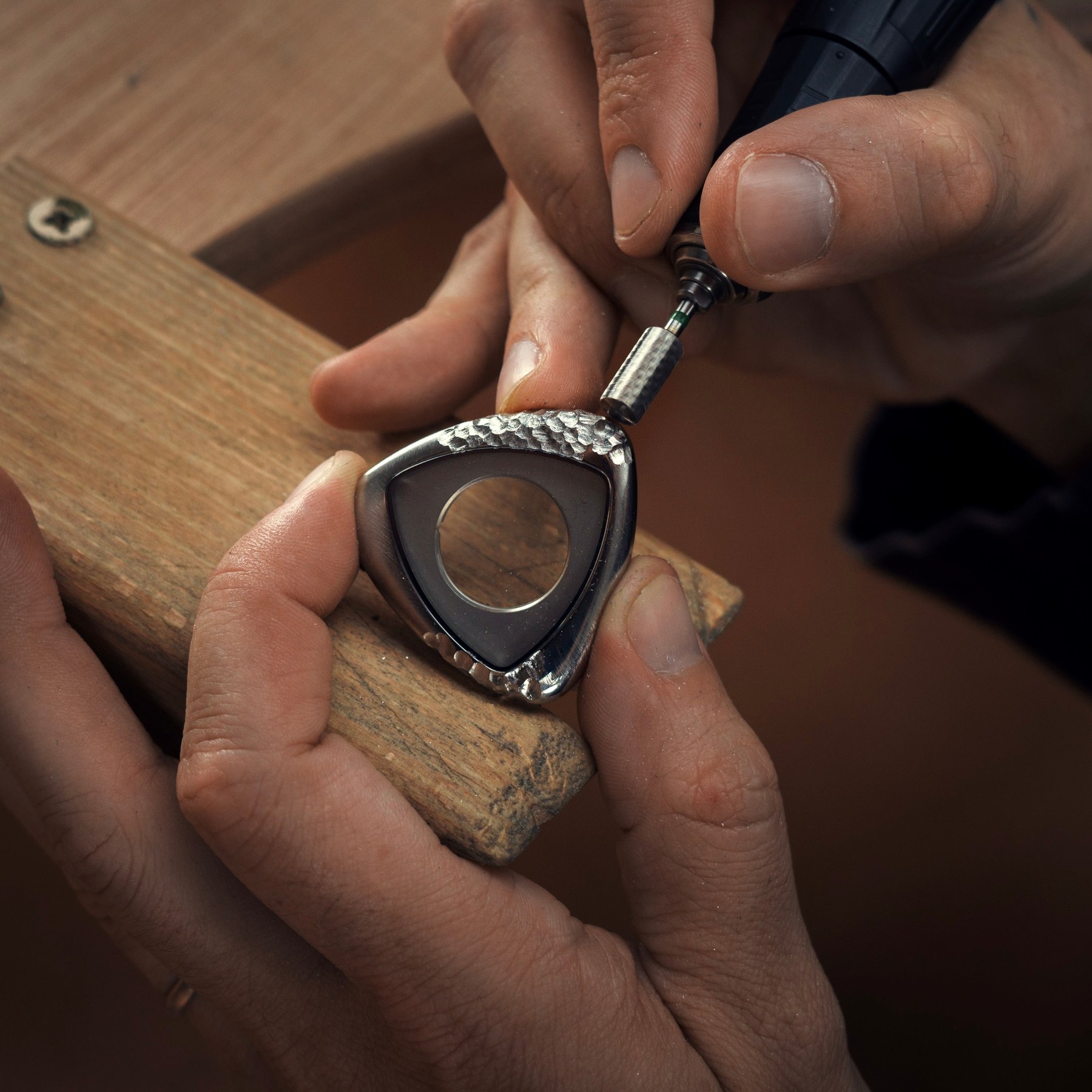
Each 316L stainless steel case is worked by hand by the French engraver Steven Brunel, and Anoma quotes approximately five hours per case. The result is not a repeating pattern. It is a set of cuts and facets that vary in depth and direction, so no two examples are identical. Brands claim that constantly and can rarely show it. Here you can see it in Anoma's own workshop photographs: a case mid-process, one flank pitted and bright, the rest still smooth.
Worth being precise about the language, because the brand is not. "Chiselled" implies a chisel and a mallet, and steel does not flake the way flint does. Anoma's own images show a handheld rotary tool doing the work. The labour is real, the five hours are real, the surface is real. The word is romantic. That is a distinction, not a scandal, and the watch survives it.
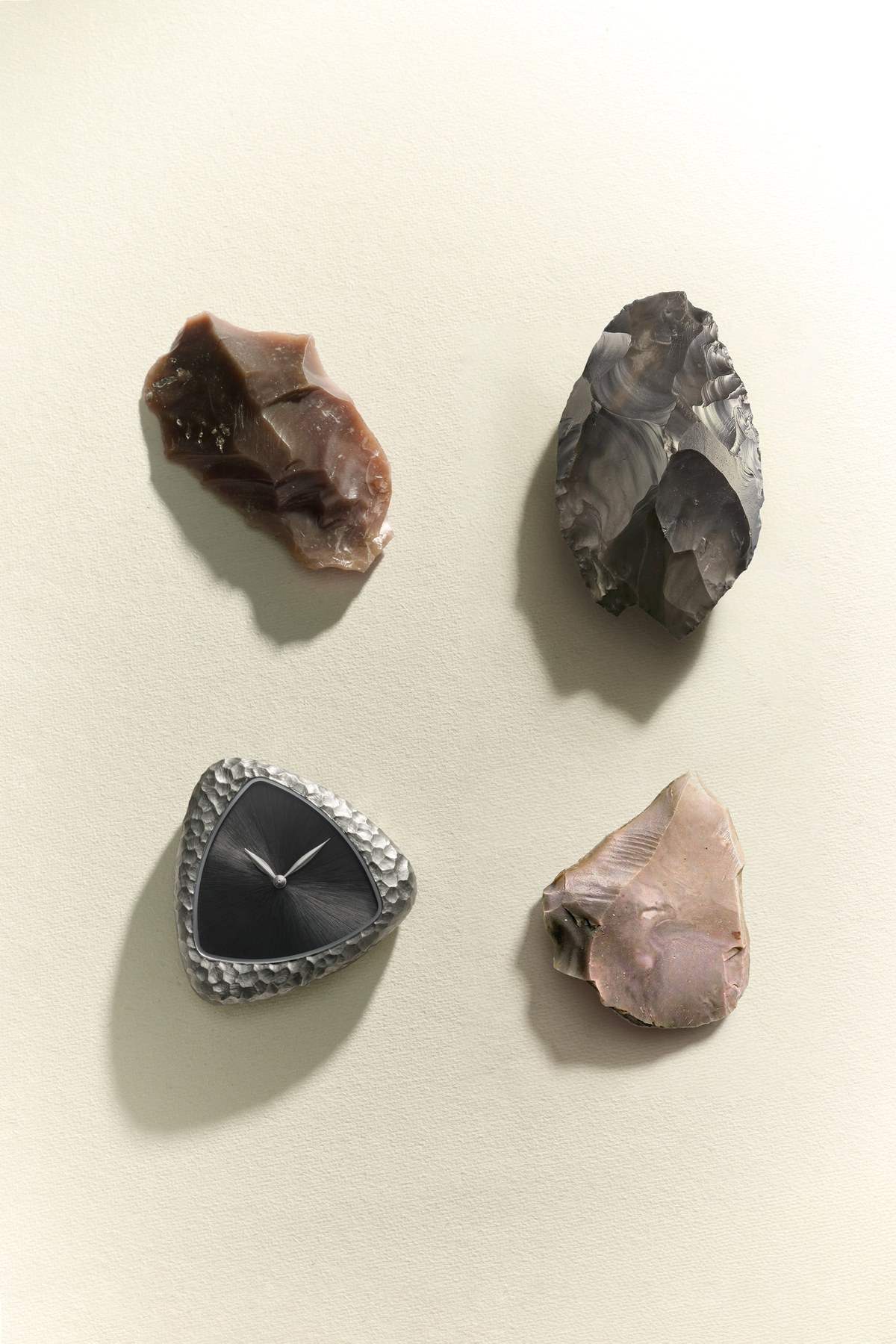
The specification barely moves. Case 39mm by 38mm, 9.45mm thick, 50m water resistance. The lower 3mm of the case curves inward, and between that and the absence of lugs, Anoma says it wears closer to a 37mm watch. The crown remains hidden from the front.
Six hundred lines
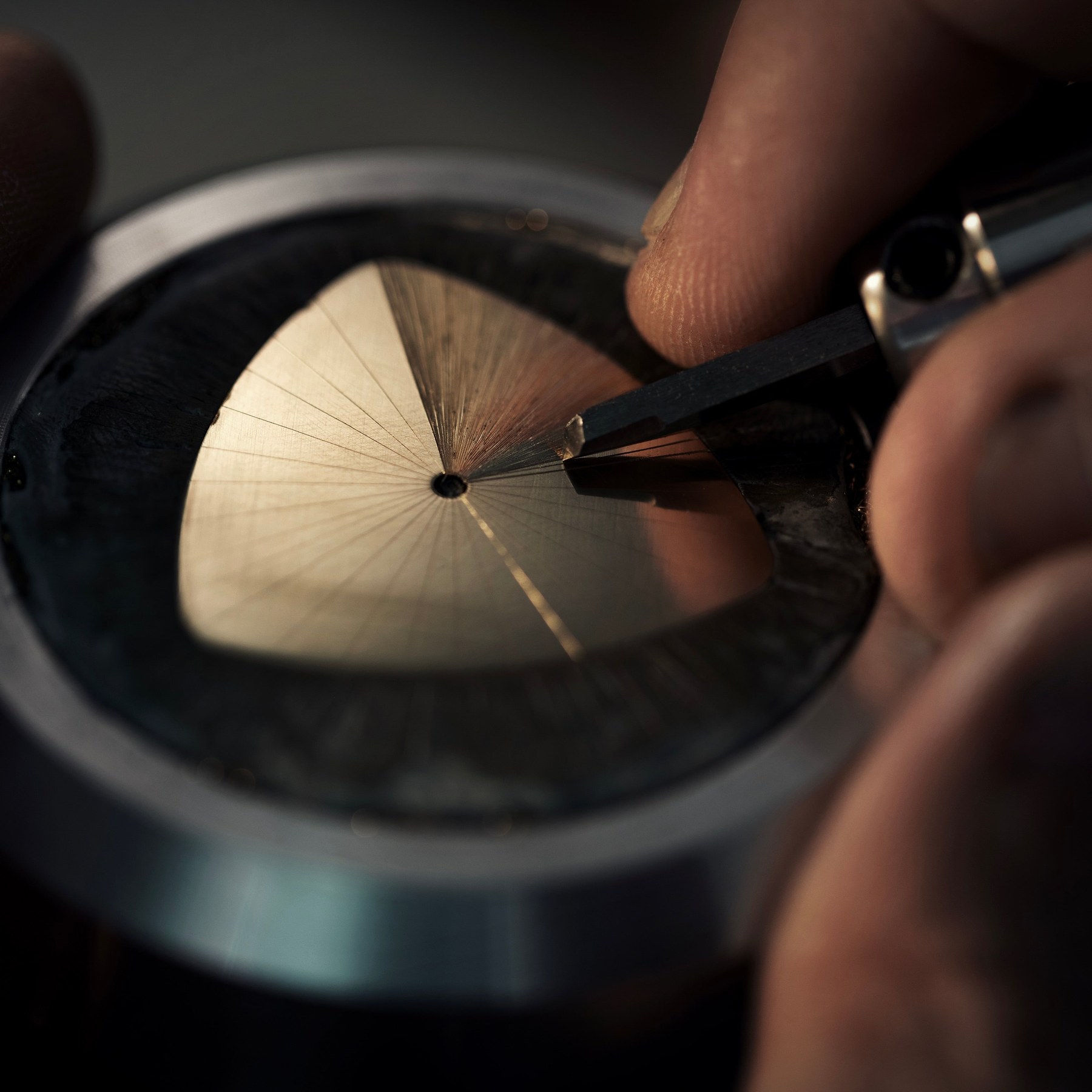
The dial is brass, and the sunburst is not stamped. Around 600 individual lines are cut into the base by hand, radiating from the centre, and the whole thing is then finished in a deep anthracite. In the workshop photograph the bare brass shows gold against the darkened surround as the lines go in. After finishing, the surface catches light in irregular bands rather than the clean rotational sweep of a machine-brushed sunray.
Hands are the same curved leaf shape as the rest of the A1 line. No markers, no text on the dial, no seconds. That restraint is why the case treatment works. Put 600 hand-cut lines and a knapped-flint case behind a busy dial and you have a novelty.
The movement
A Sellita SW100, automatic, 28,800vph, roughly 42 hours, hours and minutes only. It is a competent, unremarkable calibre and it is the correct choice. Anoma is charging for the case and the dial, both hand-worked, both visible. A gratuitously upgraded movement would have raised the price without changing anything the buyer looks at.
Availability
One hundred pieces for 2026, orders opened 8 July, deliveries from October, GBP 2,900 excluding duties and taxes. Grey grained Italian leather strap, with a pin buckle worked the same way as the case. Details at anomawatches.com.