Resonance is one of the rarest effects in mechanical watchmaking, and one of the least visible. Two oscillators, mounted close enough to influence each other, gradually fall into step and beat together. The payoff is stability: small rate errors in one balance tend to be cancelled by the other, so the watch keeps better time than either movement would alone. Very few makers build watches around it. Armin Strom, in Biel, has made it the centre of its identity.
The new Mirrored Force Resonance Red does nothing to that mechanism. It changes the dial colour, and it is honest to say so up front: this is a fifteen-piece colour edition of an existing watch, not a new calibre. What you are paying for is the machine underneath and the way it has been finished, not novelty.
The dial is the only new part
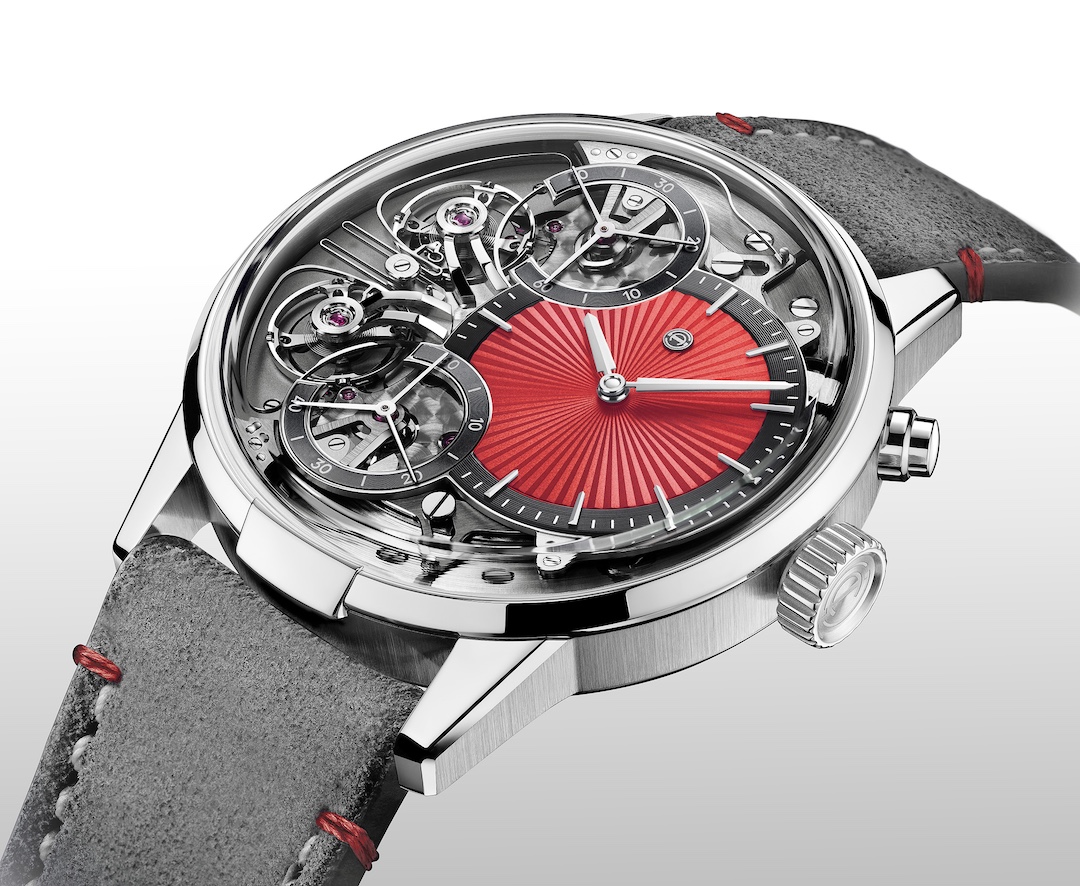
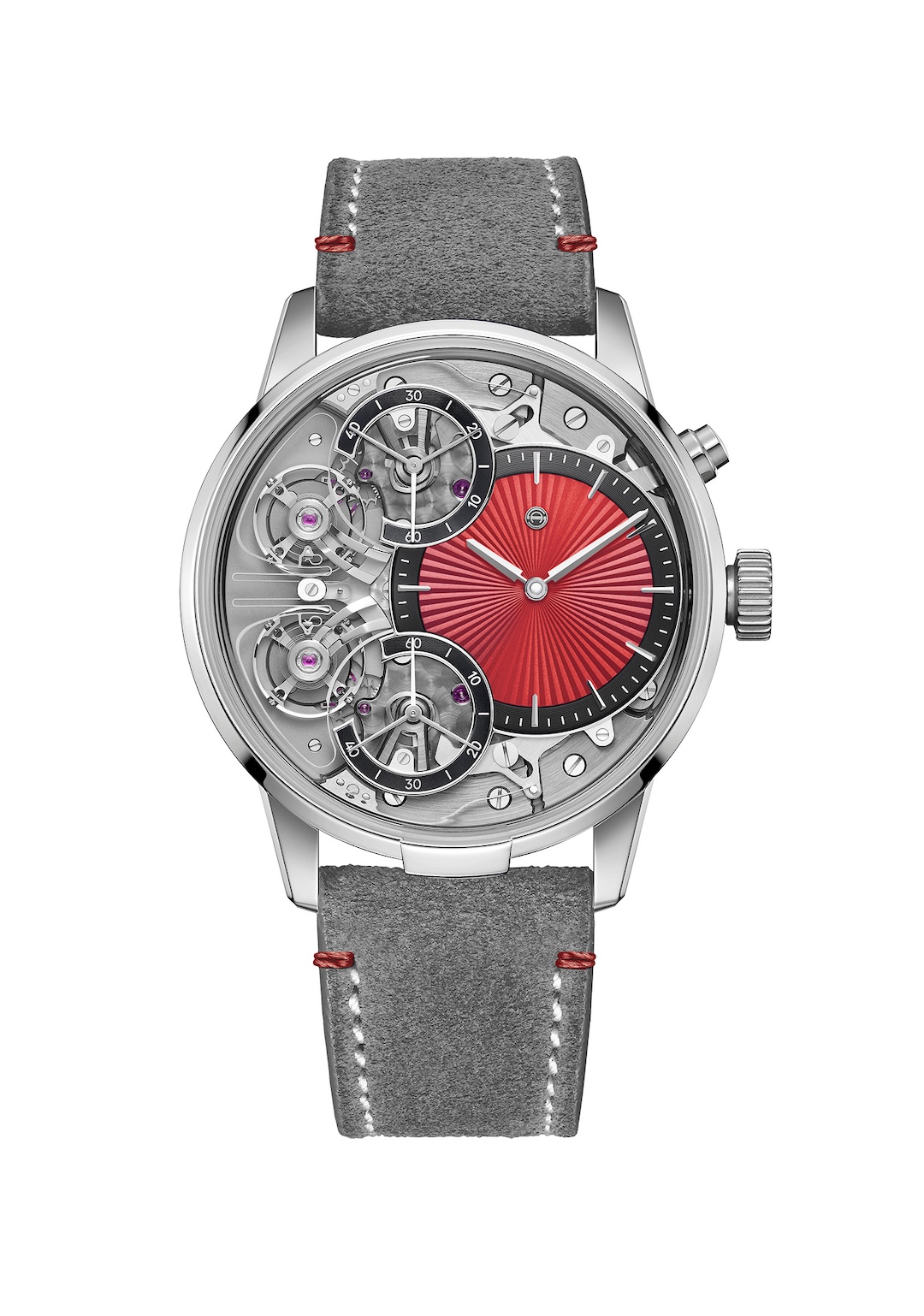
The off-centre dial is a vivid red, cut on a hand-operated rose engine lathe into a radiating guilloché whose reflections move as the light does. Black azuré chapter rings frame the display, and the applied hour markers are faceted so they appear to sit above the surface rather than on it. The bridges behind it are coated anthracite grey, and the watch comes on a dark grey Alcantara strap, so the red is the only loud thing on the watch. Armin Strom has run the same watch in other colours, including an icy blue and, earlier this year, a genuine ruby dial; red is the newest reading of it.


The mechanism is the reason it exists
The calibre is Armin Strom's ARF21, and its layout is unusual. Rather than one oscillator driving the display, it carries two completely independent movements, each with its own barrel, gear train, escapement and regulating organ. The two balances are joined by Armin Strom's patented Resonance Clutch, a physical spring that transmits vibrations from one to the other until they synchronise. This is the brand's own answer to a problem that, in modern watchmaking, is most associated with F.P. Journe: how to harness resonance reliably in something small enough to wear.
The most legible part of all this sits at 2 o'clock. A pusher there resets both seconds hands to zero at once, which desynchronises the two trains for a moment and then lets you watch them find each other again. It is a demonstration built into the watch, and it is the clearest way to see that the two systems are genuinely separate.
The parts you don't see
The movement is manually wound and visible through sapphire crystals on both sides. It is finished by hand: polished bevels, frosted surfaces, perlage, circular graining and black-polished screws, before each watch goes through Armin Strom's two-stage assembly, where the movement is built, tested, taken apart and rebuilt. The Mirrored Force Resonance case is 43mm across, and the movement runs at 3.5 Hz with a 48-hour reserve.
None of that is new to the Red, and that is the point. At CHF 78,000 for one of fifteen pieces, the colour is the reason to notice the watch and the mechanism is the reason to buy it. Details at arminstrom.com.