The double-signed watch is one of the oldest forms of prestige in the trade. A manufacture made the watch, a great retailer put its name on the dial beside the maker's, and the result outlived both: the Tiffany-stamped Pateks and Rolexes are the obvious examples. Zenith has now taken that idea and pointed it at independent watchmaking, launching a Double Signed Program whose first partner is not a retailer at all but the Tokyo workshop of Naoya Hida.
The object at the centre of it is the G.F.J., and the reason the program starts here is the movement inside it.
The most decorated calibre of its kind
The Calibre 135 was developed by Ephrem Jobin in 1948 and built for a single purpose, which was to win observatory chronometry competitions. It did. The competition specification, the 135-O, took more than 230 observatory prizes, including five consecutive wins at the Neuchâtel Observatory between 1950 and 1954, a run no other movement has matched. Everything about its architecture, the oversized balance and the large barrel, was arranged around chronometric performance rather than appearance.
Zenith brought the calibre back in 2025 for its 160th anniversary, in the time-only G.F.J. The modern version keeps the oversized balance running at a slow 18,000 vibrations per hour and the Breguet overcoil hairspring with Charles Fleck's double-arrow regulator, and adds what a contemporary chronometer is expected to have: a stop-seconds mechanism, improved shock protection, a 72-hour reserve, and regulation to plus or minus two seconds a day before it goes for COSC certification. The finishing follows the latest G.F.J., with broad Geneva stripes, hand-chamfering and a dark ruthenium treatment carrying gold-coloured engravings. It is visible through the sapphire caseback, which is where the limited-edition number, 0 of 10 on the prototype, is engraved alongside both signatures.
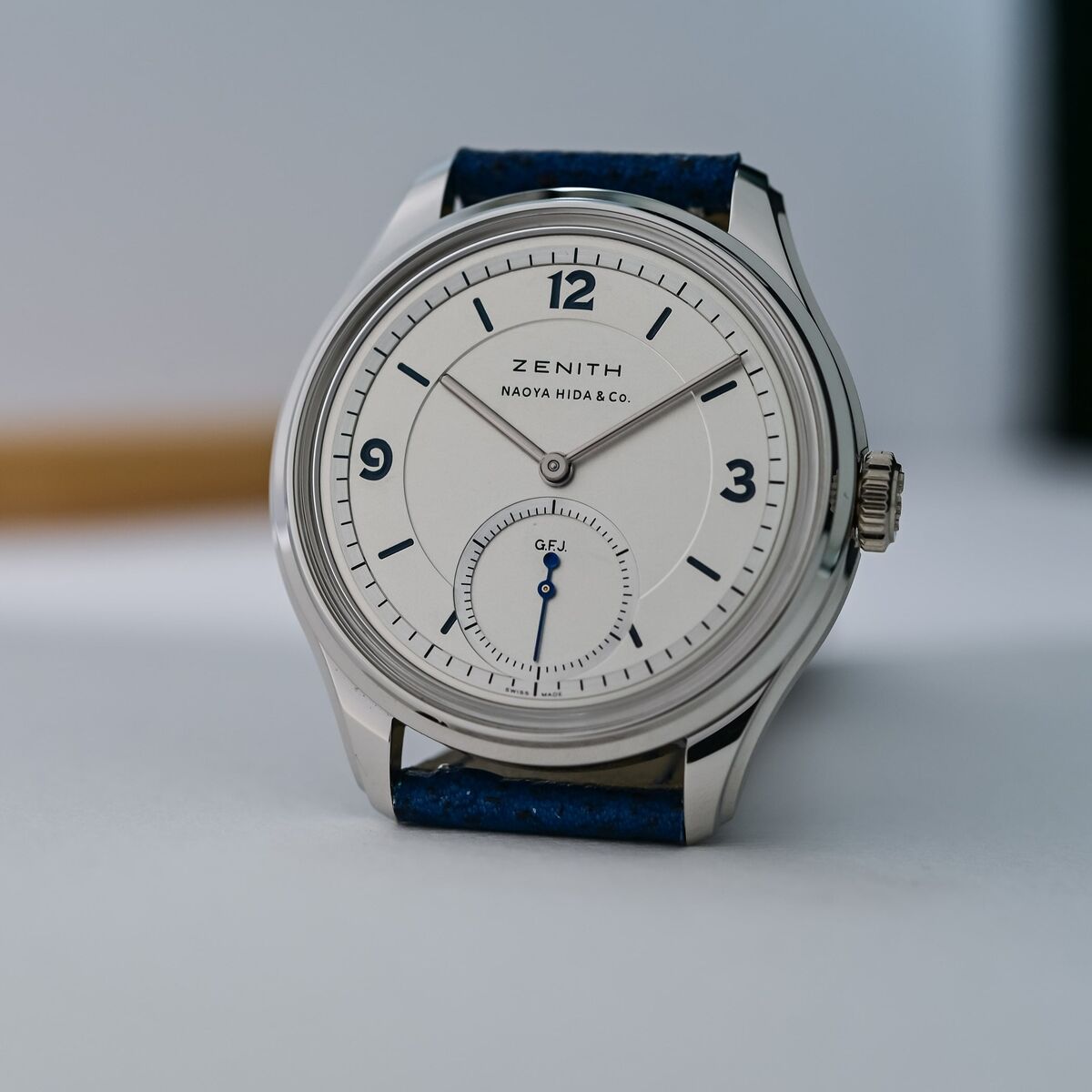
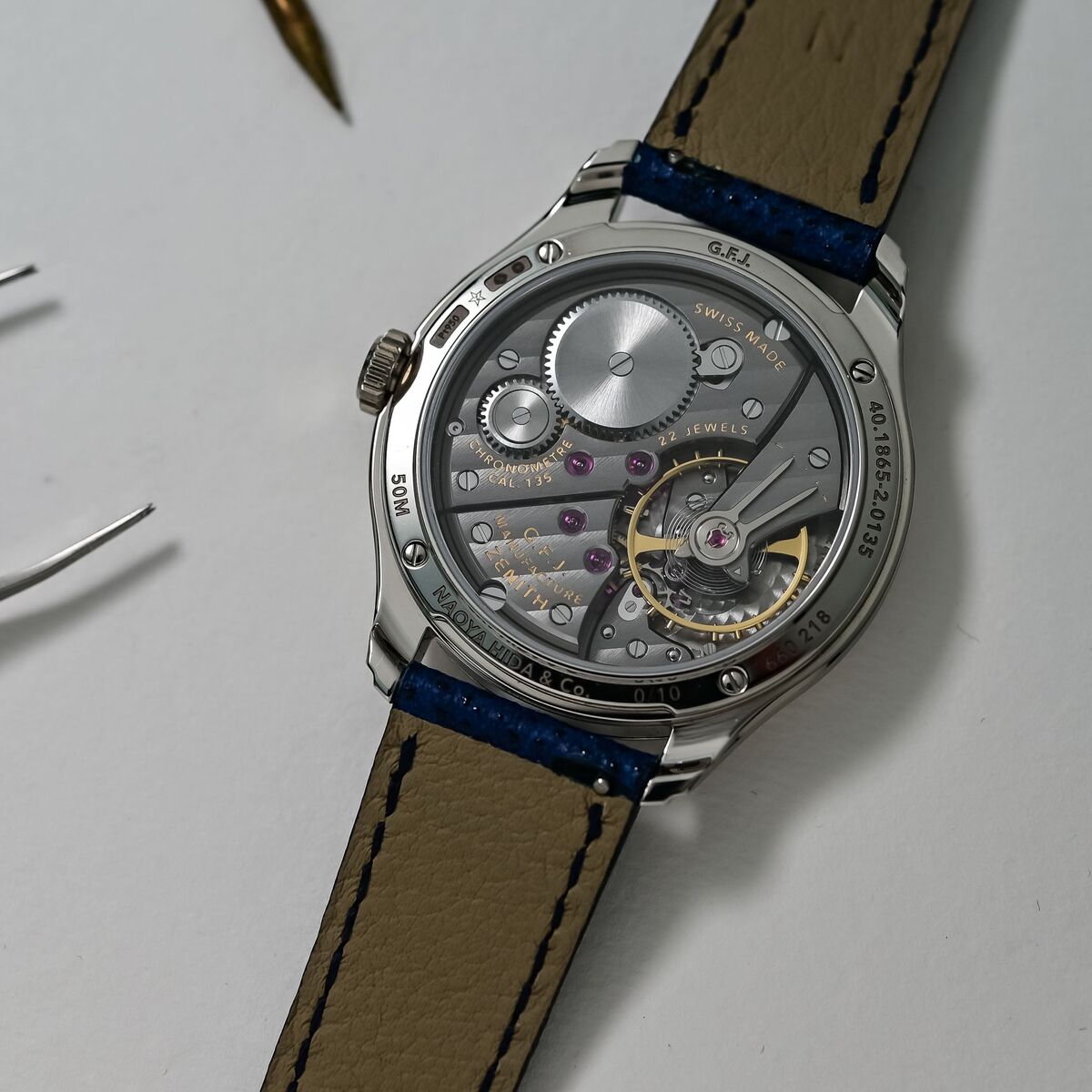
What Naoya Hida brought to it
Naoya Hida & Co. was founded in 2018 and has built a collector following in a short time on the strength of typography, proportion and finishing, often drawing on mid-century Calatrava design. The connection to Zenith reportedly began when the manufacture's chief product officer, Romain Marietta, visited Hida's Tokyo workshop. The pairing makes sense in a way that a retailer signature would not: this is a movement built around mid-century chronometry, handed to a maker whose whole language is mid-century restraint.
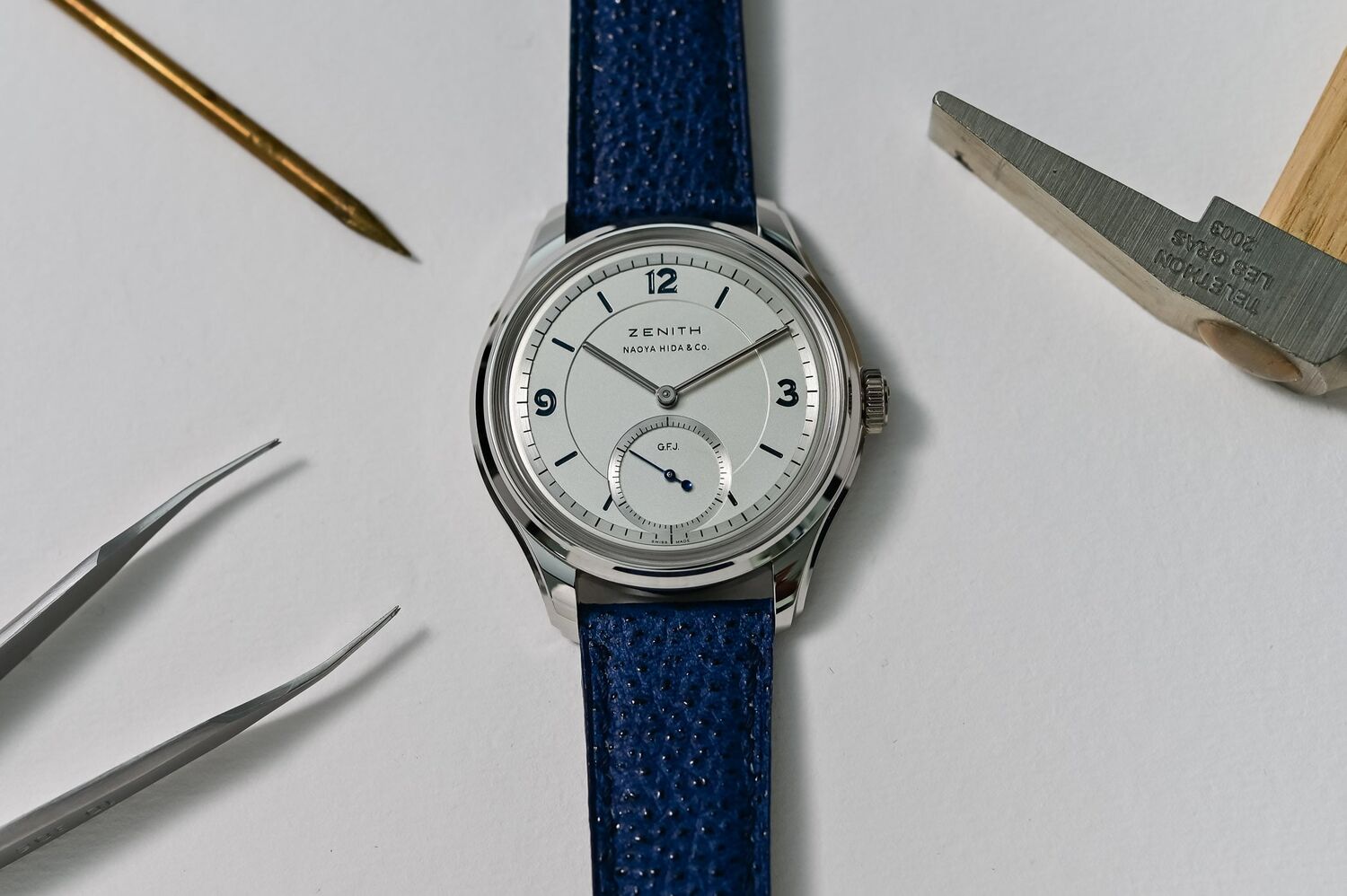
Hida's mark is most apparent on the dial. It is solid silver, and the indices, markers and both signatures are hand-engraved by the master engraver Keisuke Kano, then filled with deep blue Japanese urushi lacquer that reads as near-black in most light. The hour and minute hands are solid gold, machined and then hand-polished; the small seconds hand at six o'clock is heat-blued steel. The case carries the stepped lugs and slim bezel of Hida's NH Type 2, in 950 platinum, 39.15mm across and 10.5mm thick, water-resistant to 50 metres.
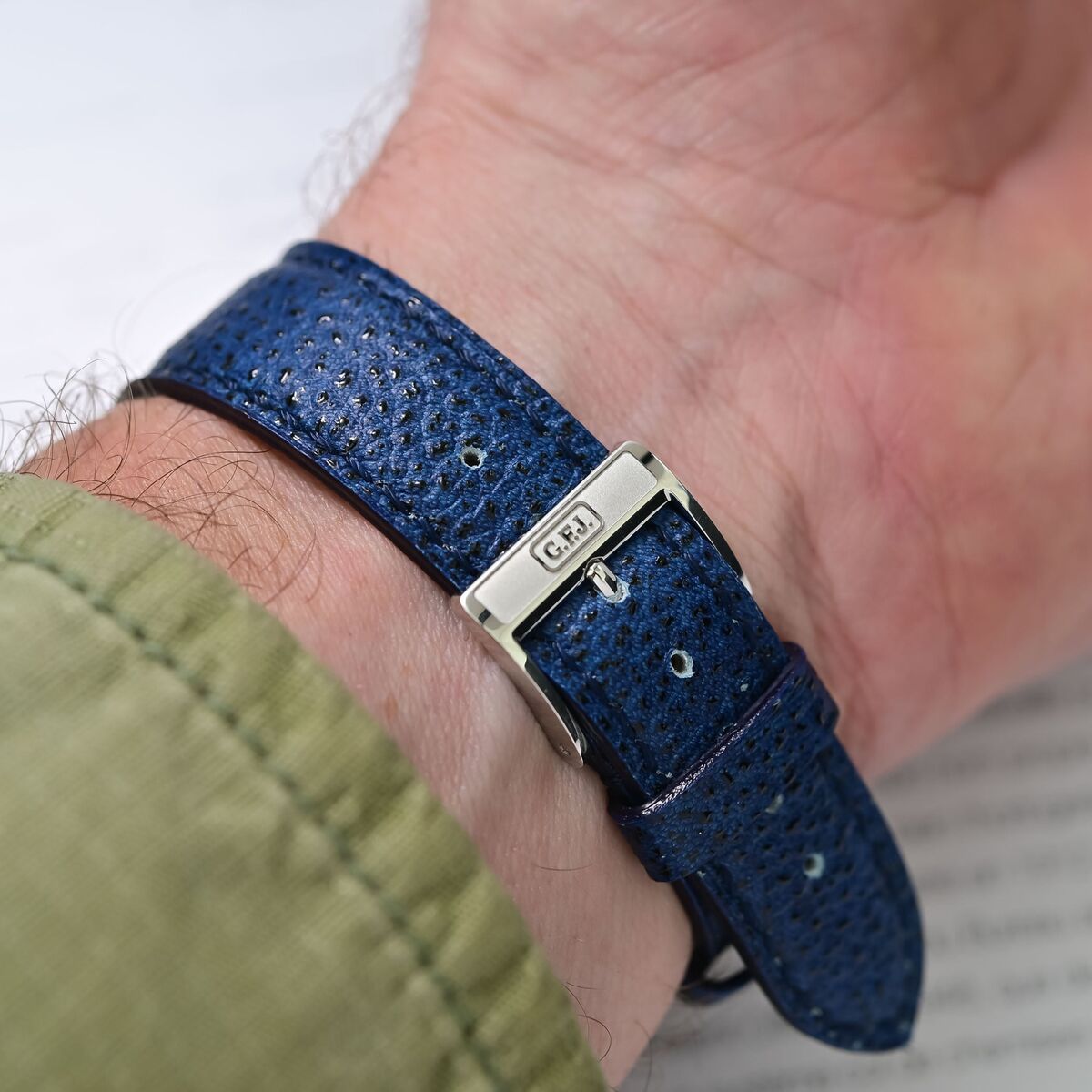
The watch ships with three straps that keep the Japanese theme literal: Himeji Kurozan leather finished in urushi lacquer, a Kyoto-made Wagyu leather strap, and a deep indigo strap in Kaihara denim, each on a platinum pin buckle engraved with the G.F.J. initials.
Ten of them
The Zenith G.F.J. Calibre 135 Double Signed with Naoya Hida & Co. is reference 40.1865-2.0135/01.C220, limited to ten pieces, priced at CHF 58,900. The number is the point. A double-signed program built on the most awarded chronometer movement of the twentieth century could have been a volume exercise; instead the first edition is small enough that it functions as a statement of intent rather than a product line. Whether the comment threads are right that the price is steep for a time-only watch is a fair argument. What is not in dispute is the movement, and that is what both signatures are vouching for.