Urwerk tends to retire a watch with a flourish rather than a memo. Recent goodbyes have included the UR-10 SpaceMeter Blue, the UR-230 Black Star and the UR-220 RG, each a final variant rather than a quiet deletion from the catalogue. The latest is for the UR-120, the watch nicknamed Spock for the way its hour markers split into a two-finger salute as they travel. On June 11 Urwerk introduced the UR-120 Blue Planet, a run of 20 pieces that ends the line.
The case, in blue
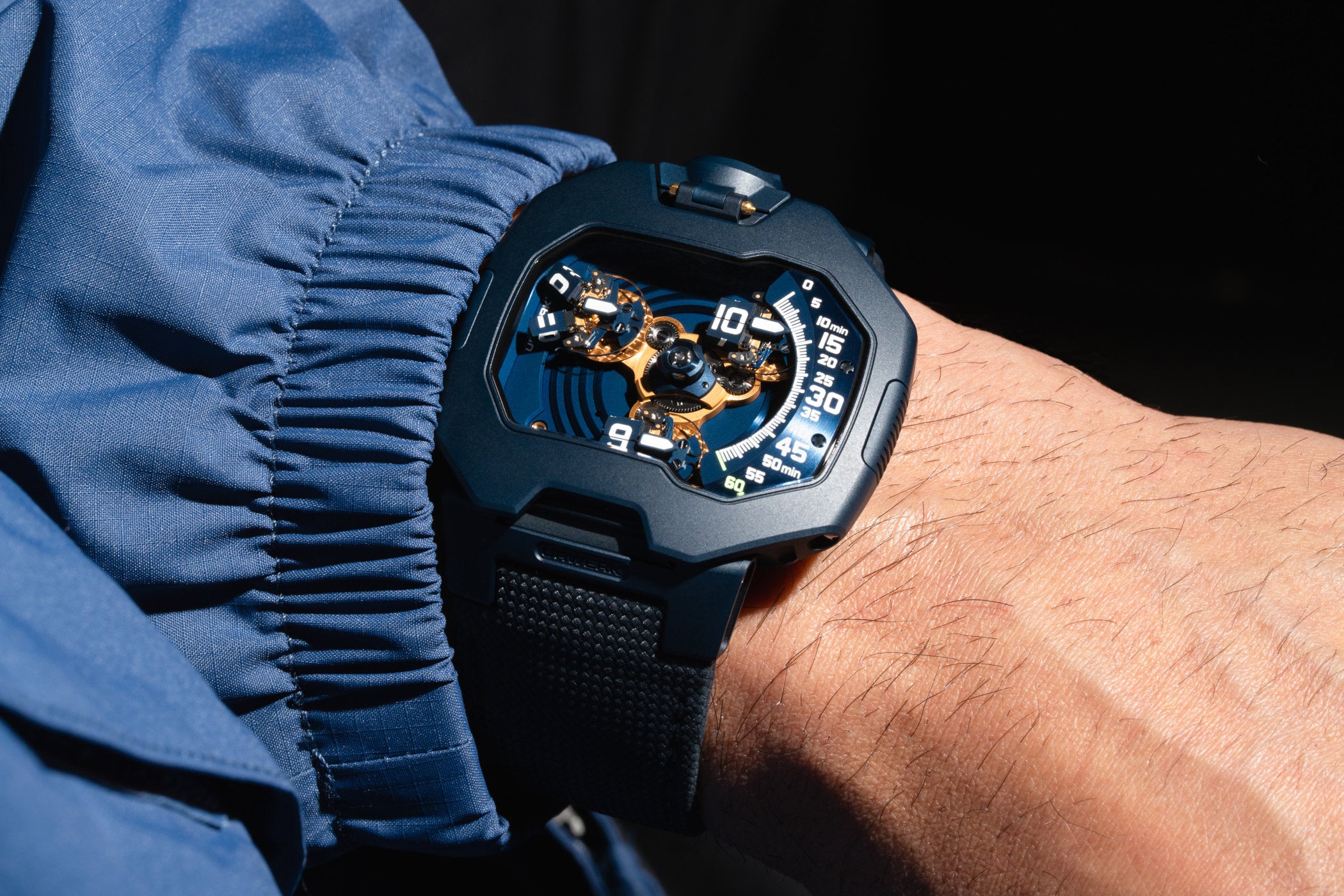
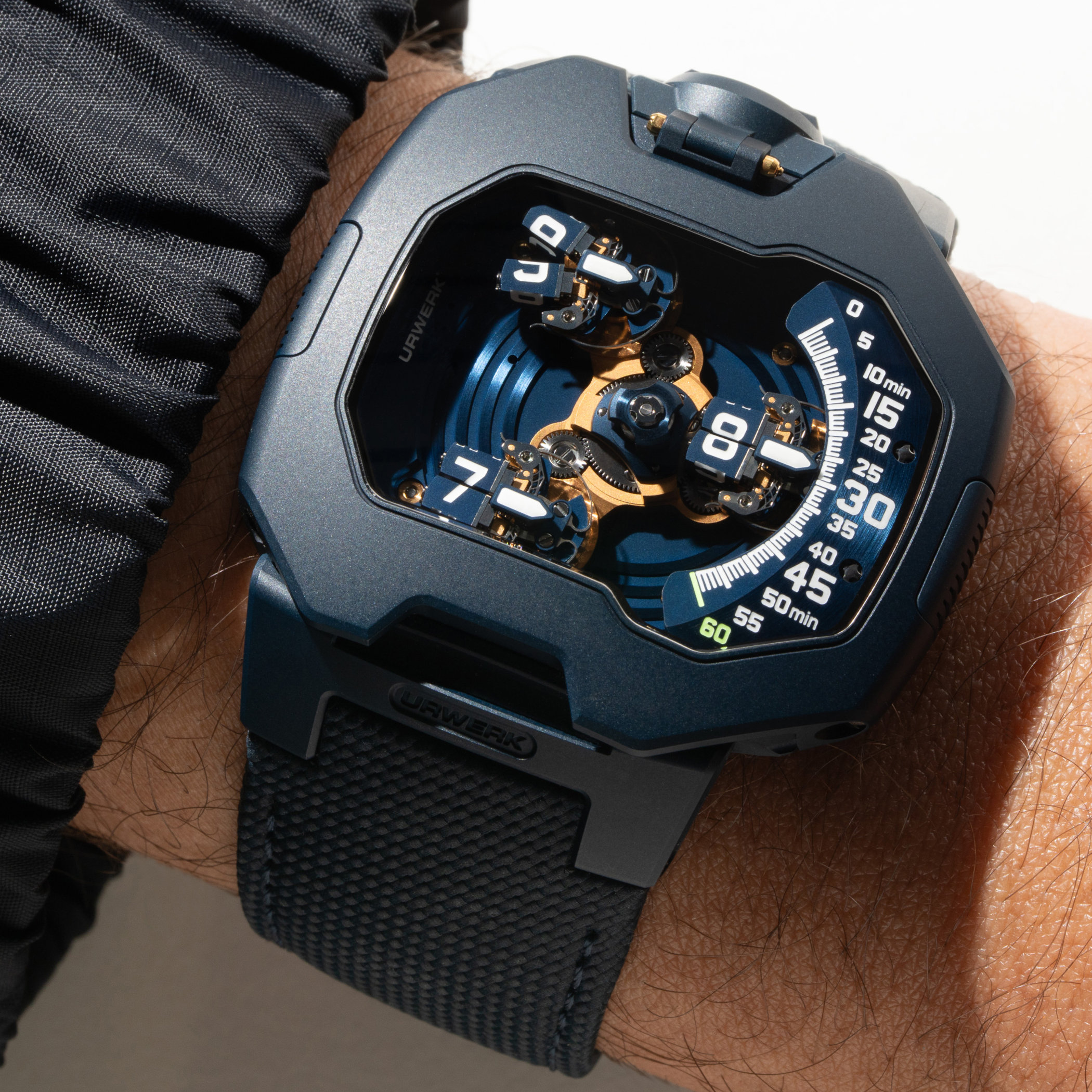
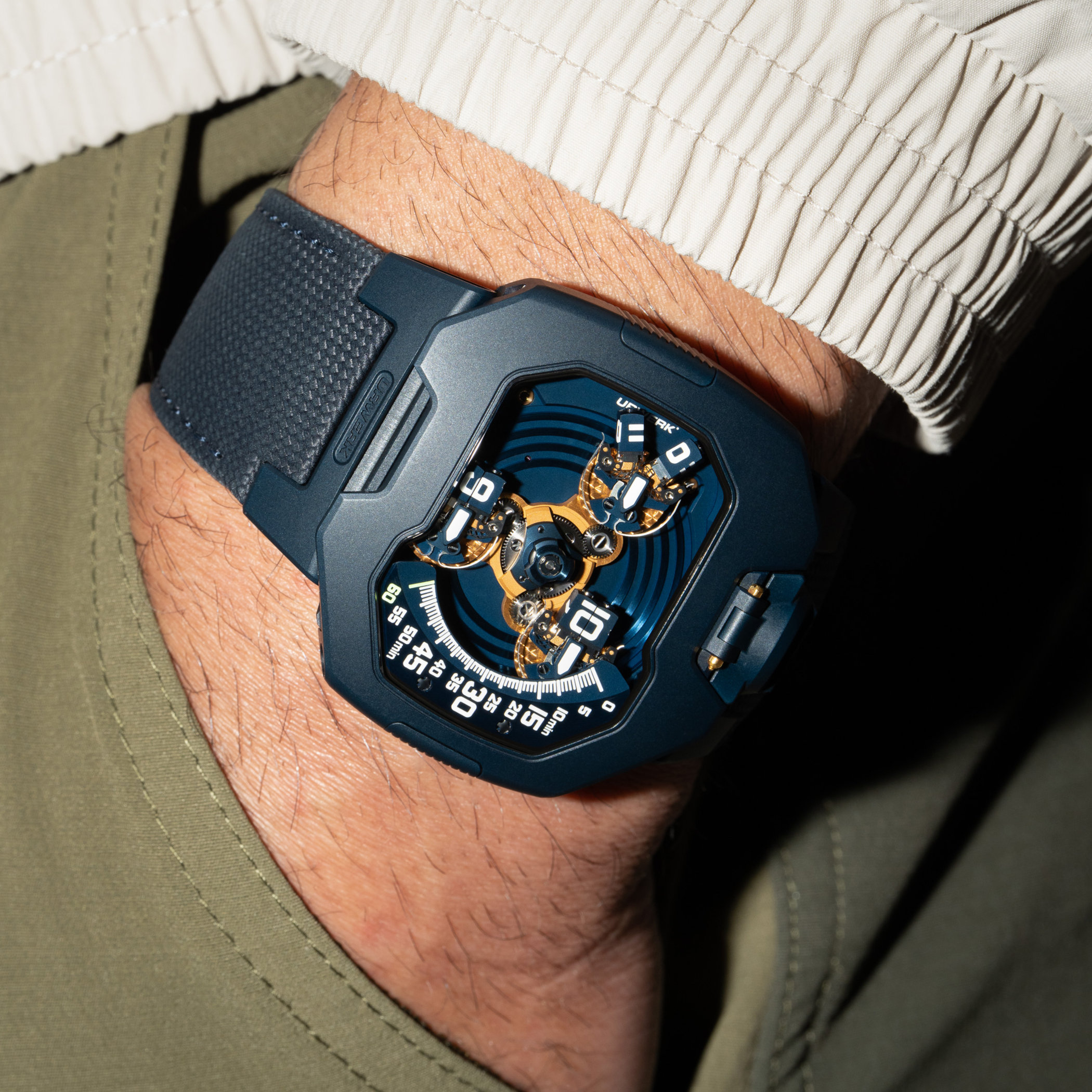
The UR-120 keeps its shape: a 47mm by 44mm case, 15.8mm thick, with the covered crown sitting at twelve o'clock under a hinged guard. What changes for the Blue Planet is the material and the finish. Where Urwerk normally reaches for titanium, this one is sandblasted steel given a blue PVD coating, which the brand says lets the colour sit evenly across the whole case. The shaped sapphire crystal, the hinged lugs and the strap mounts all carry over unchanged. Water resistance is a notional 30 metres, which is to say this is not a watch you swim in.
The display that splits in two
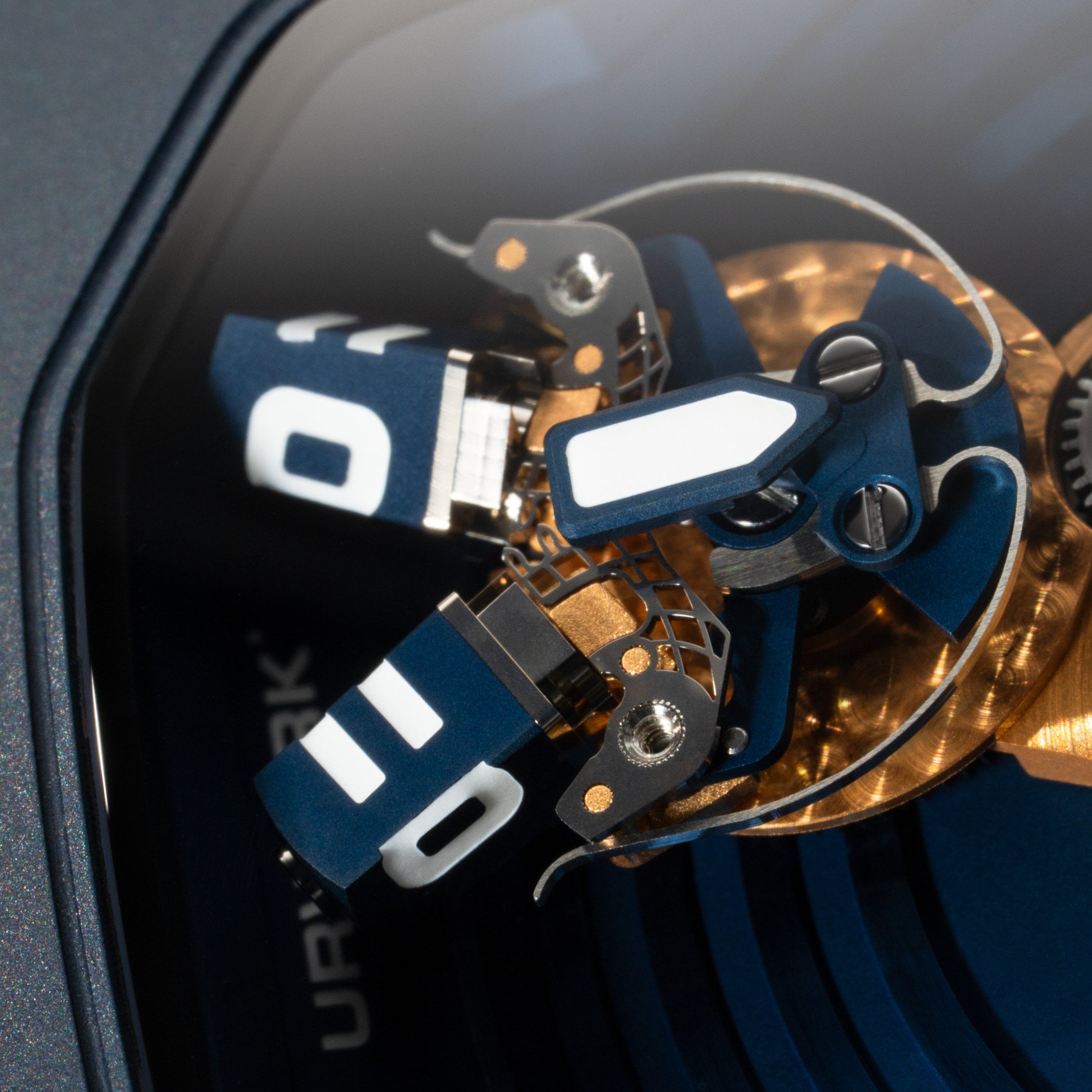
The UR-120 is a wandering-hours watch, the format Urwerk has built its name on, but with a twist the earlier satellite watches did not have. Each hour marker is cut into two halves. As a satellite carries the current hour toward the minute track, the cube splits open, rotates, and rejoins on the far side before passing the baton to the next one. The Blue Planet finishes those blocks in blue and plates the working elements of the carousel in 24-karat gold, including the hinge on the crown cover, so the mechanism reads gold against blue under the crystal. The markings are luminous, as on every UR-120.
Movement, run and price
Driving it is the Calibre UR-20.01, an automatic wound by Urwerk's Windfaenger system, a small airscrew that brakes the rotor so it winds without slamming at its limits. It runs at 28,800 vibrations per hour and holds 48 hours of reserve. The movement is built from the mixed-material palette Urwerk likes to list in full: beryllium-copper, grey-PVD brass, gold-PVD and black-rhodium aluminium, ARCAP, titanium and LIGA-formed nickel.
The UR-120 Blue Planet comes on a blue calfskin strap with a ballistic-fibre texture and a brushed-steel pin buckle. It is limited to 20 pieces, priced at CHF 115,000 excluding VAT. That is independent-watchmaking money for a watch that exists mostly to draw a line under a collection. Urwerk has done this before and will presumably do it again with whatever follows the UR-120. For now this is the last one.