Tudor's Northflag never quite got its due. When it launched in 2015, under the two-word name North Flag, it did two things worth remembering. It brought back the angular, tool-like language of the 1970s Ranger II, a design that had never been a commercial hit but had ideas in it: a shaped case, a prominent bezel, an integrated metal bracelet with large links. And it was the first Tudor to carry a movement the company built itself, shown off through a sapphire caseback at a time when that was a statement for the brand. It was discontinued in 2021, and mostly missed. Now it is back, as the Northflag GMT.
What has changed, and what has not
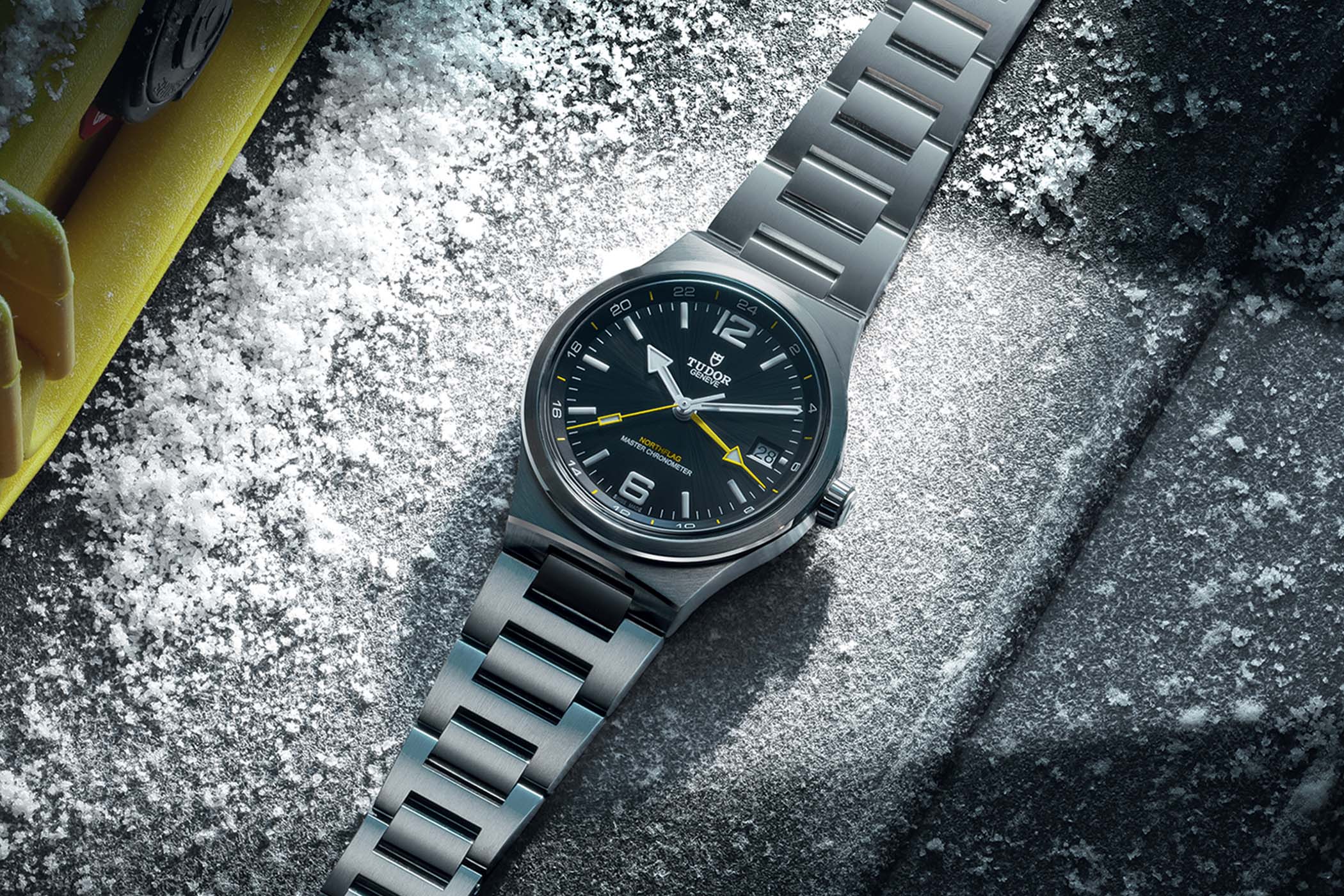
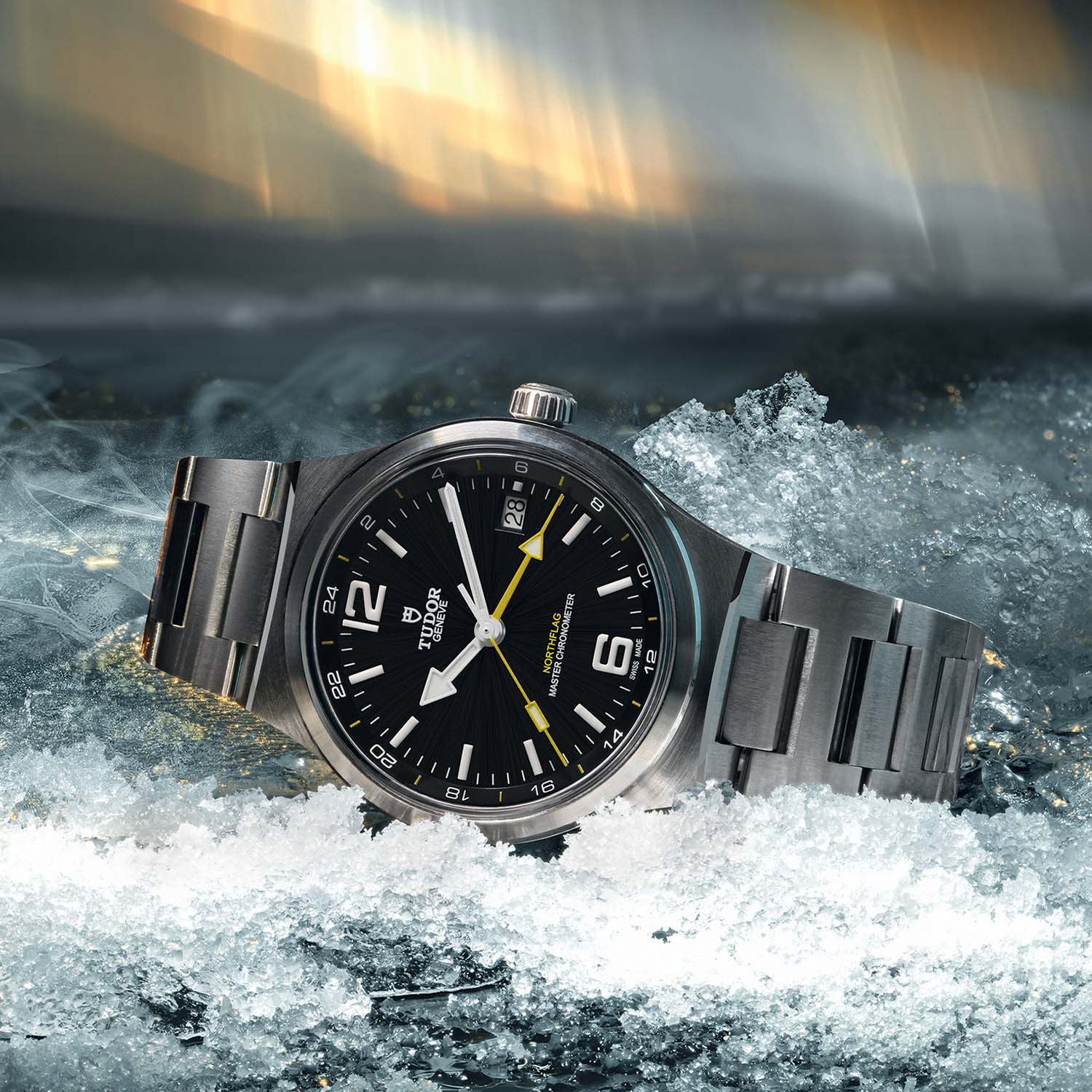
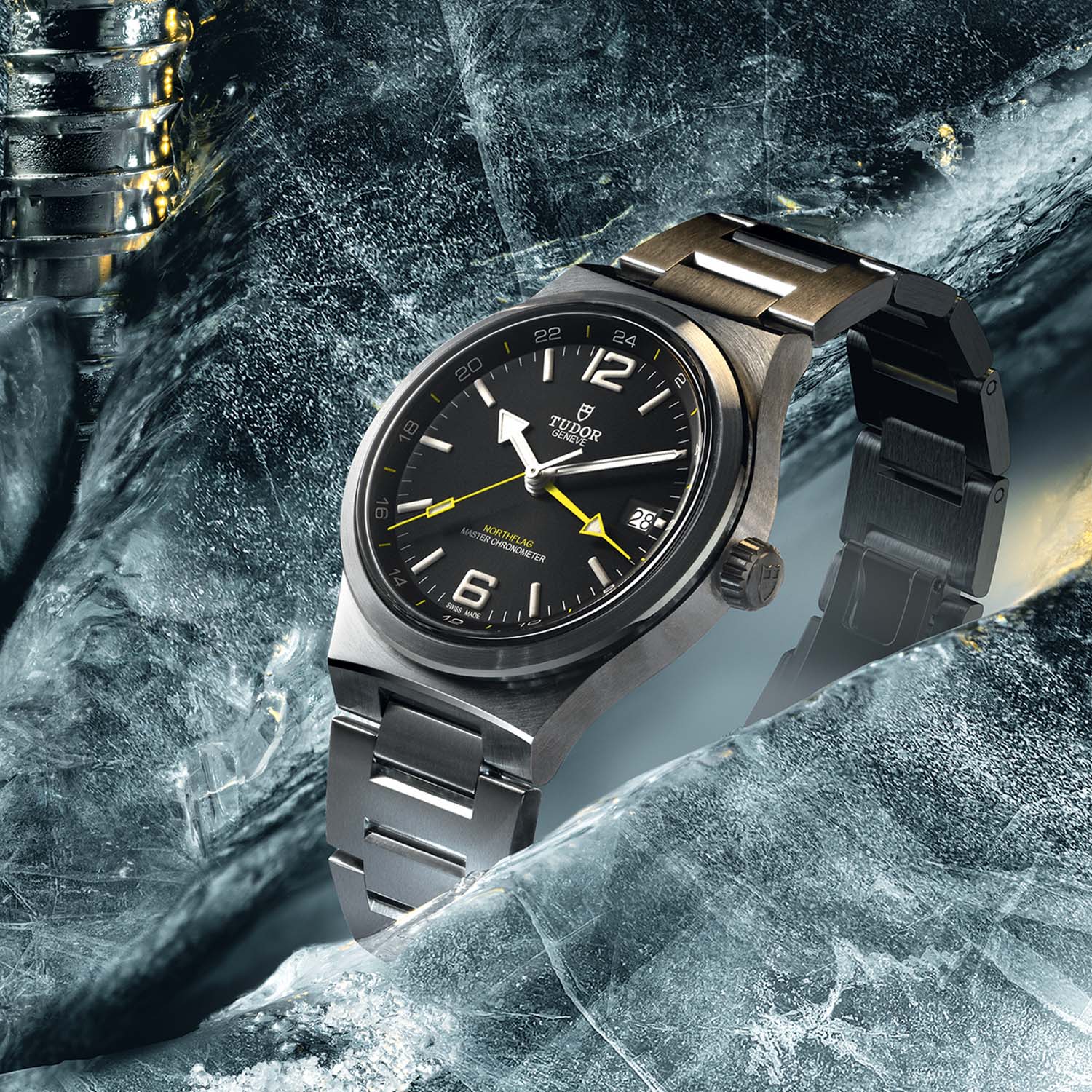
The recipe is the same, refined. The shaped case still measures 40mm across, but it is now 12.7mm thick against 13.4mm before, and the lug-to-lug has come in from 50mm to 48.8mm. Those are small numbers that add up to a watch that sits flatter and shorter on the wrist. The bezel is now fixed and angled, without the black contrasting ring the first version wore under it, and it is thinner, paired with a domed sapphire crystal that gives the whole thing a more slender profile. The crown is a more conventional screw-down design, there is sapphire on both sides, and water resistance stays at a useful 100m.
The dial, and the case for the GMT
The dial keeps the high-contrast look of the original, black with white and yellow accents, and the hour markers and numerals are made from monobloc ceramic filled with luminous material. The change that matters is the removal of the power-reserve indicator that the 2015 watch carried. In its place is a GMT function, with a yellow central hand and a fixed 24-hour scale on an inner flange. It reads as a more purposeful watch than the one it replaces, and despite adding an indication, the dial is cleaner and better defined than before. This is, as always with Tudor, a true GMT, meaning the local hour hand jumps in one-hour steps, the version a traveller actually wants.
The movement and the bracelet
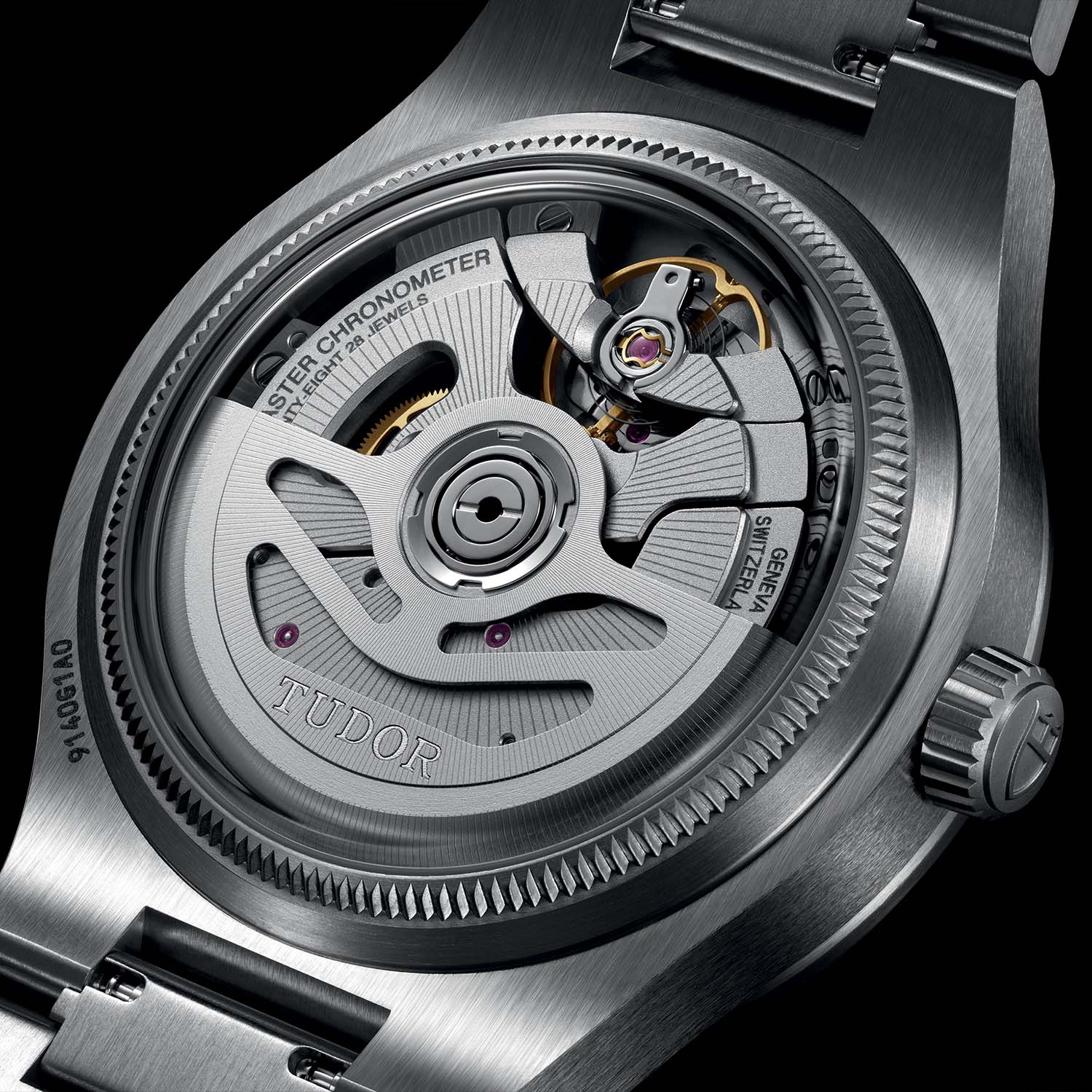
Inside is the calibre MT5652-U, made by Tudor's sister company Kenissi and certified as a Master Chronometer by both METAS and COSC. There is nothing new about it, and that is the point: it is the same architecture found in the Pelagos FXD GMT, the Black Bay Pro and the Black Bay GMT, a proven movement running at 4Hz with a 65-hour reserve and a silicon hairspring for resistance to magnetism. It is visible through the sapphire back. The watch comes on an integrated steel bracelet with H-shaped links, satin-brushed with polished accents, closed by Tudor's T-Fit quick-adjust clasp.
The Northflag GMT is part of the permanent collection, sold only through Tudor boutiques, at CHF 4,500 or EUR 5,050, under reference 9140G1A0U. Full details are at tudorwatch.com and in Monochrome's introduction. Whether the Northflag finds a wider audience this time is an open question, since the shaped-case integrated look remains a specific taste. But a genuine travel complication on a Master Chronometer movement, at this price and from this brand, is a more coherent proposition than the watch it replaces, and it corrects the one thing the original never quite justified.