The Dutch Grand Prix leaves Circuit Zandvoort this year, and TAG Heuer has marked the departure with the collection that suits it. Two Formula 1 Solargraph limited editions, unveiled at the track ahead of the race weekend of 21 to 23 August 2026, translate the orange of the Zandvoort grandstands into a watch, and in doing so bring the Formula 1 back to a case size it had at the start. The pair was covered by WatchTime on 15 August 2026 and by Time and Tide.
Back to 38mm
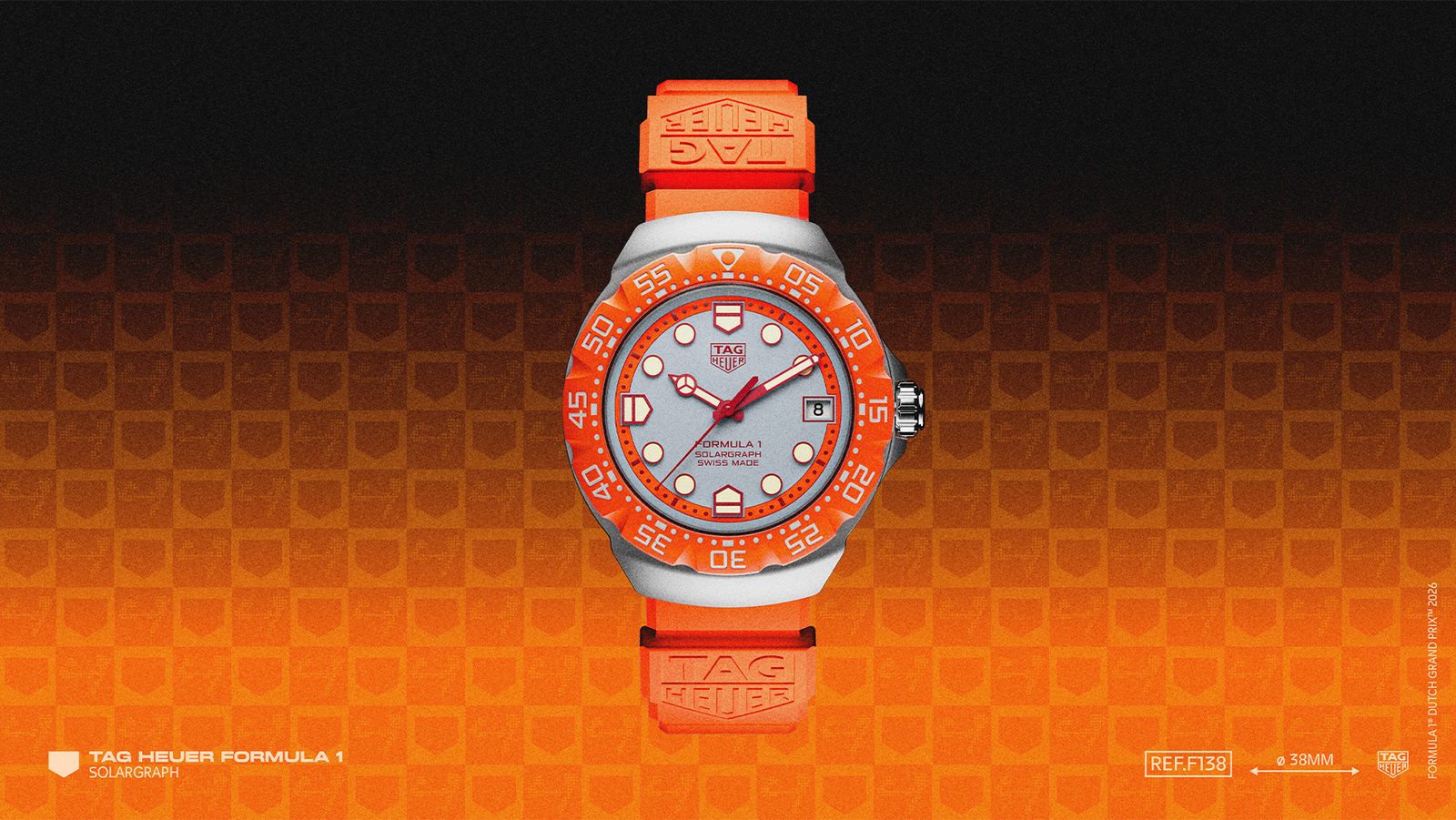
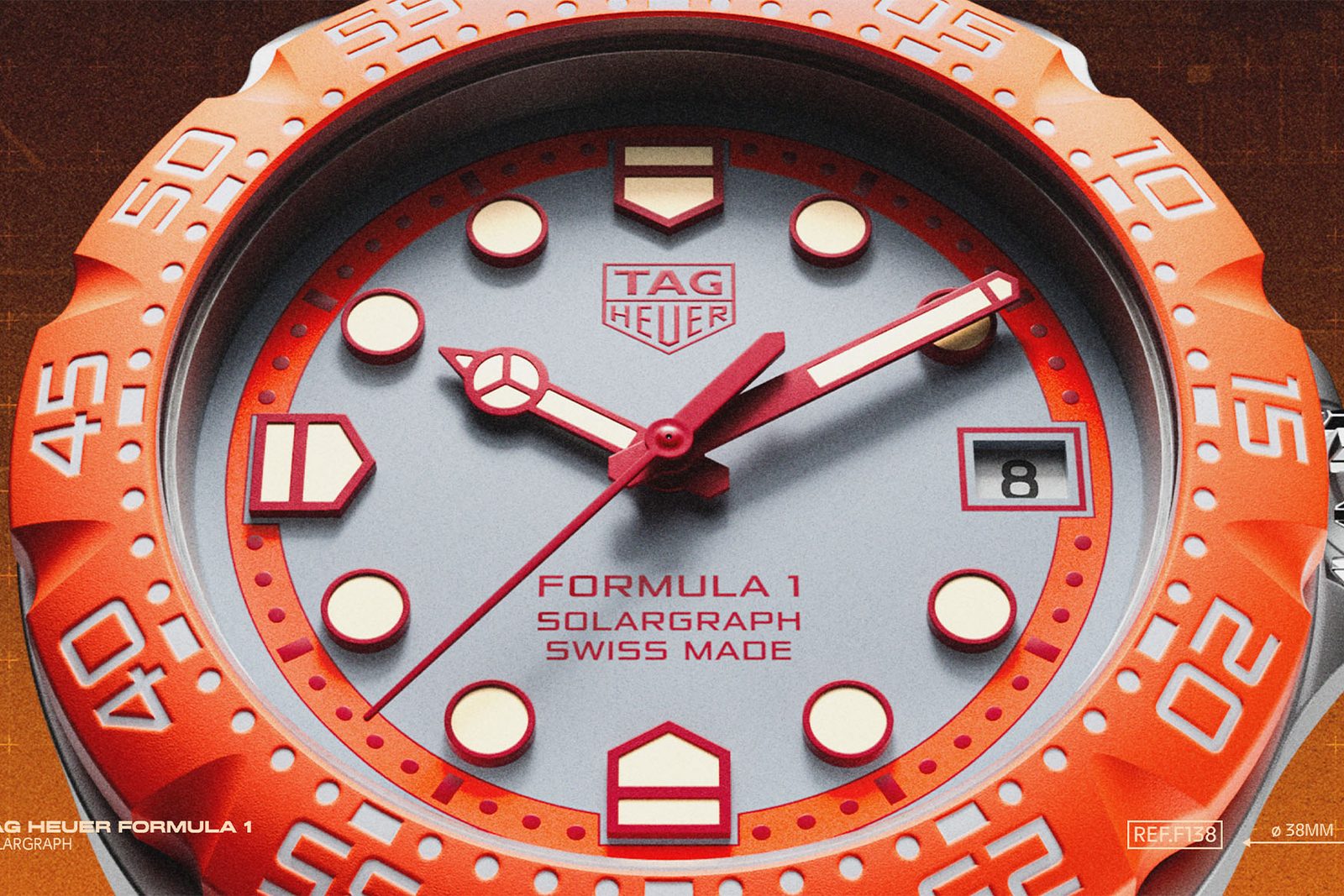
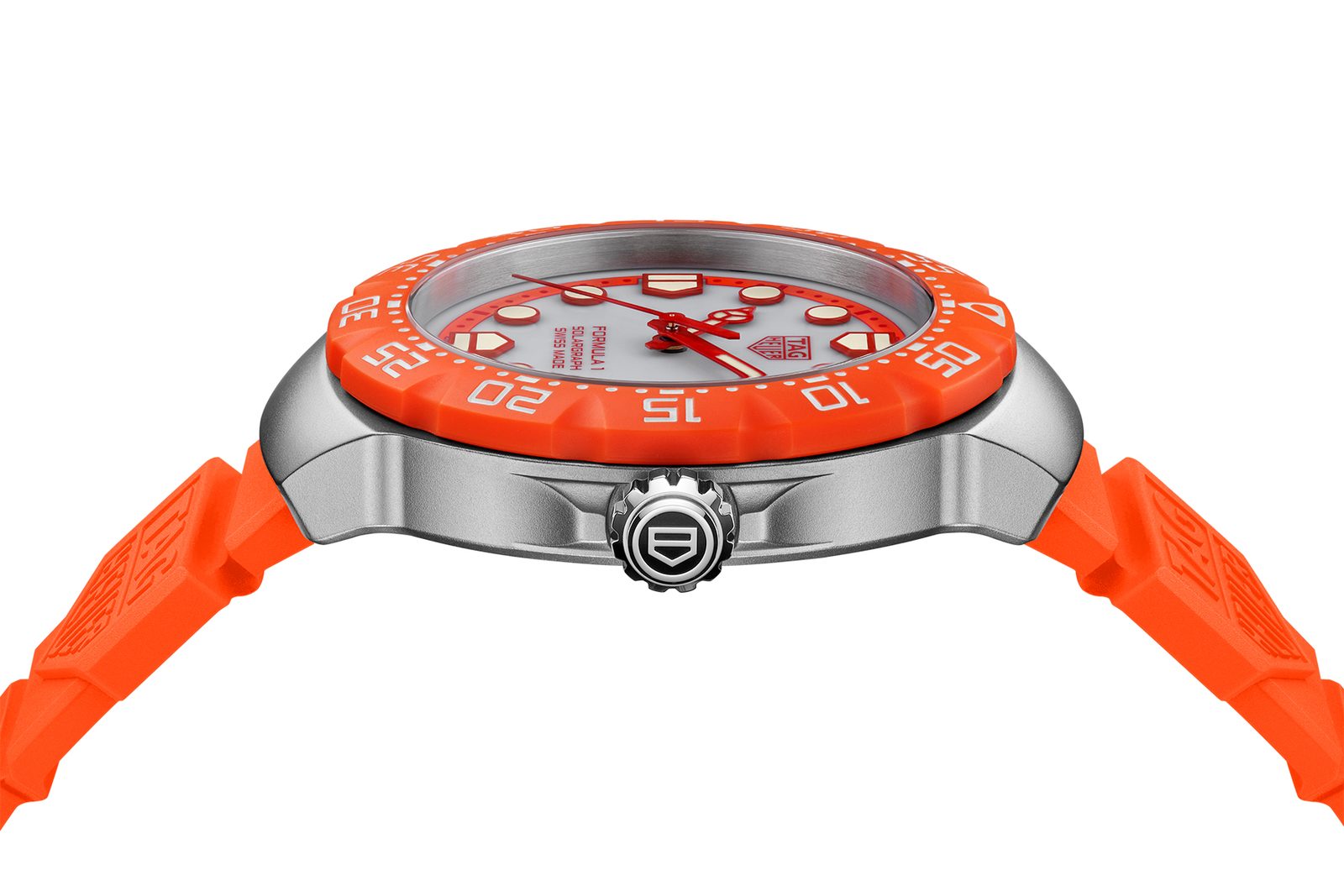
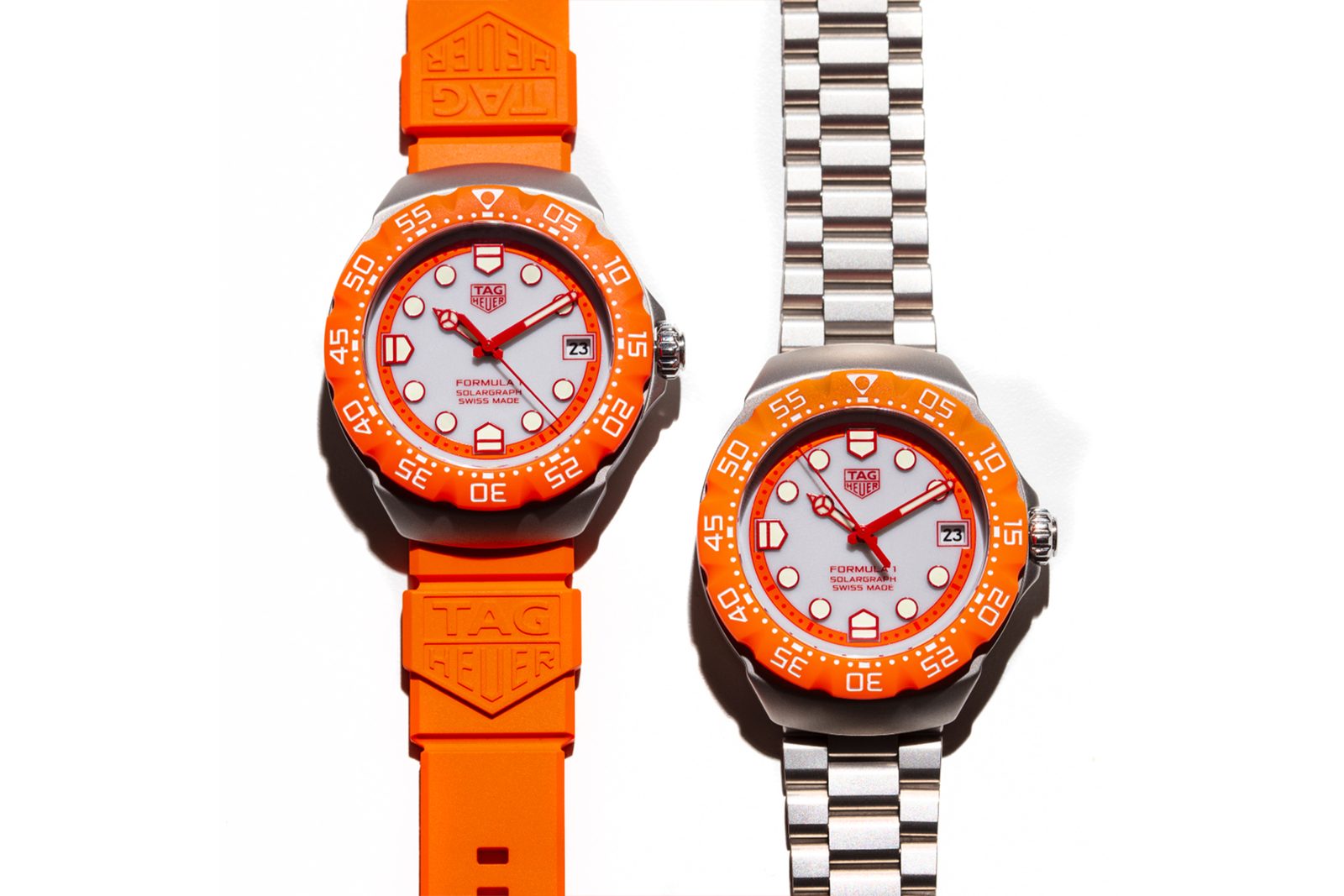
The Formula 1 launched in 1986 as a small, cheerful quartz diver, and for years it was worn at modest sizes before the line crept upward. These two editions return to a 38mm case, sandblasted steel with a matte surface. On top sits the collection's bidirectional bezel in TH-Polylight, a light and durable composite, carrying an orange sixty-minute scale. A flat sapphire crystal with anti-reflective treatment covers a grey opaline dial worked in orange and red. The applied indexes are red lacquered and filled with an eggshell Super-LumiNova that glows green, the hour and minute hands match, and the central seconds hand and the TAG Heuer shield are picked out in red. A date sits at three o'clock, and both are water resistant to 100 metres.
The palette is not arbitrary. Zandvoort runs through the dunes on the Dutch coast, with banked corners and tight sections, and its modern identity is the orange crowd that fills the stands for Max Verstappen. The watch is that crowd rendered in steel and composite, which is exactly the register the Formula 1 has always worked in.
A movement that runs on light
Both watches use the same engine, the TH50-00 Solargraph, a quartz movement that charges from natural and artificial light. TAG Heuer's figures are the appeal of the type: one minute of direct sunlight is enough for roughly a day of running, a full charge takes under 40 hours of light exposure and delivers up to ten months of autonomy in complete darkness, and ten seconds of light will restart a watch that has stopped. The accumulator is rated to last up to fifteen years. For a watch meant to be worn hard and not fussed over, a solar quartz caliber is the honest choice, and it keeps the price where the Formula 1 belongs.
Two references
The differences are in the wrist. Reference WBY111H.FT8128 is limited to 1,500 pieces and comes on an orange rubber strap with a steel pin buckle, at USD 2,150. Reference WBY111L.BA0042 is limited to 1,000 pieces and pairs the case with a three-row sandblasted steel bracelet whose folding clasp has double safety push-buttons and an adjustment-link extension, at USD 2,250. Both are available this month.
None of this is haute horlogerie, and it does not try to be. It is a well-made, light-powered sports watch tied to a specific race at a specific track that will not host this event again, priced so that the tie means more than the watch has to. As farewells go, matching the object to the moment is the right instinct.