Singer Reimagined is best known for the Track1, a chronograph that reads time from the centre of the dial and looks like nothing else. The Heritage V72 is the opposite instinct. Instead of a new movement wrapped in a new idea, Singer has taken an old one, a genuine Valjoux 72, and spent its effort bringing it back rather than replacing it. Monochrome covered the launch on 6 August 2026, with full specifications and pricing.
A movement older than the brand
The Valjoux 72 is one of the reference points of twentieth-century chronograph history. A tricompax, column-wheel, manual-winding calibre, it arrived in 1938 as an evolution of the two-register Valjoux 23 and stayed in production until 1974. Across those 36 years it powered a long list of golden-era chronographs from Rolex, Breitling, Heuer, Universal Genève, Jaeger-LeCoultre and Longines, which is why it turns up so often in vintage sales today.
Singer's approach borrows directly from its sister company, Singer Vehicle Design, which restores and reworks the Porsche 911 rather than building a car from scratch. The watch side did the same thing in 2025 with the first Heritage Chronograph, based on a restored Valjoux 236. The V72 continues that logic with a more storied base calibre. As Singer frames it, the goal was not to revive an industrial workhorse but to take a known machine and give it a second life, which is a tidy way of describing a restomod.
What restoration actually means here
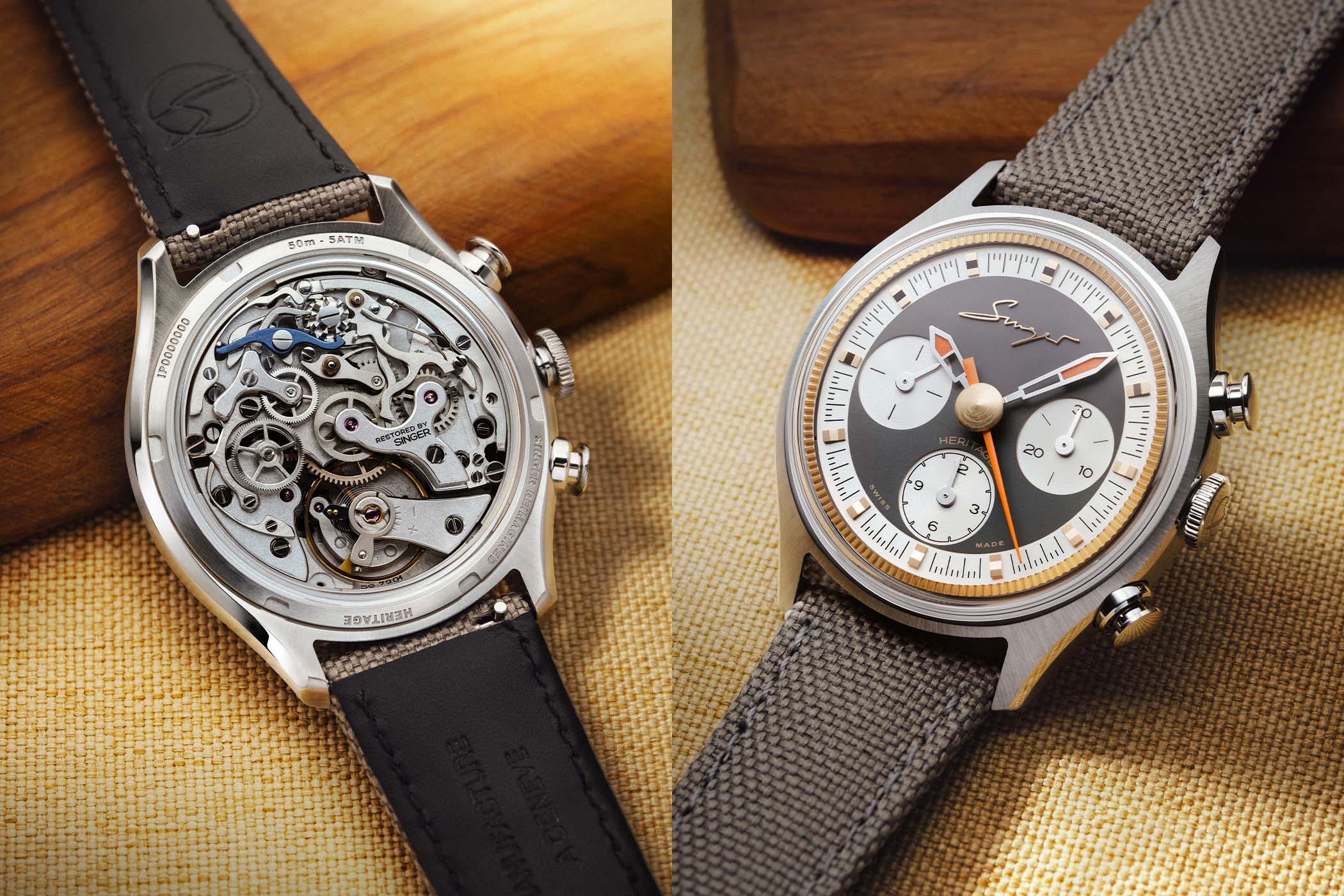
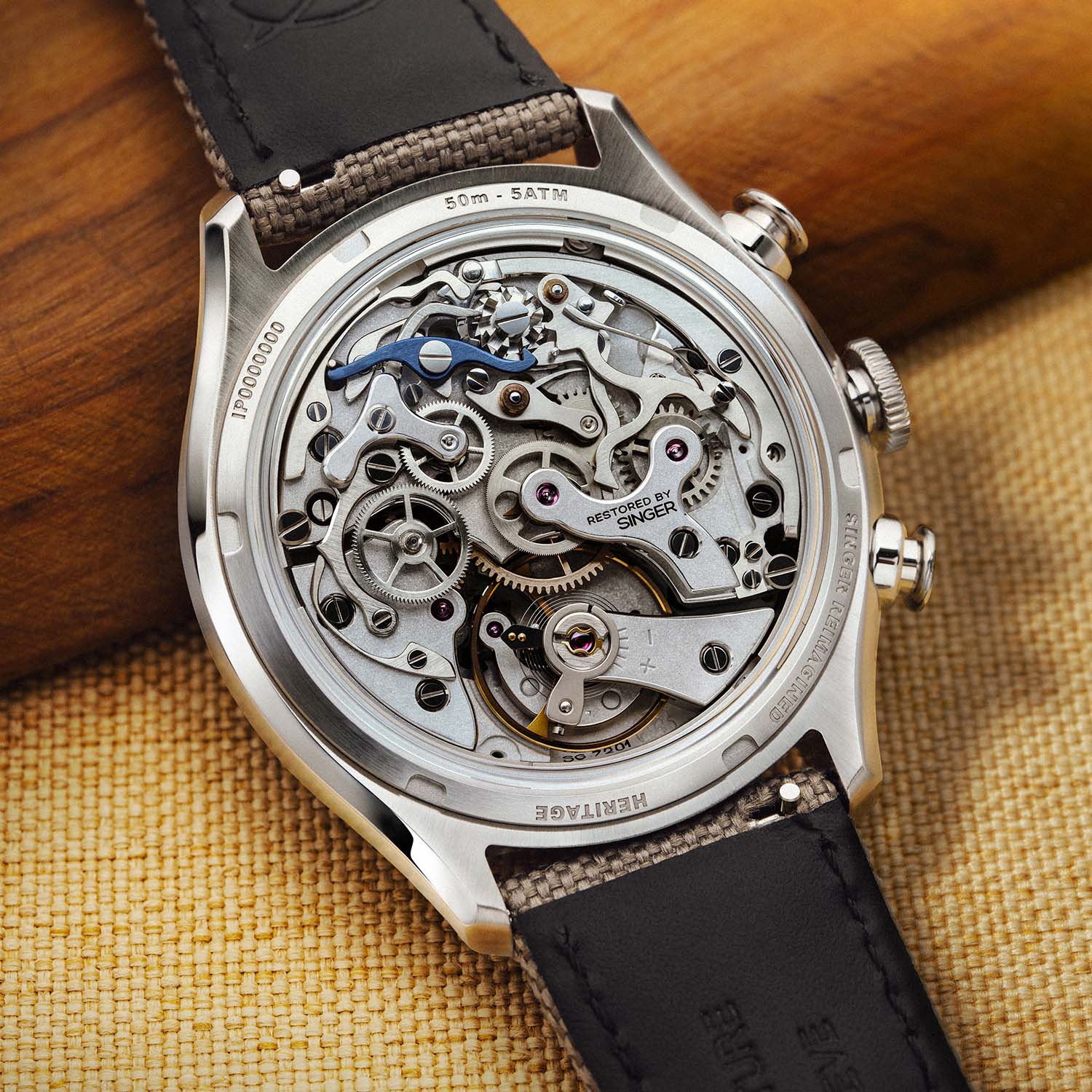
Singer starts with pristine, unused new-old-stock Valjoux 72 movements and rebuilds them past their original manufacturing standard. The bridges are frosted for a matte finish, the chamfers and screws are hand-polished, the steel parts are rhodium-plated, and the switch component gets a blue ALD coating that stands out against the grey. The Y-shaped chronograph bridge that spans the geartrain now carries a "Restored by Singer" inscription, which is visible through the caseback.
What has not changed are the working numbers. The calibre, renamed SG7201, keeps the original 18,000vph beat rate and 44-hour power reserve, with 166 parts and 17 jewels. This is the honest part of the exercise: the finishing is elevated, but the mechanism is period-correct rather than modernised.
The case and dial
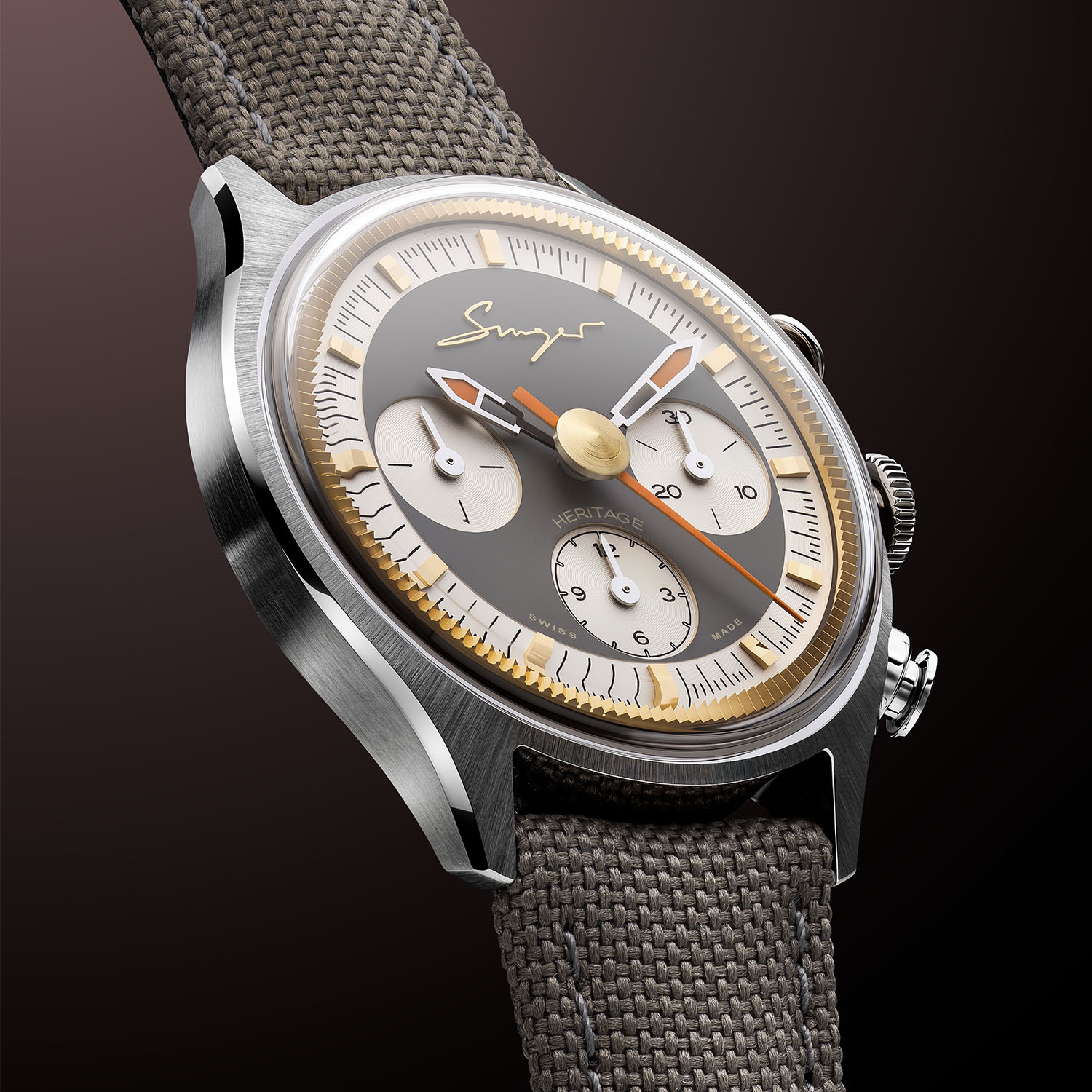
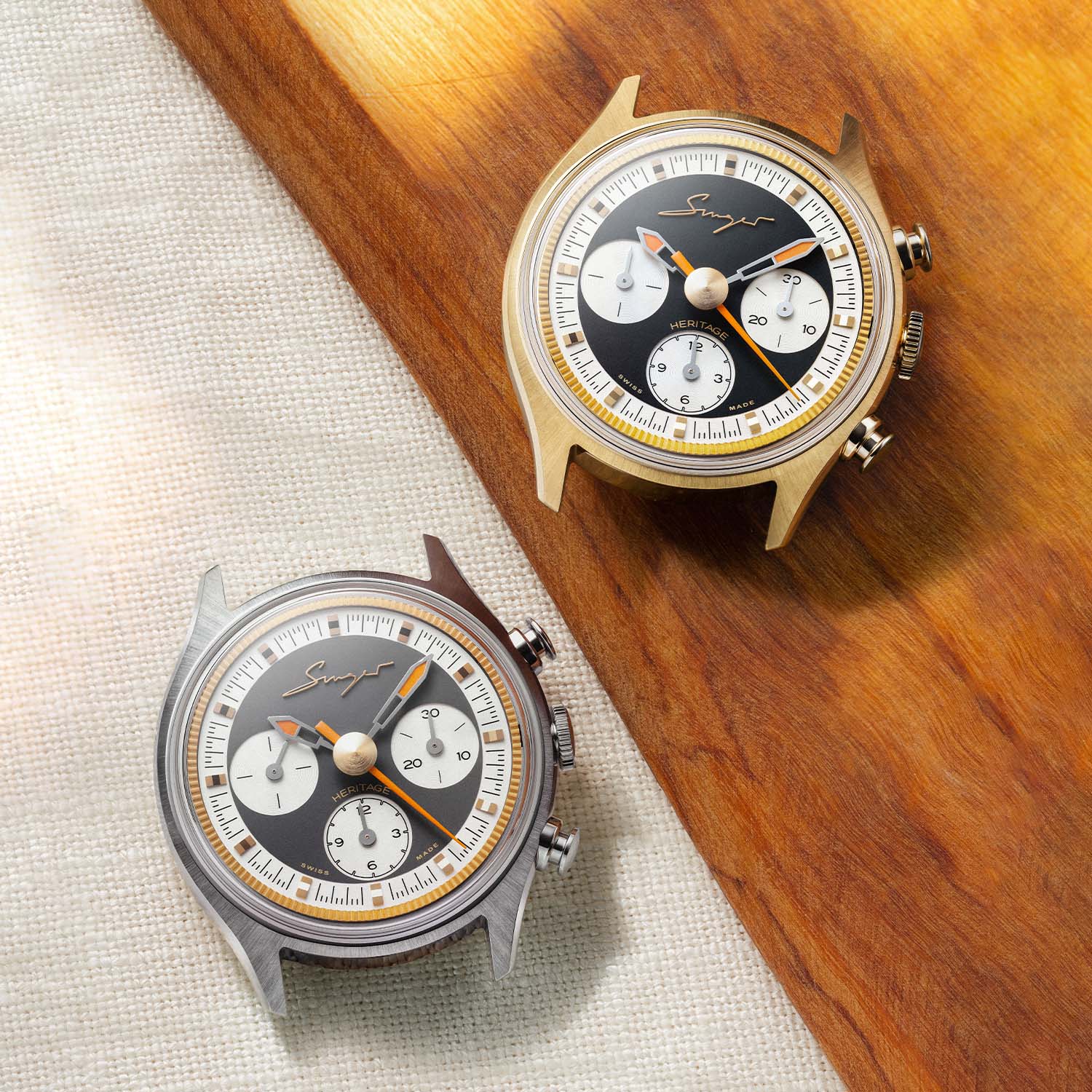
The case measures 38.8mm across and 13.25mm thick, in the brand's Heritage style with vintage piston-shaped pushers, a flat fluted crown and glassbox sapphire crystals front and back. Water resistance is 50 metres. It comes in stainless steel or solid 18k yellow gold, both satin-finished with polished bevels.
The dial keeps the signature Singer touches, framed by a golden toothed flange and laid out in the classic Valjoux 72 three-register pattern: a 30-minute counter at 3, a 12-hour totaliser at 6 and running seconds at 9. The steel model has a stone-grey background, the gold a matte black, and both use champagne snailed sub-dials with applied golden markers. The sword hands carry orange Super-LumiNova to match the orange central chronograph seconds hand, which is the one loud note on an otherwise restrained face. The steel reference (SR621) ships on a grey textile strap, the gold (SR620-1) on black grained leather.
Price is the argument
This is where the Heritage V72 divides opinion. The steel version is limited to 50 pieces at CHF 23,000 before tax, the gold to 20 pieces at CHF 45,000, with deliveries from early November 2026. Set against a used Valjoux 72 chronograph, or against other small makers fitting restored versions of the same calibre for a fraction of the price, those figures ask a lot.
The counter-argument is that you are not paying for the movement so much as for the labour and finishing lavished on it, plus the Singer name. Whether that is worth the premium is a judgement each buyer will make for themselves. What is not in dispute is that the watch is well made and that the object of the exercise, showing a familiar old calibre at its best, has been achieved.