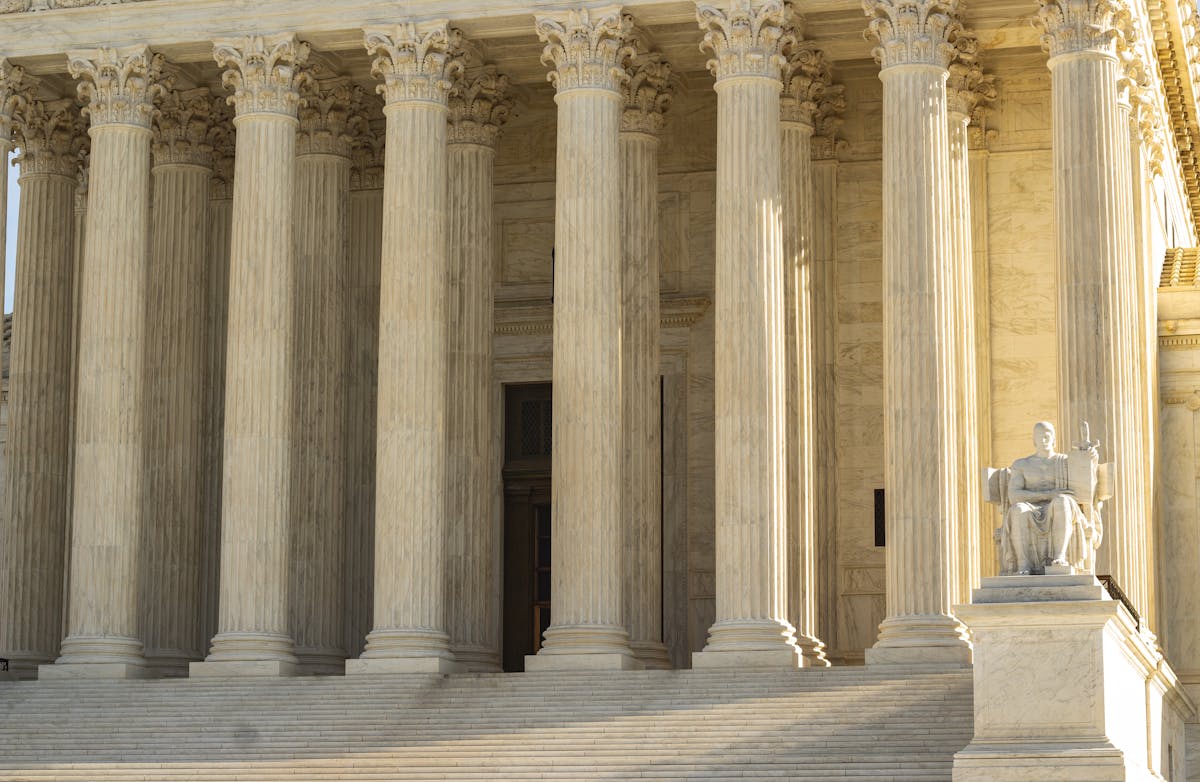
On February 20, the U.S. Supreme Court struck down President Trump's use of emergency powers to impose sweeping import tariffs, including the 15% levy on Swiss goods that directly affected every major watch brand selling in America. The 6-3 ruling in Learning Resources, Inc. v. Trump found that the International Emergency Economic Powers Act (IEEPA) does not grant the president authority to impose tariffs.
For the watch industry, this should have been straightforward good news. It wasn't.
The legal pivot
Within hours of the ruling, the White House pivoted. The administration announced a new 10% surcharge under Section 122 of the Trade Act of 1974, which allows the president to impose temporary global tariffs capped at 15% for a maximum of 150 days, unless Congress votes to extend them.
So the tariff landscape shifted, but didn't disappear. Swiss watches went from a 15% IEEPA tariff (itself a reduction from the original 39%) to a 10% Section 122 surcharge. The legal basis changed. The practical impact for consumers barely moved.
Why prices aren't coming down
Even before the Supreme Court ruling, the damage was largely baked in. Rolex, Audemars Piguet, and Tudor all raised U.S. prices at the start of 2026, with increases averaging around 7% in the States. These adjustments weren't just about tariffs. Record gold prices, global inflation, and a weaker dollar all contributed.
Watch brands don't typically reverse price increases. In the luxury market, prices are sticky on the way up and rigid on the way down. A brand that cuts prices risks signaling weakness to its dealer network and collector base. The tariff gave brands cover to raise prices. The Supreme Court ruling won't give them a reason to lower them.
The 150-day clock
The Section 122 authority has a built-in expiration. Without Congressional action, the 10% surcharge lapses after 150 days, which puts the deadline somewhere around mid-July 2026. At that point, the administration would need either a new legal theory or bipartisan legislation to maintain any tariff on Swiss imports.
Given the current political landscape, neither outcome is certain. Watch brands and authorized dealers are treating the situation as temporary but planning as if it's permanent.
What it means for buyers
If you're buying a Swiss watch in the U.S. right now, you're paying more than you would have two years ago, and roughly the same as you were in January. The Supreme Court ruling changed the law. It didn't change the price tag.
For anyone tracking values over time, this is worth noting. The tariff era compressed retail-to-resale margins on many models, particularly in the $5,000 to $20,000 range where price sensitivity is highest. Whether those margins recover depends less on the courts and more on whether brands hold the line on future increases.
Sources
- Supreme Court strikes down tariffs - SCOTUSblog
- What the Supreme Court's tariff ruling changes, and what it doesn't - PIIE
- Impact of Supreme Court Tariff Decision on Watch Prices - Collective Horology
- Rolex, Audemars Piguet, and Tudor Have All Raised Watch Prices in 2026 - Robb Report
- U.S. Supreme Court Issues IEEPA Tariff Decision - Sidley Austin LLP