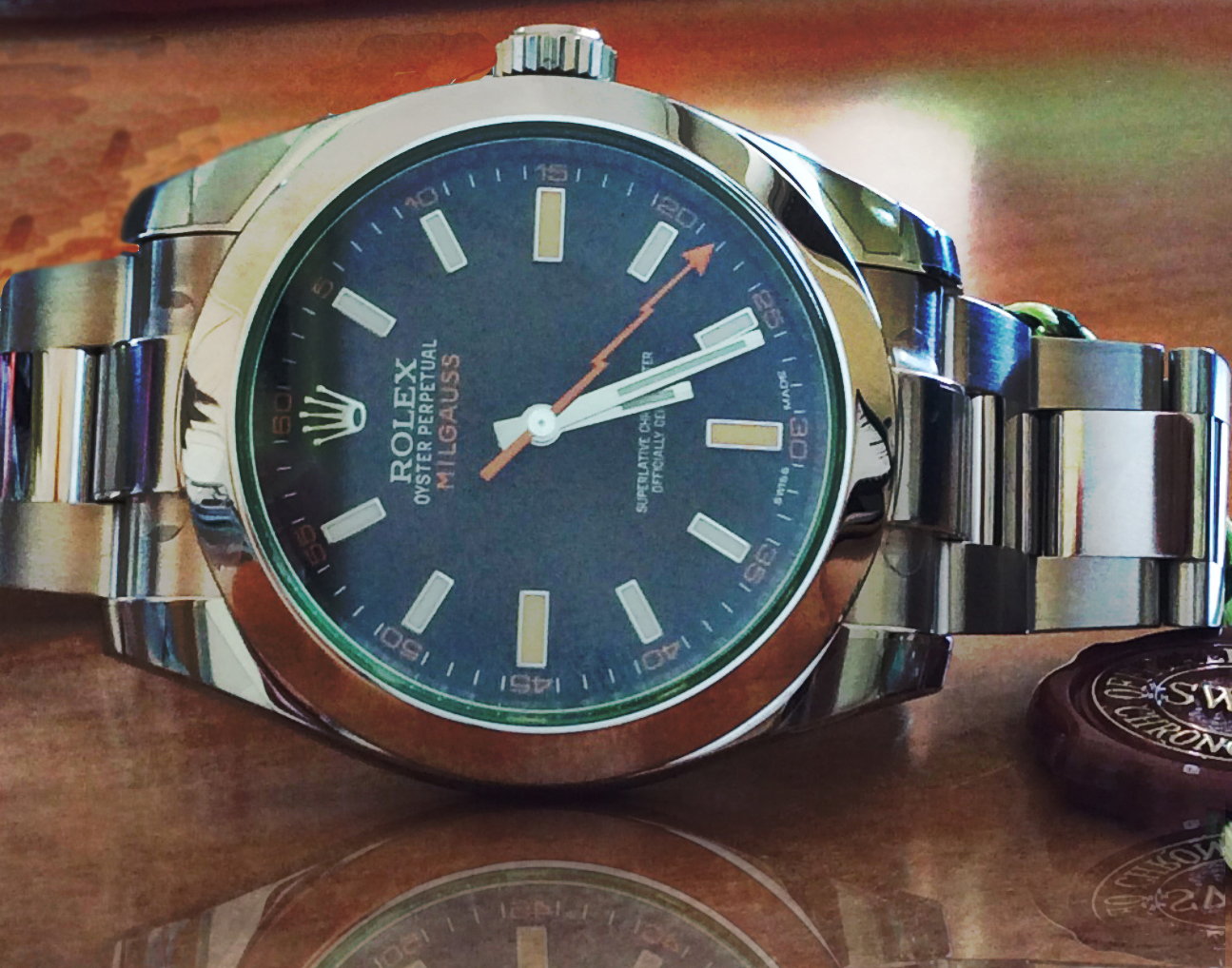
Rolex quietly discontinued the Milgauss in 2023. No announcement, no farewell edition. The reference 116400GV, with its green sapphire crystal and lightning bolt seconds hand, simply vanished from the catalog. For a watch born in 1956 to resist magnetic fields in scientific laboratories, it was an oddly silent exit.
Three years later, two things line up. The Milgauss turns 70. And Rolex filed a patent on September 30, 2025, for a new process to produce colored sapphire crystals.
A brief history of 1,000 gauss
The Milgauss wasn't designed for collectors. It was designed for scientists. In 1956, researchers at CERN and other physics laboratories needed a watch that could survive the stray magnetic fields generated by their equipment. A magnetic field of 1,000 gauss is enough to derail a mechanical watch's timekeeping. Rolex solved it with the reference 6541: a steel sport watch with an inner Faraday cage that isolated the movement from the environment.
The watch was tough, austere, and famously practical. It sat in the catalog for decades, quietly serving its purpose. Then came the design refresh. In 1988, Rolex discontinued the Milgauss. The magnetism problem, as it turned out, was being solved in laboratories by quartz watches and digital tools. The tool watch for scientists no longer existed in Rolex's collection.
For nearly two decades, the Milgauss disappeared entirely. Its comeback came in 2007, when Rolex reintroduced it as the reference 116400GV. This time, the watch arrived with a green sapphire crystal, a lightning bolt seconds hand that became instant visual shorthand for the model, and a freshly engineered Faraday cage inside the new Caliber 3131 movement. Rolex positioned it as a neo-vintage piece, nodding to the watch's scientific heritage while clearly pitching it at enthusiasts instead of lab techs.
That decision worked. The 2007 reintroduction launched what became a genuine cult following. The Milgauss became the watch for people who loved its contradiction: a tool watch that never quite got the chance to be a tool, loved because it was honest about what it did and who it was designed for. The lightning bolt seconds hand became one of watchmaking's most iconic micro-details.
The patent
The filing, first noted by Fratello Watches, describes a method for creating tinted sapphire watch glasses with more consistent color distribution than previous techniques. The classic green sapphire crystal was the Milgauss's most recognizable feature in its final generation. Previously, Rolex created the green color by adding iron oxide to sapphire during the Verneuil process, but achieving uniform color across the full crystal was notoriously difficult. Batches would vary. Some crystals came out too pale, others too rich. The new patent apparently solves this consistency problem, suggesting Rolex can now produce green sapphire crystals that look identical from dial to bezel.
Rolex wouldn't patent improved colored sapphire technology unless it planned to use it. That alone raises the question: is a green Milgauss really coming?
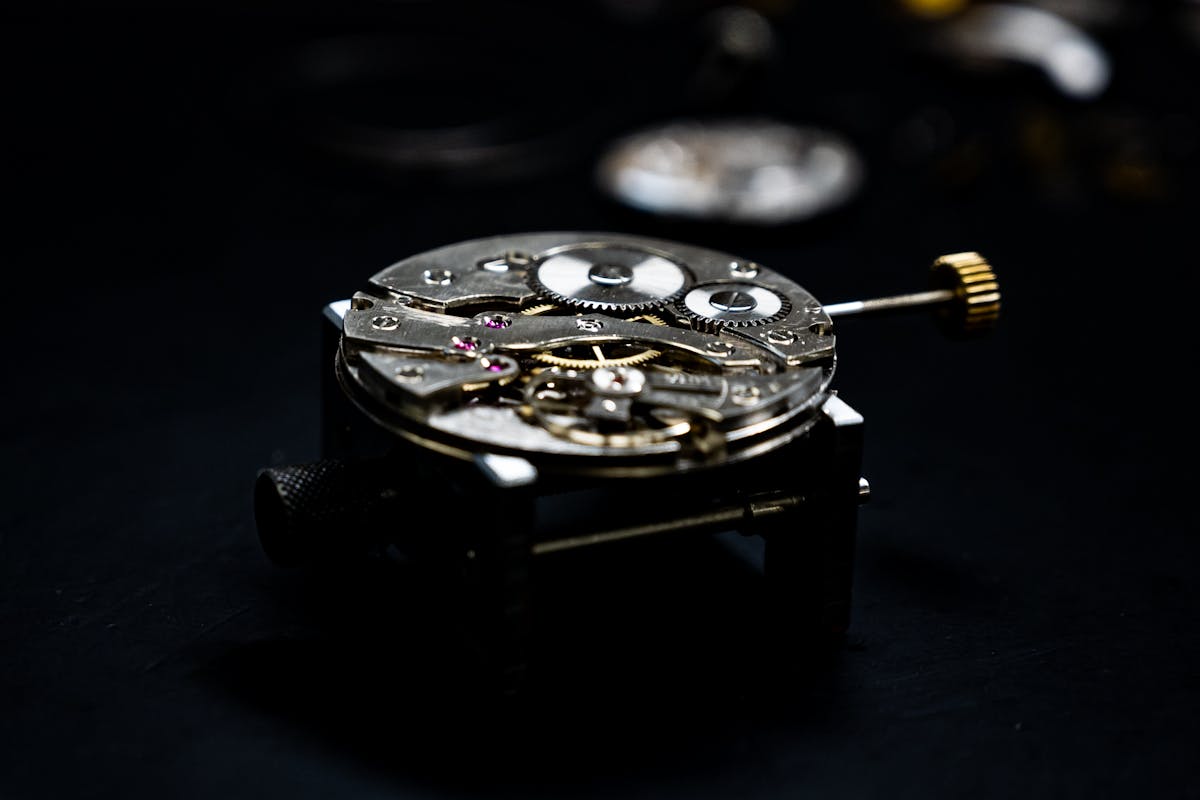
Chrono24's editorial team, analyzing the patent alongside Rolex's recent movement development, noted that the Caliber 7135 Dynapulse is inherently antimagnetic. Unlike its predecessors, it doesn't require a Faraday cage, which means a potential new Milgauss could be significantly thinner than the 116400GV while maintaining the same magnetic resistance. The Kettle Club made a similar observation: the technical barrier that made the Milgauss thick and somewhat divisive no longer exists.
The Dynapulse advantage
The Caliber 7135 Dynapulse represents a fundamental shift in how Rolex approaches magnetic resistance. The movement uses a paramagnetic Chronergy escapement and a nickel-phosphorus hairspring. Paramagnetic materials don't retain magnetization the way ferrous metals do. When a magnetic field passes through them, they respond momentarily but don't hold onto that magnetism once the field is gone. That's why a nickel-phosphorus hairspring can work near powerful magnetic fields without losing its shape or its ability to regulate timekeeping the way a traditional steel hairspring would. The escapement works the same way, which means the entire movement resists magnetism at a fundamental material level.
This is different from the old Faraday cage approach. The 116400GV used a soft iron inner case to shield the movement from external magnetic fields, the way a cage shields whatever's inside. The Dynapulse doesn't need that shield. It's resistant from the inside out. That design freedom means a new Milgauss could wear like a modern sport watch instead of feeling dense and compact.
What collectors are doing
Secondary market behavior gives some clues about what happens next. The 116400GV began climbing gently in price after Rolex discontinued it in late 2023. WatchCharts and CronoGraph data show the reference trending upward through 2024 and into 2026, a slower pace than you'd see with a truly scarce reference, but steady enough. The Z-Blue dial version commands a slight premium over the standard black, typically 5 to 8 percent, because it was rarer in production.
A reintroduction cuts both ways for current owners. If Rolex releases a new Milgauss at Watches and Wonders, secondary market prices for the 116400GV will likely cool as buyers move to the new reference. That could sting for anyone who bought in expecting scarcity premium. But it also means the watch stays alive as a tool instead of becoming just an artifact of the past.
What the rumor mill says
Speculation, aggregated across Monochrome Watches, WatchGuys, and Chronohunter, points to a possible reference 126400. The predicted design would share its basic case architecture with the modern Air-King: polished bezel, crown guards, and the 32xx/71xx movement family. If accurate, the new Milgauss would look cleaner and wear smaller than the model it replaces.
Fratello's prediction piece went further, suggesting Rolex might use the anniversary to position the Milgauss as a more versatile daily wear piece rather than a niche tool watch for scientists. That would be consistent with how Rolex repositioned the Explorer and Air-King in recent years.
The market context
The timing matters for another reason. Secondary market prices for discontinued Rolex references tend to follow a predictable pattern: initial decline, followed by a slow climb as remaining supply dries up. The 116400GV has been on a gentle upward trend since late 2024, according to WatchCharts data. A reintroduction with a new reference would likely cool those prices while generating its own waitlist.
None of this is confirmed. Rolex doesn't telegraph its releases, and the brand has a long history of letting speculation run wild before doing something entirely different. But the patent is real, the anniversary is real, and Watches and Wonders opens in exactly one week.
If the Milgauss does return on April 14, it won't just be a 70th anniversary celebration. It'll be the first watch in the current Rolex lineup designed from the ground up around the Dynapulse movement's magnetic resistance. That's worth paying attention to, regardless of what color the crystal turns out to be.
Sources: Fratello Watches, Monochrome Watches, Chrono24 Magazine, WatchGuys, Chronohunter, The Kettle Club.