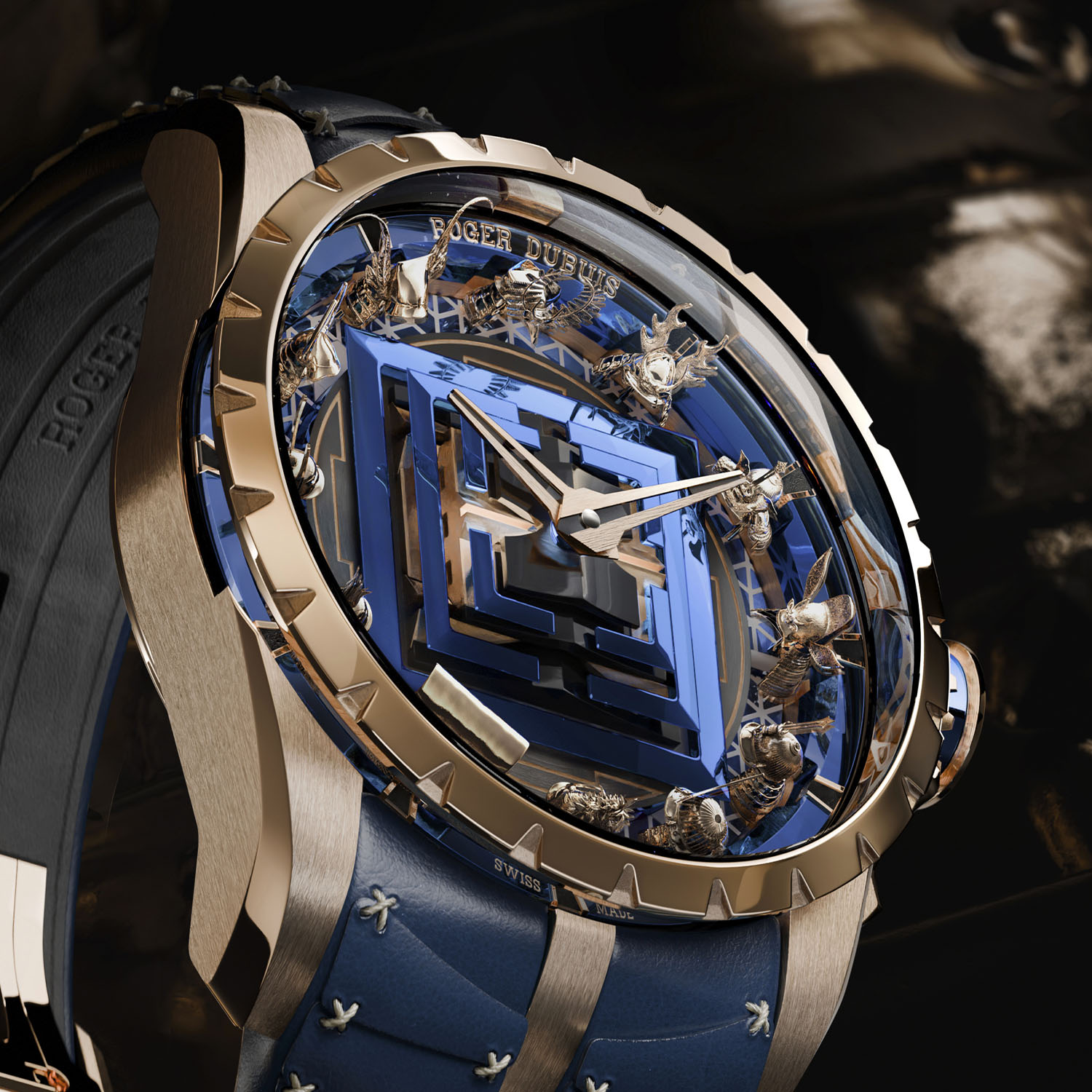
Roger Dubuis has a house trick that it returns to every so often, and it is one of the more theatrical ideas in modern watchmaking. Twelve small sculpted figures are arranged around the dial, standing in for the knights of Arthurian legend, gathered at a round table under the Excalibur name. The concept first appeared in 2013 and has been revisited several times since, most recently with an Enchanter Merlin edition in 2025. The new Excalibur Kabuto Legacy, reference RDDBEX1139, keeps the format and moves it a long way east, to 17th-century Japan.
Twelve helmets instead of twelve knights
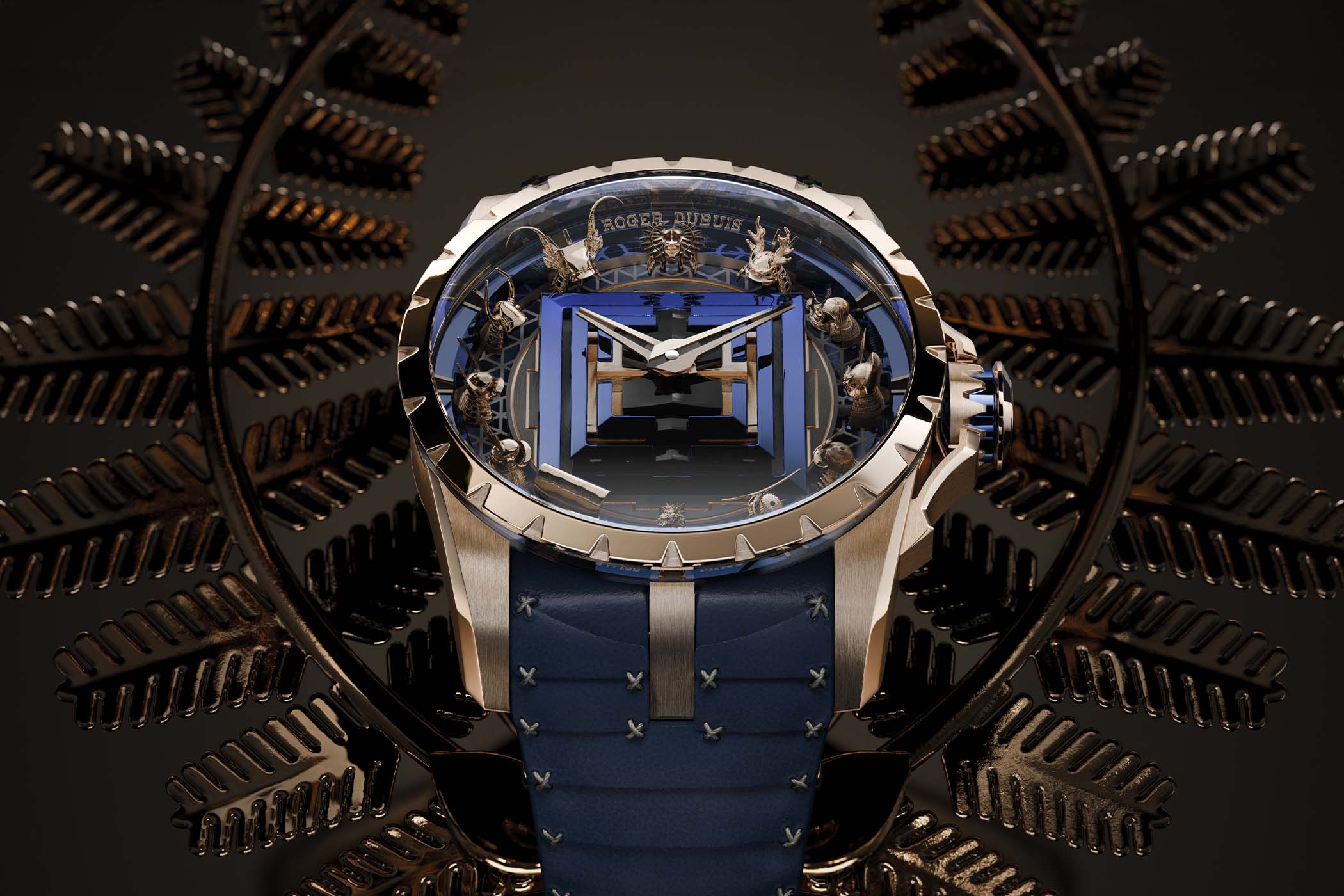
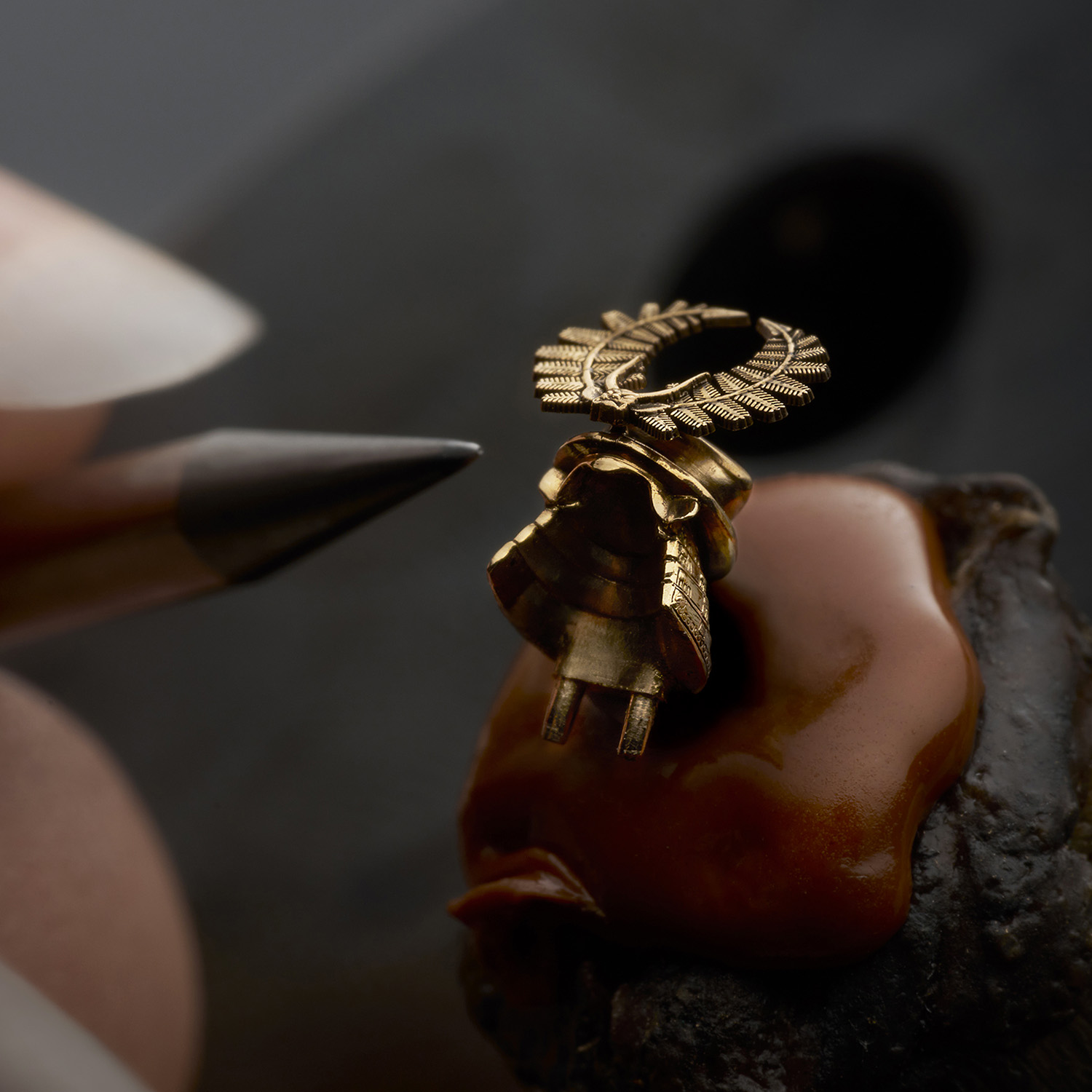
In place of the knights are 12 kabuto, the crested helmets worn by samurai. Each one is a hand-engraved piece of 18k pink gold, and each is modelled on a real commander from the early Edo period rather than a generic warrior. Three are easy to pick out even if you know nothing about the period. Tokugawa Ieyasu, who founded the shogunate, is represented by a helmet with a fern crest. Honda Tadakatsu, one of his most famous generals, carries the tall deer antlers he was known for. Date Masamune wears the crescent moon that appears on almost every portrait of him. Roger Dubuis did not do this from memory. It worked with Frederik Cryns, a professor of Japanese history and a consultant on the Emmy-winning series Shogun, to make sure the crests and the story behind them were accurate.
An Edo Castle at the centre
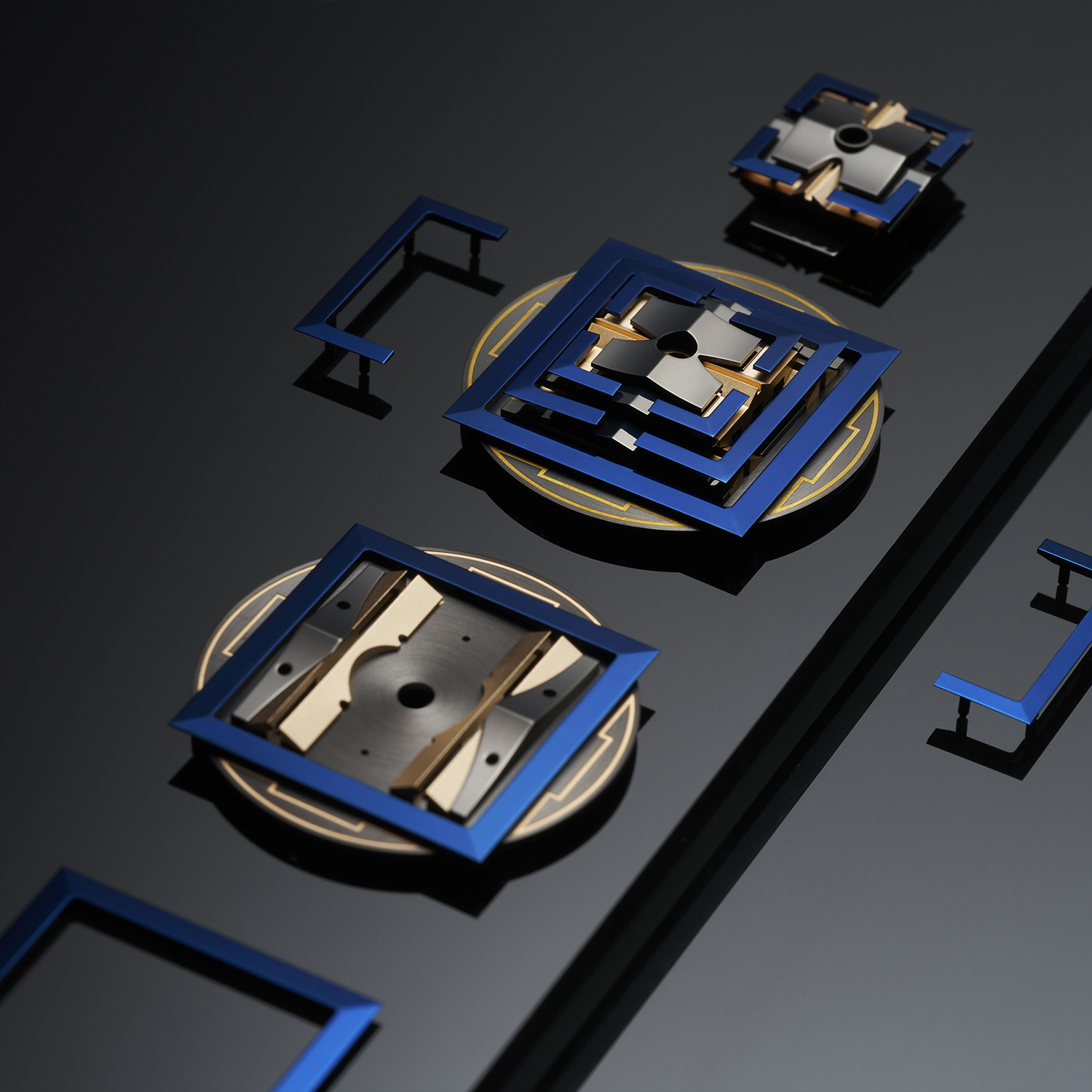
Where the knights' table would sit, there is instead an abstract rendering of Edo Castle, the seat of Tokugawa power and the building that gave modern Tokyo its start. It is not a single cast piece. Roger Dubuis assembled it from 17 separate elements in pink gold, black PVD and deep blue CVD, layered and finished in several ways, from polished to shot-blasted, so that light behaves differently across the structure as the watch moves. The blue is the point of contact between the two cultures the watch is trying to bridge. It is drawn from indigo, the dye used on samurai garments and across Japanese textiles, and it carries through to the strap and the caseback.
The case and the movement
For all the decoration, this is still recognisably an Excalibur. The 45mm case is 18k pink gold and 16.87mm thick, with the collection's fluted bezel and the signature third central lug at six o'clock. Water resistance is a dress-watch 30 metres, which tells you where this piece is meant to spend its life. The crown carries a blue enamel ring, and the open caseback is framed by a blue-coated pink-gold ring laser-engraved with the crests of all 12 commanders, so the theme continues even when the watch is off the wrist.
The movement is the calibre RD821, an in-house automatic with a central rotor. It carries the Poinçon de Genève, the Geneva hallmark that governs both finishing and function, and Roger Dubuis quotes 172 components, 33 jewels, a 4Hz balance and a 48-hour power reserve, with 14 separate in-house finishing techniques applied across the piece. It shows hours and minutes only, which is the right call. On a dial this busy, a running seconds hand or a date would be noise.
Where it sits
The watch comes on a blue calfskin strap with stitched leather tiles that echo the lacing of samurai armour, with a second leather strap in the box and an 18k pink-gold triple folding buckle with a quick-release system. It is limited to 28 pieces, and the price is available on request. Monochrome expects it to land around CHF 300,000, which places it firmly in the collector-commission territory this series has always occupied.
The Kabuto Legacy is not a watch most people will ever handle, and it does not pretend otherwise. What makes it worth writing down is the discipline behind the excess. A concept that could have been a costume exercise instead gets a historian on the payroll, 12 accurate crests, and a castle built element by element. The result is closer to miniature sculpture than to horology in the usual sense, which is more or less where this series has always wanted to be. There is more at rogerdubuis.com.