Piaget has always made two arguments at once. Founded in 1874 by Georges-Edouard Piaget in the village of La Cote-aux-Fees, the house made its name first on high-precision movements and then on ultra-thin ones, and it has spent the century and a half since proving it can fit a complication into a case slimmer than the complication is supposed to allow. It has done this with the tourbillon, the perpetual calendar and the minute repeater. It has now taken the last of those, previously housed in the Emperador Coussin, and moved it into the Polo.
A repeater in a sports case
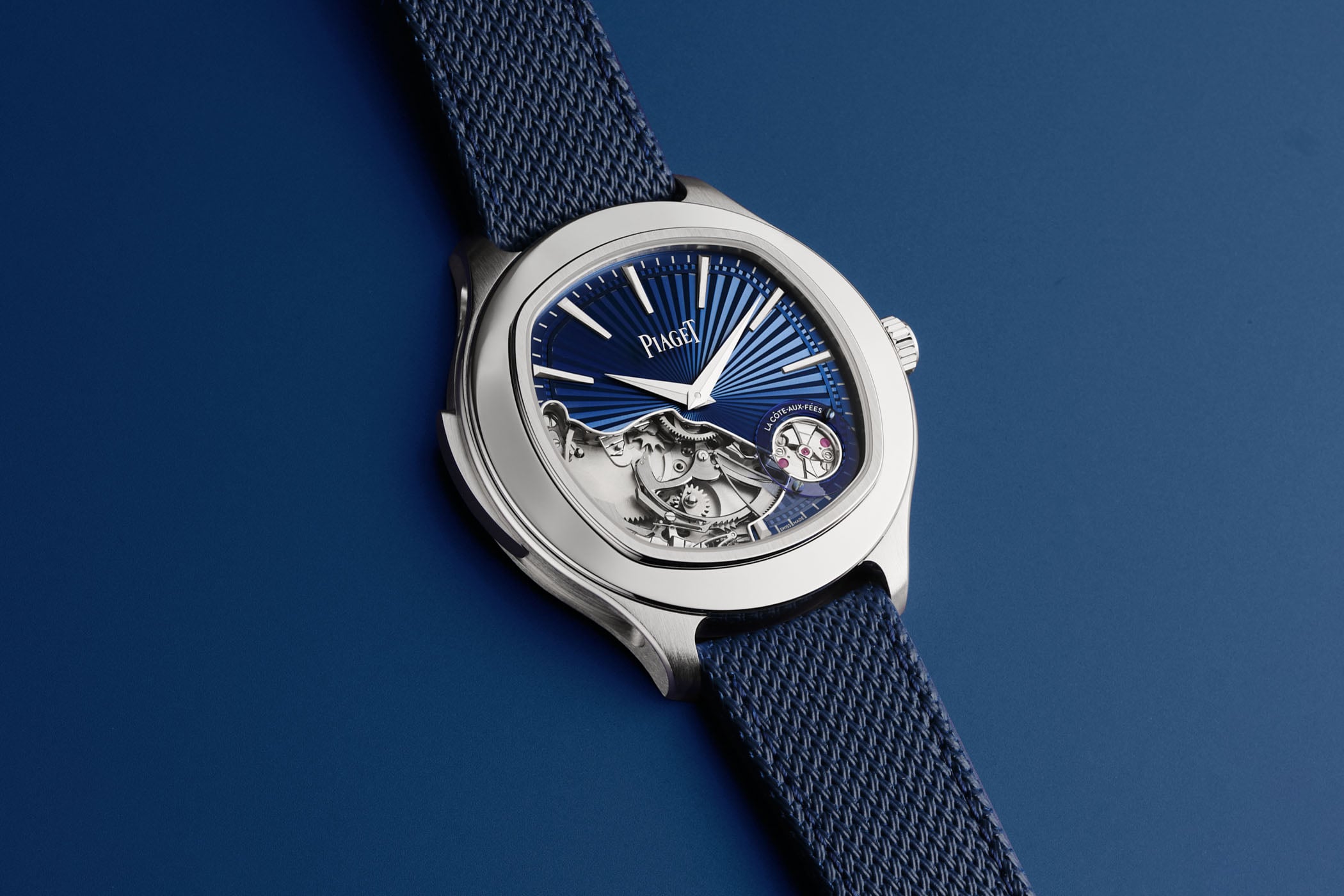
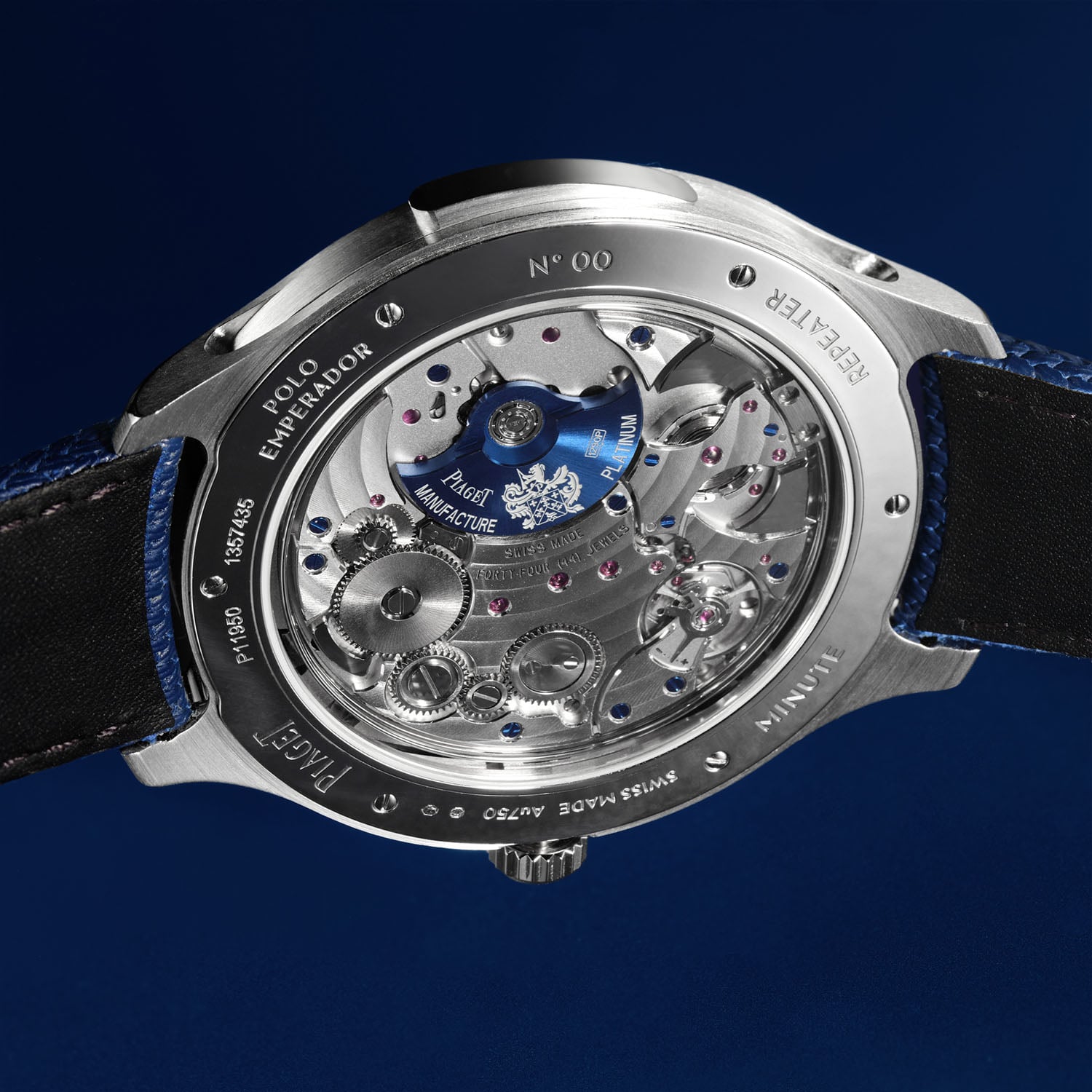
The new Polo Minute Repeater sits in a 48mm white gold case with a rhodium finish, 9.3mm thick, almost identical in size and shape to the Emperador Coussin that carried this movement before; the caseback still reads "Polo Emperador". The repeater is fired by a slide at 9 o'clock, and water resistance is 30 metres, which is the honest limit of a case that has to let sound out. The case here has barely changed, which makes the exercise more interesting rather than less. A repeater's case is part of its instrument, the body that projects the chime, so even a small change in what surrounds the movement is an acoustic decision before it is a styling one.
The dial does two jobs
The dial is white gold, openworked and hand-guilloche, with blue PVD accents and a blue sapphire ring. A shaped aperture in the lower half reveals the movement beneath, and the sapphire ring at 4 o'clock, inscribed "La Cote-aux-Fees", frames the visible inertia wheel, the governor that regulates the speed of the strike. It is a nice piece of theatre: activate the repeater and you watch the regulator spin as the watch counts out the time. The upper half keeps a legible guilloche sunburst so the watch still reads as a watch.
Calibre 1290P
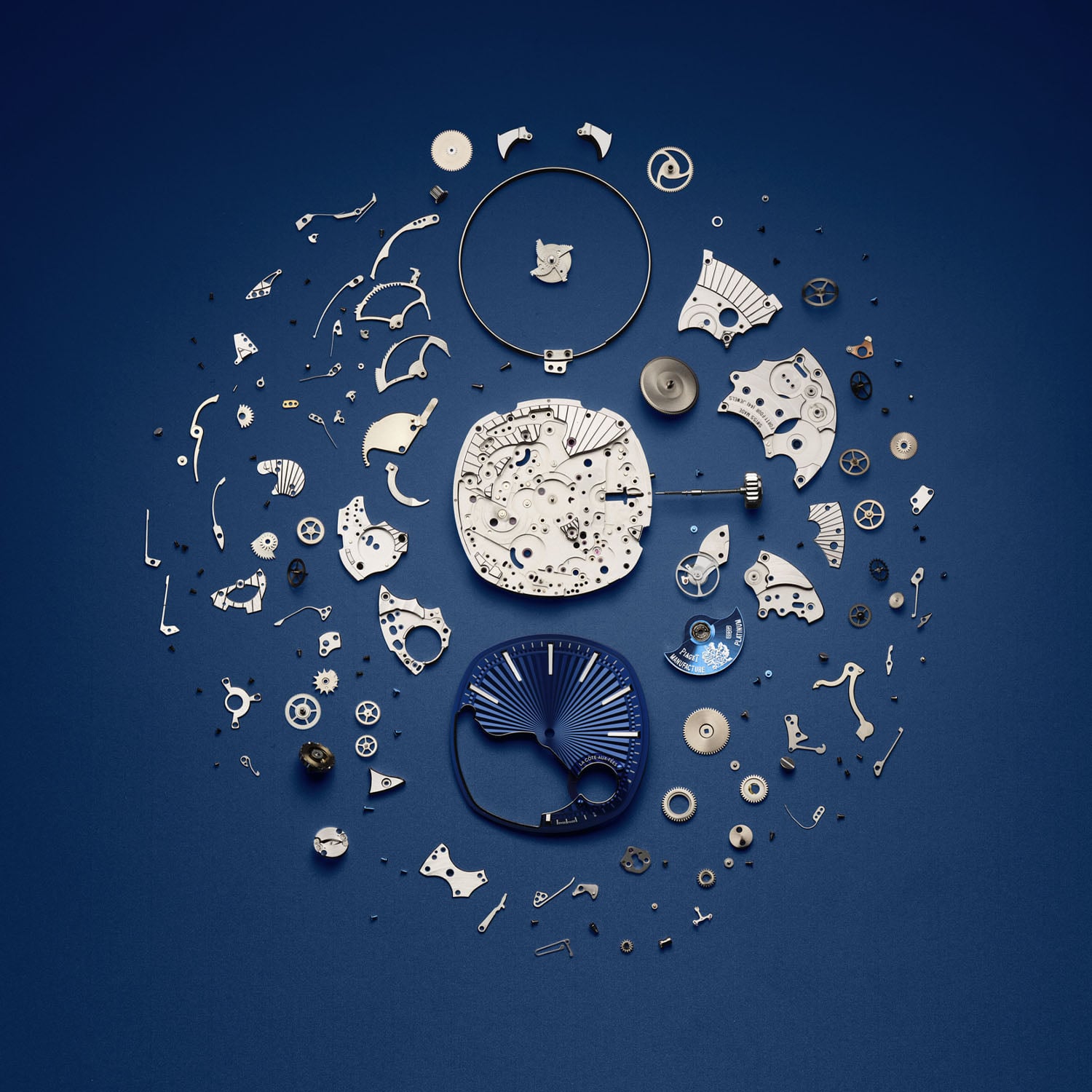
The engine is the calibre 1290P, an ultra-thin self-winding minute repeater conceived, developed, finished and assembled at La Cote-aux-Fees. It runs on a platinum micro-rotor, uses 430 components, beats at 21,600 vibrations per hour and holds 40 hours. The finishing is done by hand: bevelled bridges, a guilloche main plate and mirror-polished repeater hammers. Piaget also quotes the acoustics, which is where a repeater is really judged, citing a sound intensity of 64 decibels and a strike tuned to chime the hours at G-sharp and the minutes at A-sharp. Numbers like that are as close as a specification sheet gets to describing how a watch sounds.
Two versions, one on request
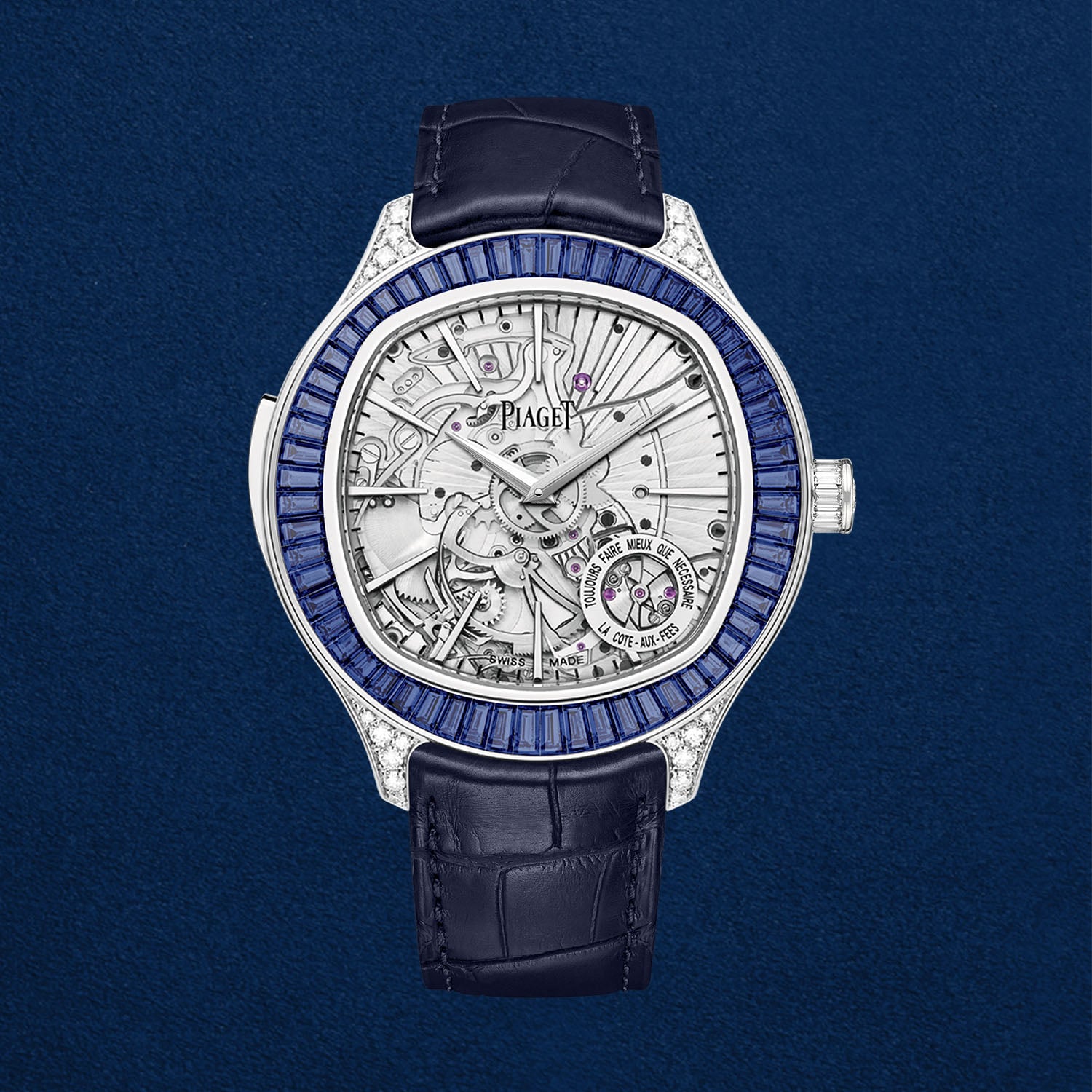
Alongside the white gold model, reference G0A51038, Piaget is showing a High Jewellery interpretation, reference G0A51017, with a bezel set in baguette-cut blue sapphires, a case set with baguette and brilliant-cut diamonds and a fully openworked dial that puts the movement entirely on display. The white gold model comes on a blue embossed calfskin strap with an alligator strap supplied as well; the High Jewellery version is on blue alligator. It is a numbered edition, with five pieces planned for production this year, and Piaget does not publish a price. Monochrome lists it as on request; Deployant reports EUR 330,000 for the white gold reference. Piaget frames the number as a consequence rather than a decision: five a year is what the handwork allows. Either way it is a statement, a way of saying the Polo can carry the house's hardest complication. On the evidence of the movement and the tuning, it is a statement Piaget has earned the right to make.