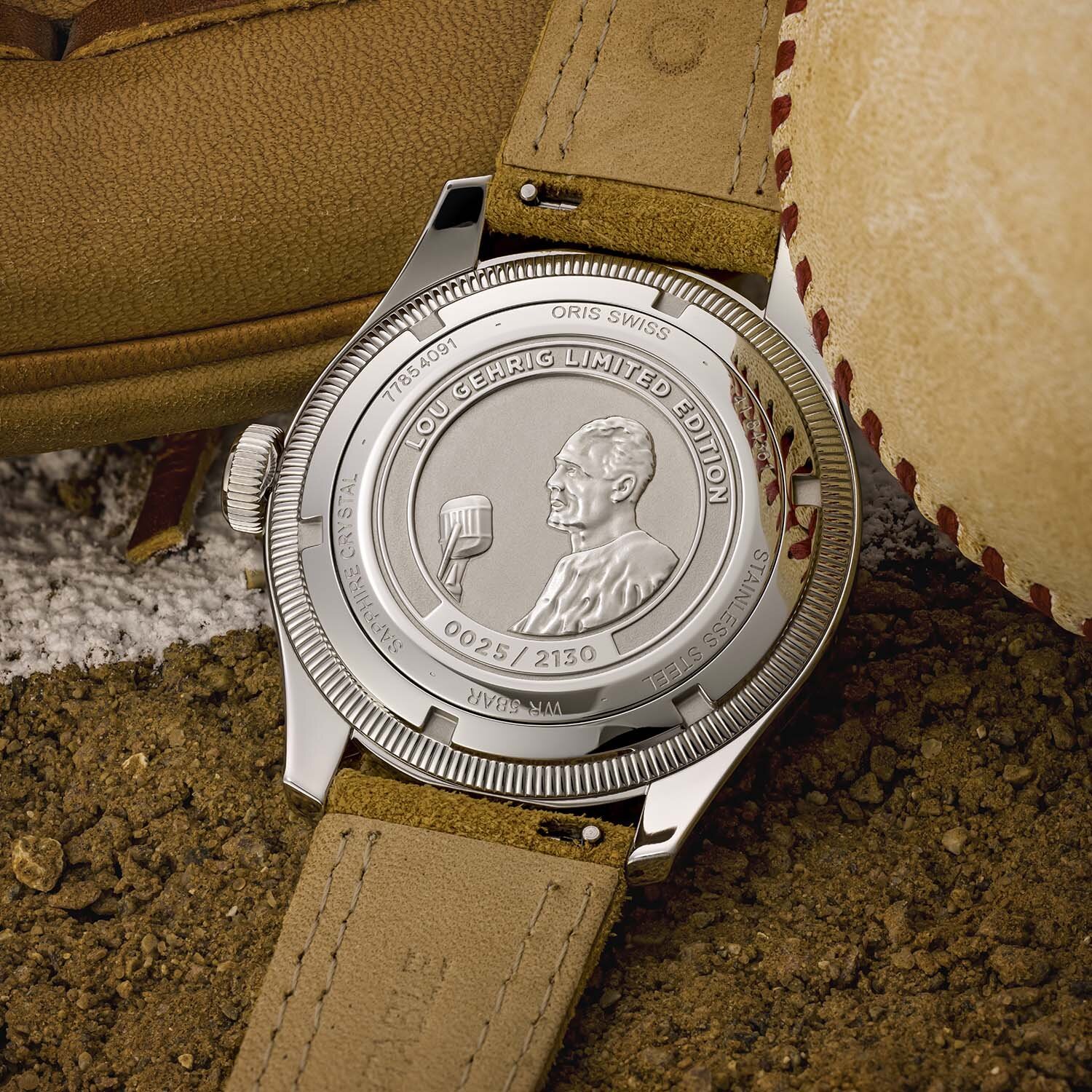
Lou Gehrig played 2,130 consecutive games for the New York Yankees between 1925 and 1939, a record that stood for fifty-six years until Cal Ripken Jr. passed it in 1995. Oris has now made 2,130 watches. The arithmetic is the whole idea: one watch for each game in the streak, with a share of every sale directed to the Lou and Eleanor Gehrig Family Foundation, which funds research into the disease that ended both the streak and, two years later, his life.
The Oris Lou Gehrig Limited Edition is the third baseball watch in this vein from the brand, after editions for Roberto Clemente and Hank Aaron, and like them it is built on the Big Crown Pointer Date.
A 1938 pilot's watch, lightly dressed
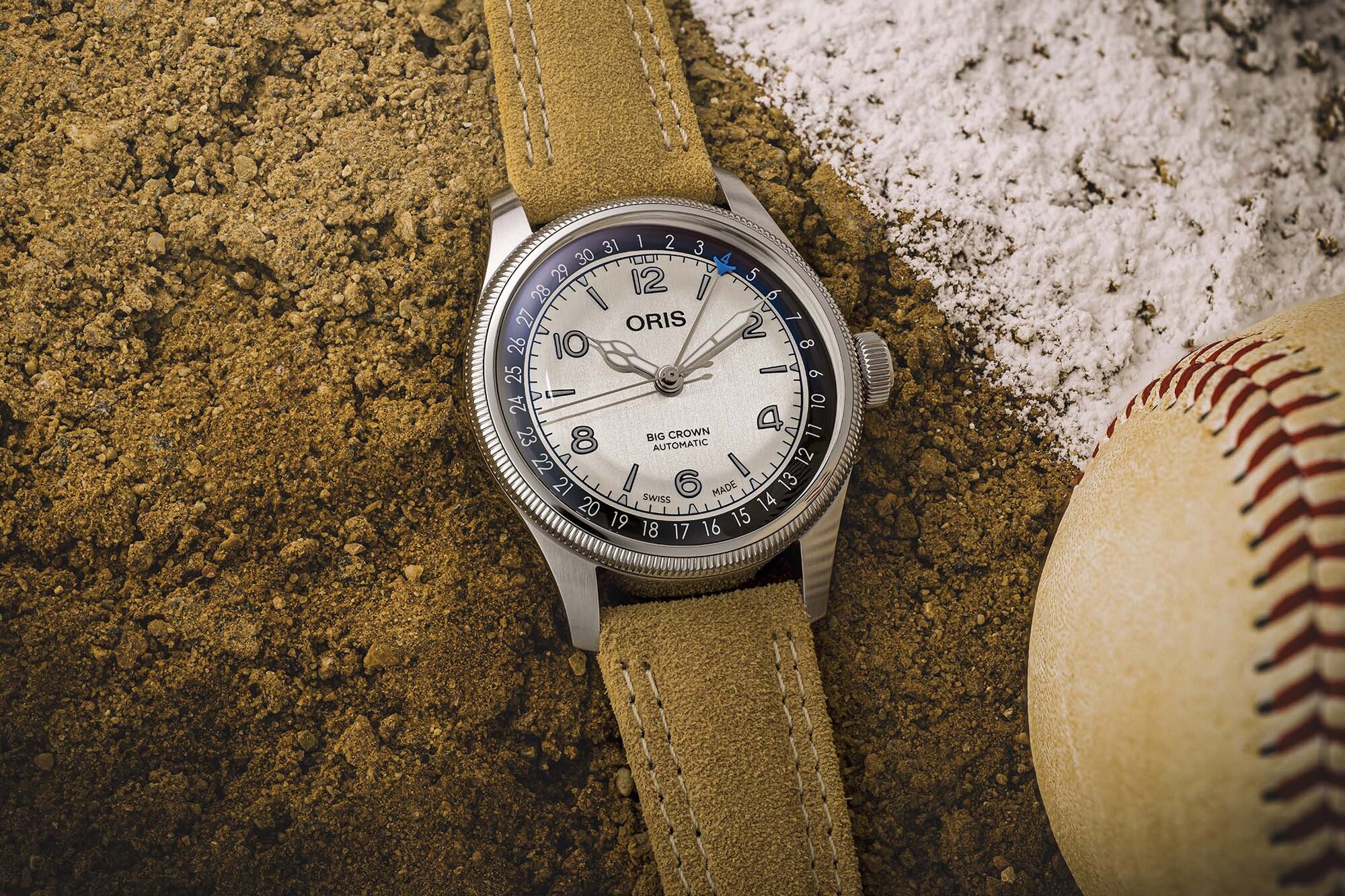
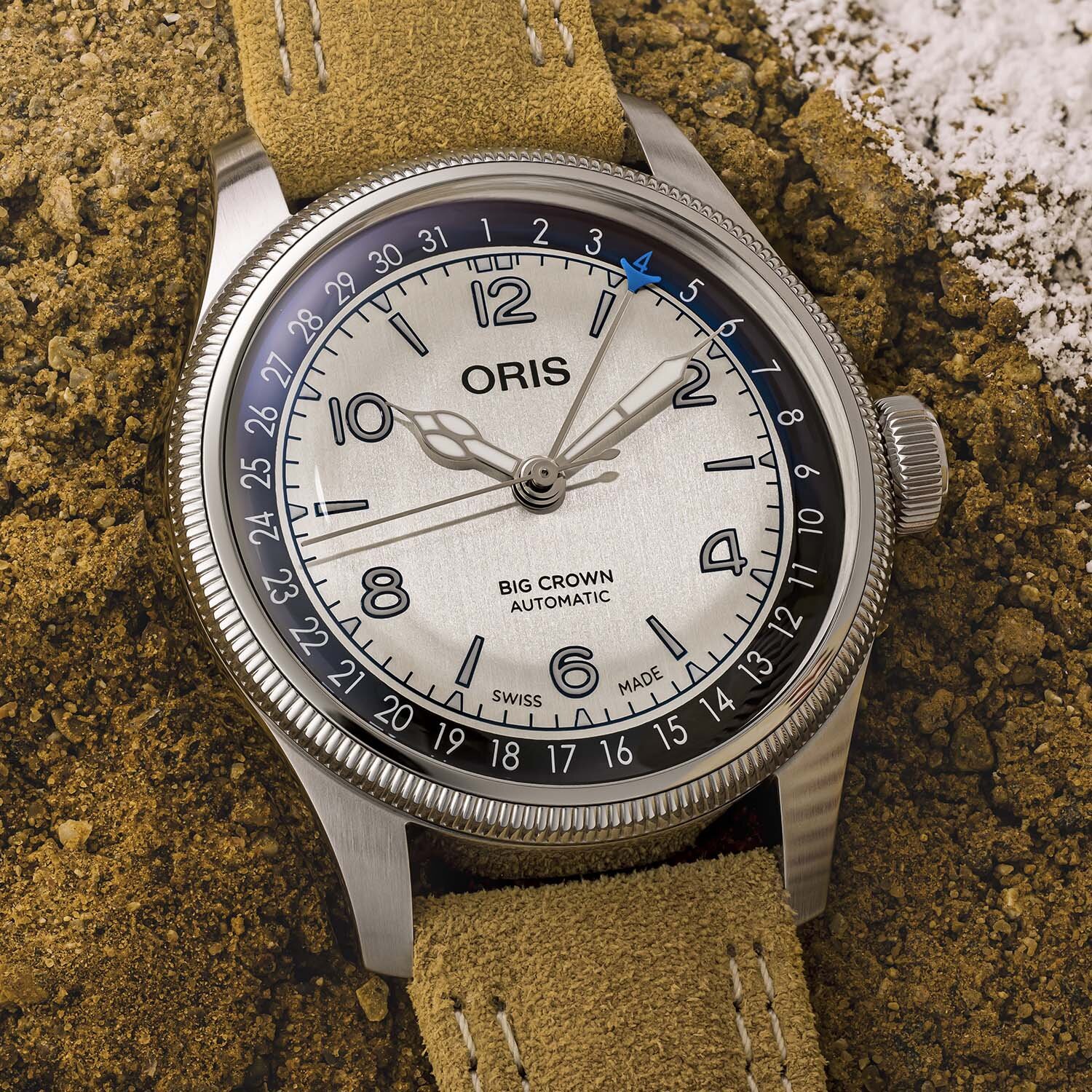
The Big Crown began in 1938 as a pilot's watch. The oversized crown was there so a flier could set the time without removing his gloves, and the hand that sweeps the dial's outer track to point at the date has been the model's signature ever since. The Lou Gehrig edition keeps the format: a 40mm steel case, 12.2mm thick, 48.2mm lug to lug, with alternating brushed and polished surfaces, a knurled bezel and that large screw-in crown. A domed sapphire crystal with internal anti-reflective coating sits over the dial. Water resistance is 50m.
The dial reads as a uniform
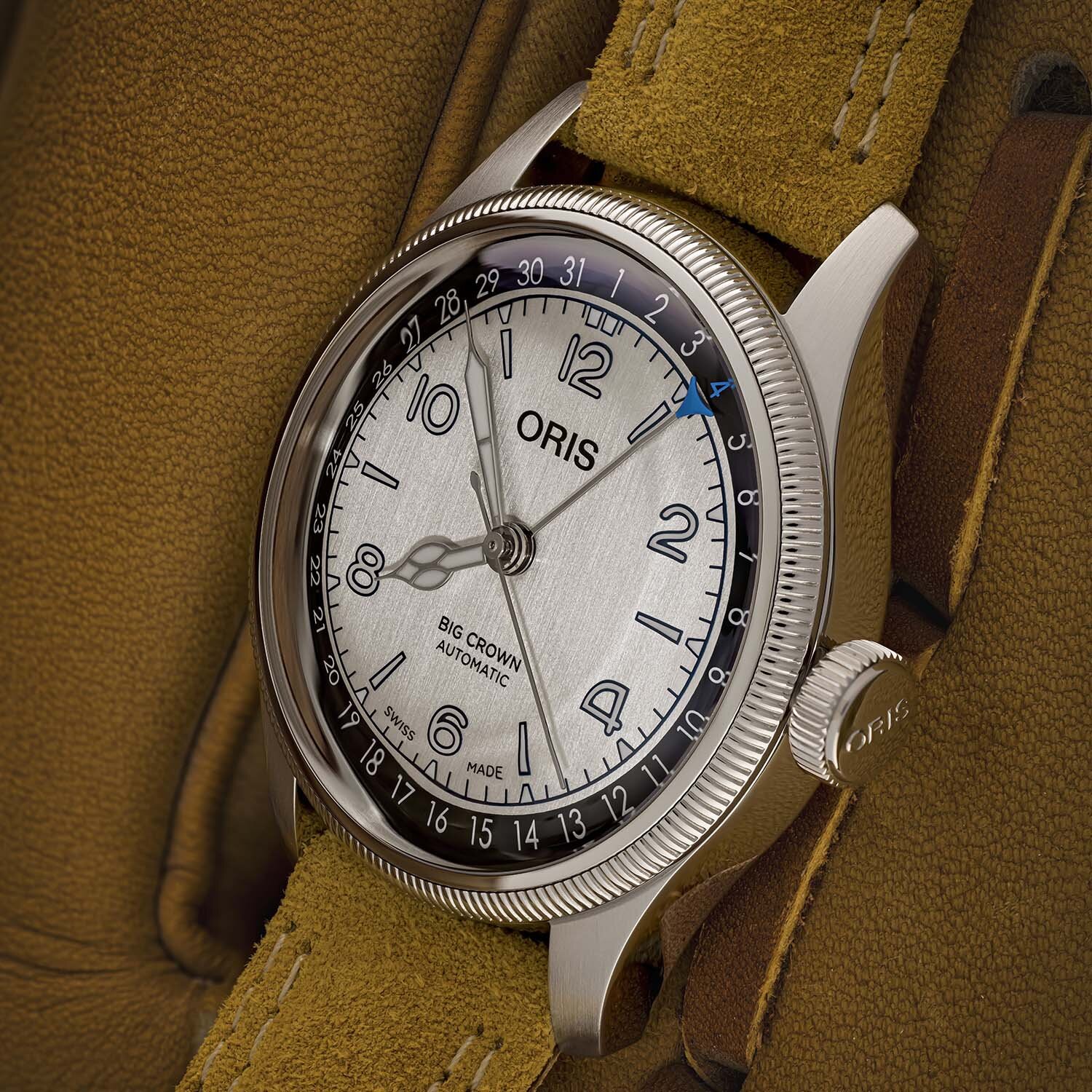
The colours come from the team. The dial is brushed vertically in silver-grey, a nod both to the road uniform and to Gehrig's nickname, the Iron Horse. Applied Arabic numerals at 12, 2, 4, 6, 8 and 10 are outlined in blue and filled with white Super-LumiNova that glows green. The minutes track is blue. On the black date ring around the rim, one numeral is picked out in blue: the 4, for the number the Yankees retired in Gehrig's honour, the first number any major-league club ever took out of circulation. Cathedral hands and a blue-tipped pointer finish it.
The back, and the straps
The caseback is sealed and engraved with an image of Gehrig at a microphone, from the farewell speech he gave at Yankee Stadium in 1939 after his diagnosis, the one that ends with him calling himself the luckiest man on the face of the earth. The watch ships on two straps. The first is brown suede, double-stitched in white the way a baseball glove is sewn. The second is a NATO in Yankees stripes. A strap-change tool comes in the box.
The movement, and the number
Inside is the Oris calibre 754, a Sellita SW200-1 reworked for the pointer-date function and fitted with the brand's red rotor. It runs at 28,800 vibrations an hour with a 41-hour reserve and hacking seconds. None of that is the reason to buy this watch, and Oris knows it. The reason is the number on the caseback and the cause it points to. Amyotrophic lateral sclerosis is still widely called Lou Gehrig's disease in the United States, eighty-five years after it killed him on 2 June 1941, the date this edition was introduced. The watch costs CHF 2,400, around 2,850 US dollars, and it is limited, with some inevitability, to 2,130 pieces.