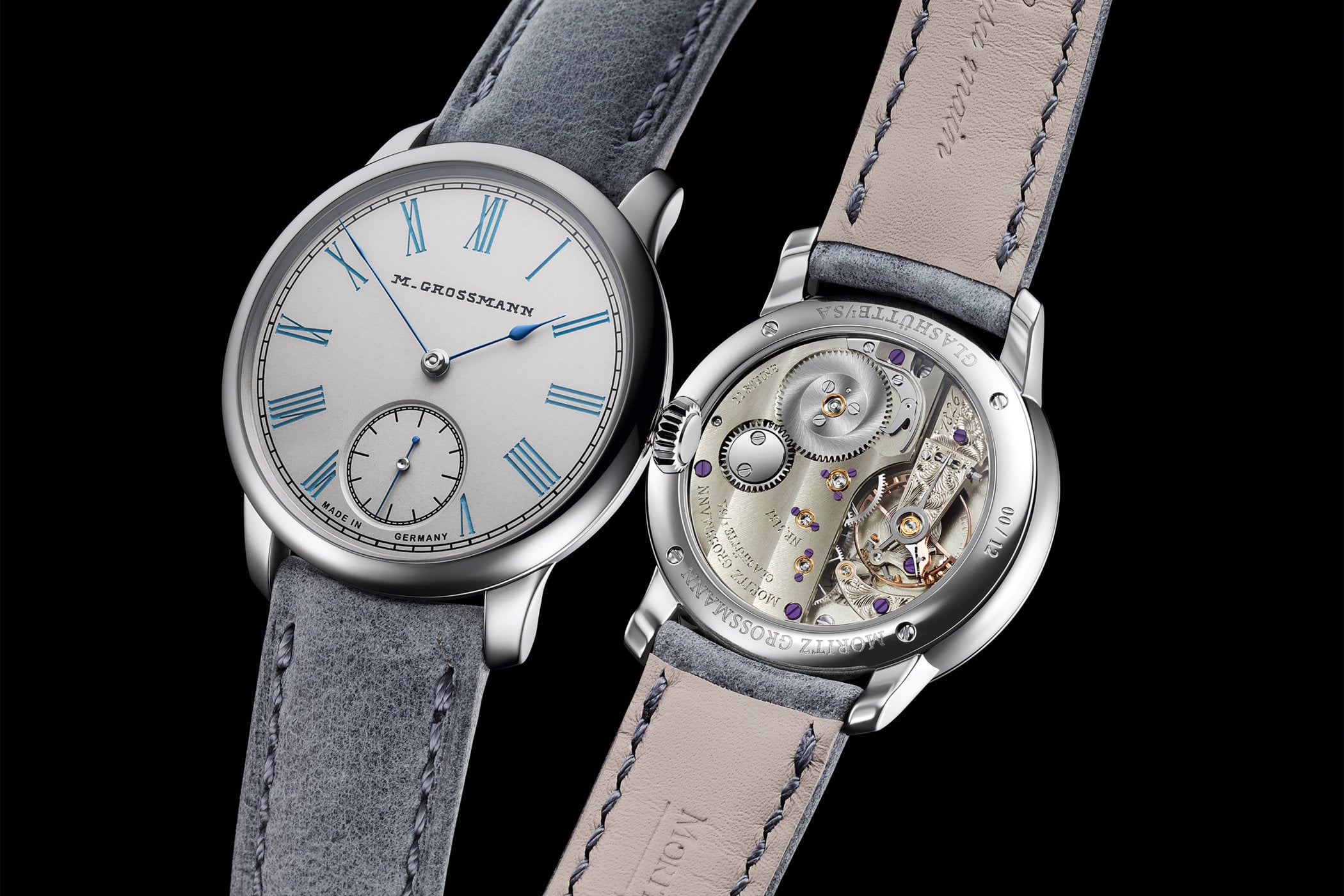
Carl Moritz Grossmann was born in 1826, and 2026 has been a long series of anniversary pieces from the Glashütte house that carries his name. After the Hamatic, the Tremblage in gold and the first friction-silvered Tefnut with green accents, Moritz Grossmann has released one more. The Tefnut 36 Silver-Plated by Friction Turquoise Blue is a smaller version of its slimmest dress watch, and Monochrome covered it on 11 August 2026.
Why this name matters
Grossmann was persuaded by Ferdinand Adolph Lange to set up shop in Glashütte, where he built a reputation for watchmaking tools, pocket watches, marine chronometers and precision clocks, and helped found the German School of Watchmaking. The modern marque was revived in 2008 by Christine Hutter, who rebuilt it around in-house calibres and hand finishing. The company makes an estimated 85 to 95 percent of its movement components in-house, including balance wheels and hairsprings, which is rare at any size of firm.
A 36mm case
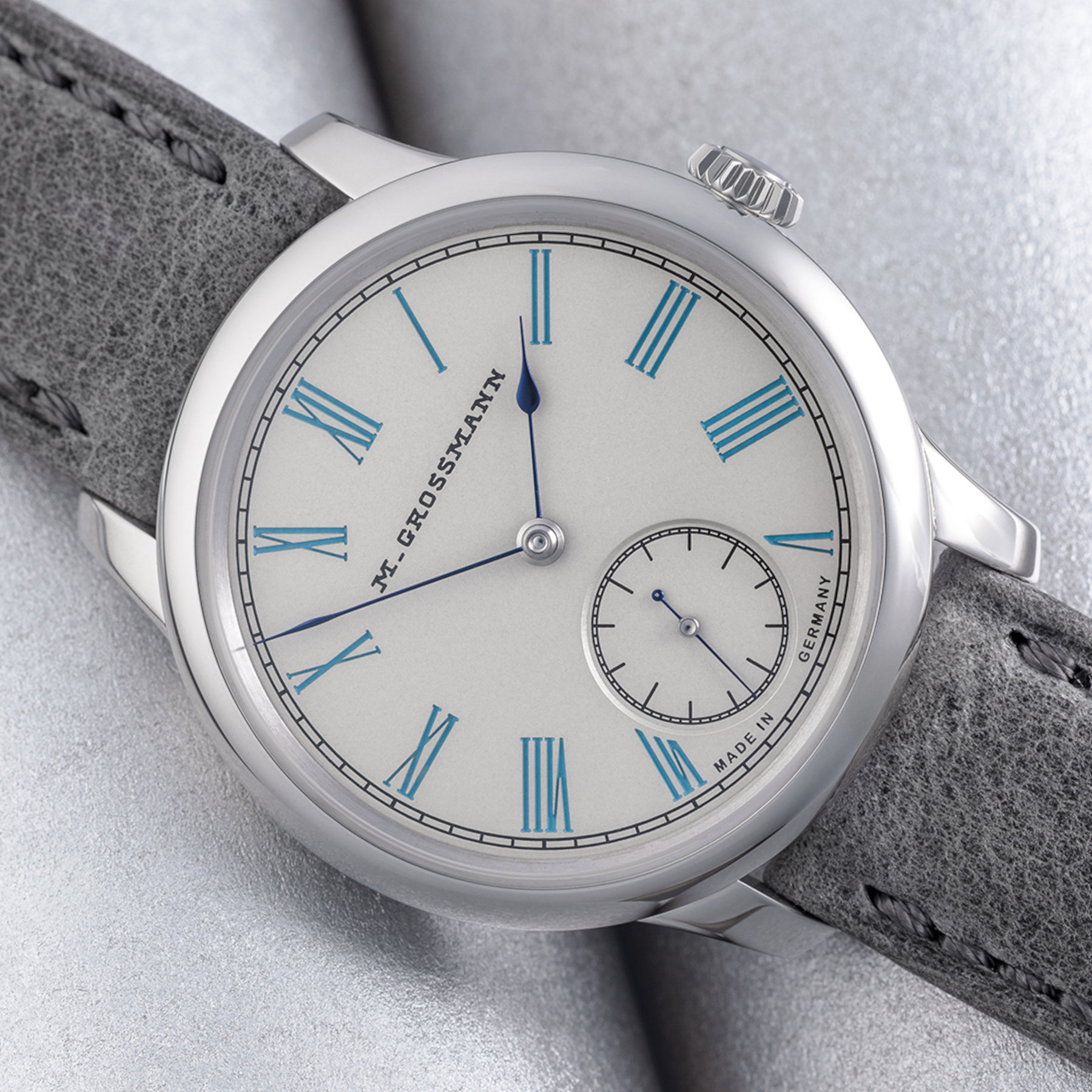
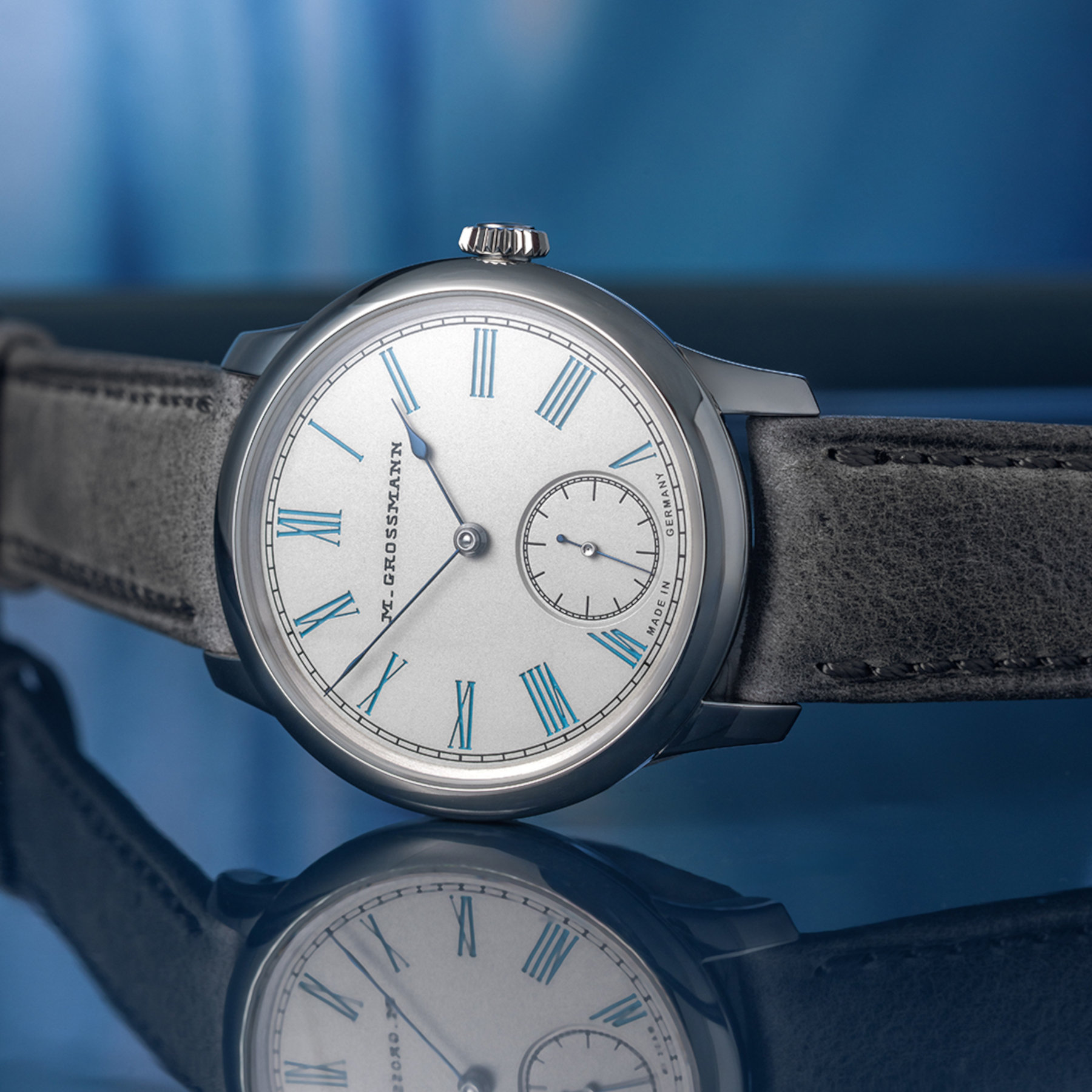
The Tefnut line has always been the brand's thinnest and most restrained. This anniversary version pulls the case down to 36mm across and 8.5mm tall, in fully polished three-part steel, with sapphire crystals front and back. The lugs taper gently and the crown is a large, flat, easy-to-grip disc. At this diameter it reads as a small dress watch, which is where much of the interest lies.
The dial is the watch
The dial uses a 19th-century technique called silver-plating by friction, revived in Grossmann's own workshop, which produces a velvety, matte finish rather than a bright one. The order of work is deliberate. First the Roman numerals are engraved into a brass base and filled with turquoise lacquer, then fired in a kiln until hard. The 1875 "M. Grossmann" signature, the railway minute and small seconds tracks and the "Made in Germany" line are filled with black lacquer.
Only then does the silvering happen. A paste of pure silver powder, salt, cream of tartar and water is brushed on and rubbed in by hand to a fine grain, the excess removed, the surface lightly polished and sealed with a thin protective lacquer. The hands are made in-house, ground with diamond files and annealed over an open flame to a bright blue, with chamfers polished by hand on a wooden disc.
Calibre 102.1
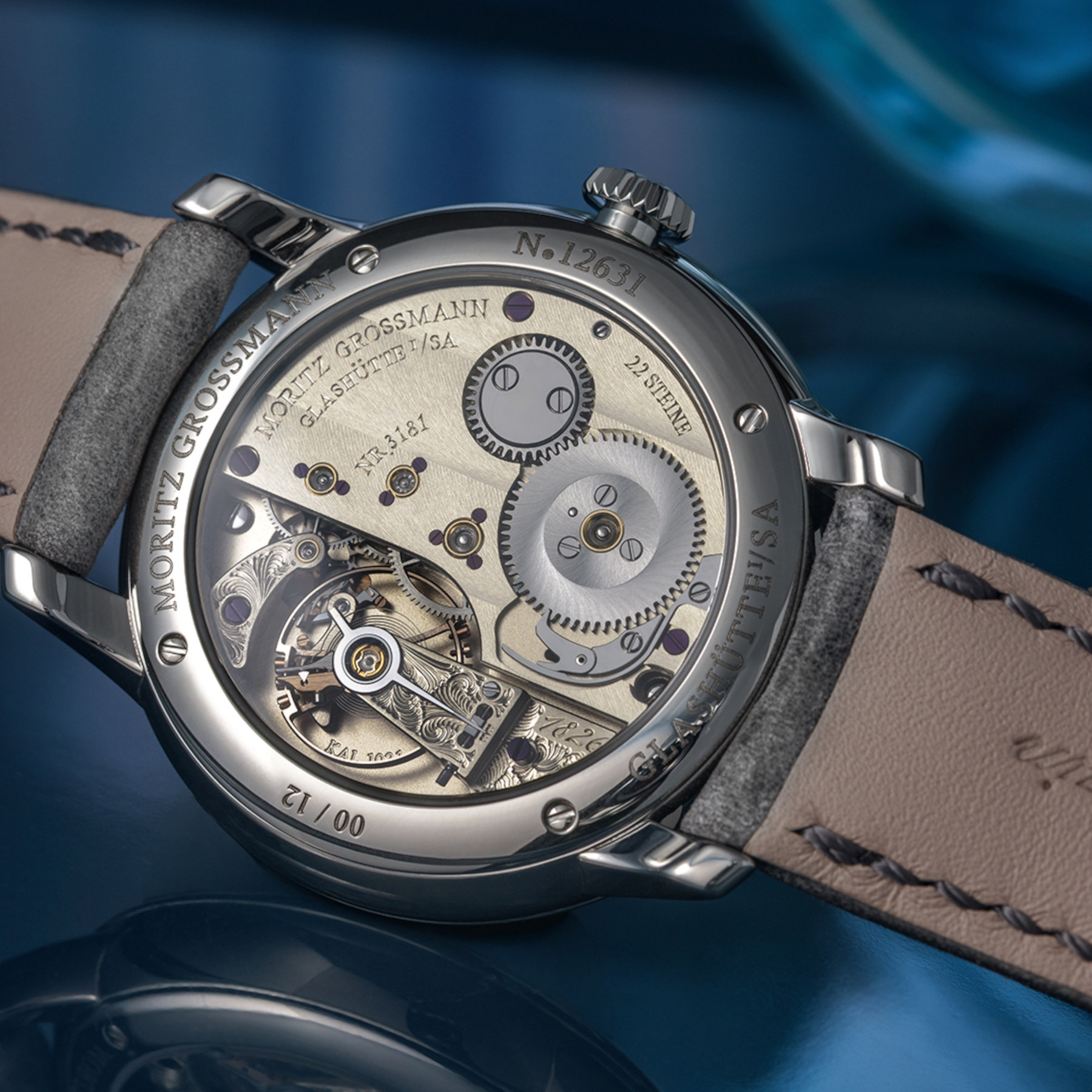
Turn it over and the reason for the price is on display. The hand-wound calibre 102.1 is 3.45mm thick, built from 188 parts, and finished to Saxon standards. The untreated German silver three-fifths plate carries wide Glashütte striping with polished bevels, and the stepped balance cock is hand-engraved with a floral motif along with a discreet "1826" and a polished Grossmann micrometre screw. In a nod to 19th-century pocket watches, the movement uses white sapphires rather than synthetic rubies, set into three solid gold chatons, and the steel screws are heat-annealed to a violet-brown. It runs at 21,600 vibrations per hour and holds 48 hours.
Twelve pieces
The watch comes on a bluish-grey kudu strap with a steel prong buckle. It is reference MG-004153, limited to twelve pieces, priced at EUR 29,000 excluding VAT. Grossmann's site is at grossmann-uhren.com.
Twelve watches is barely a production run. But the point of these anniversary Tefnuts was never volume. It was to show what the workshop can still do by hand on a dial 36mm wide.