Worldtimers are sold as the traveller's complication, and for the most part they earn it: one glance gives you the hour in two dozen cities at once. They also share a flaw almost nobody designs around. Twice a year, large parts of the world move their clocks by an hour for daylight saving, and the fixed 24-hour ring that makes a worldtimer legible suddenly disagrees with the wall. London and Hong Kong sit next to each other on the dial all year, but for months at a time one of them is lying to you. The Ming 57.05 Comet, the Malaysian-Swiss independent's ninth-anniversary watch, is built around a mechanical answer to exactly that problem.
Two rings instead of one
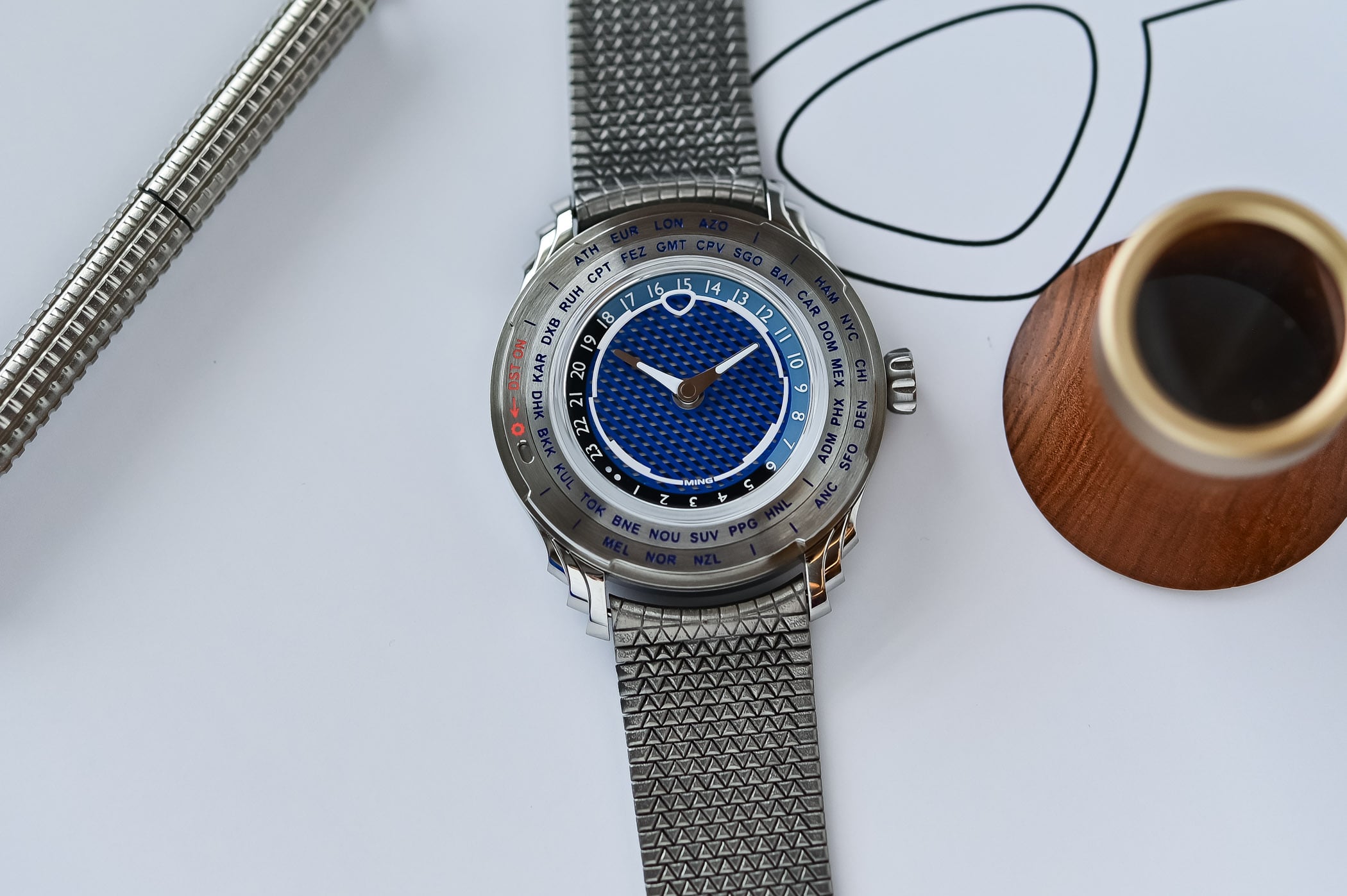
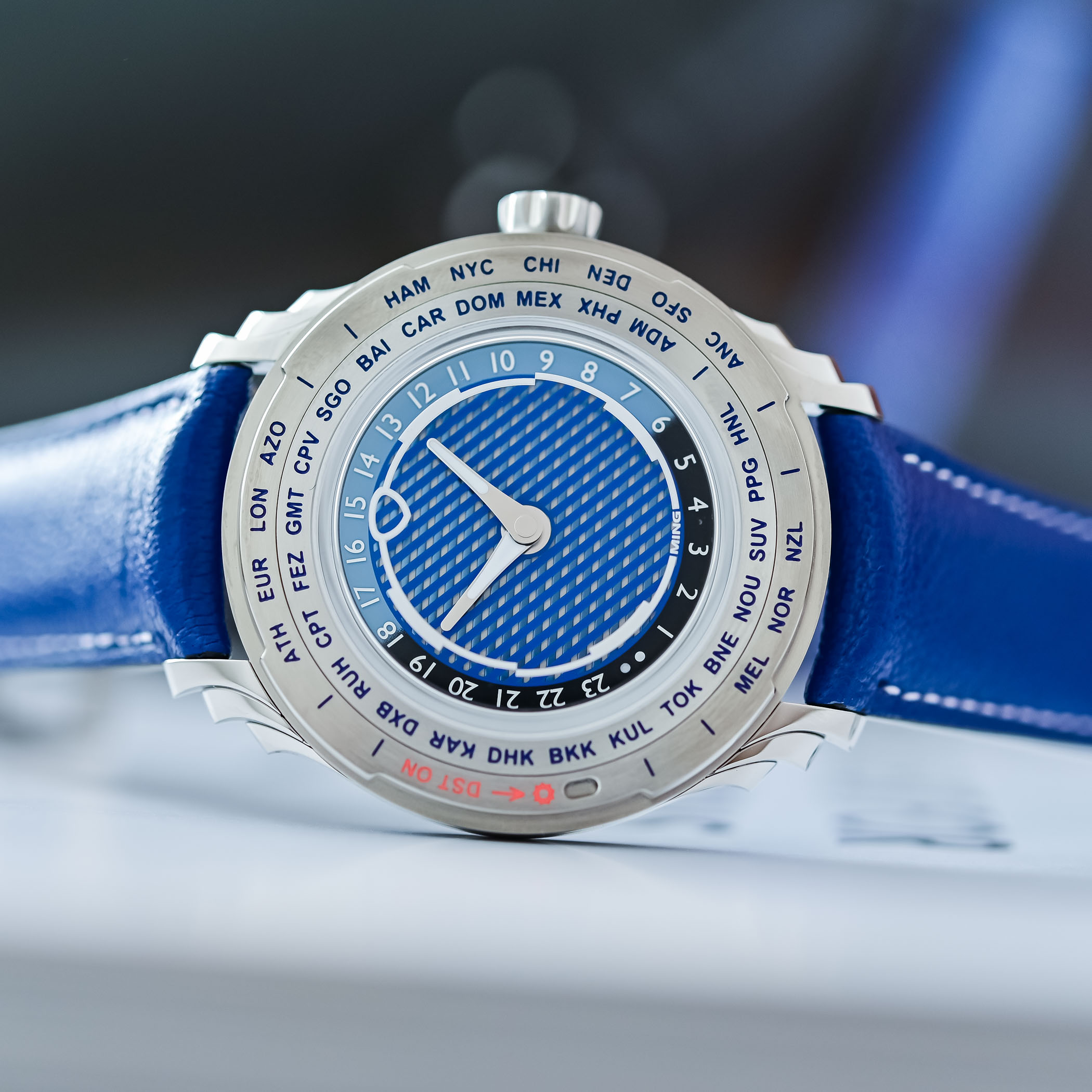
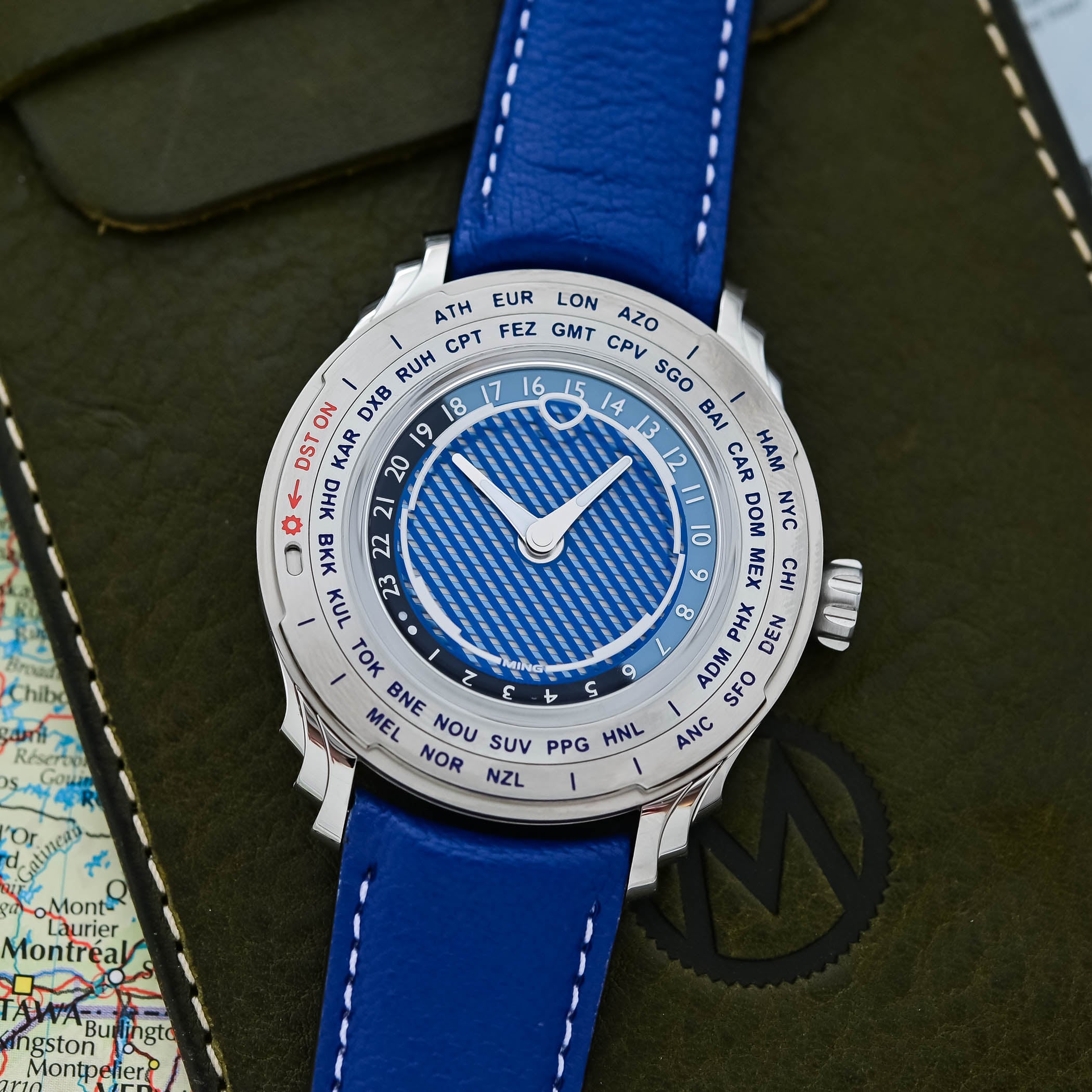
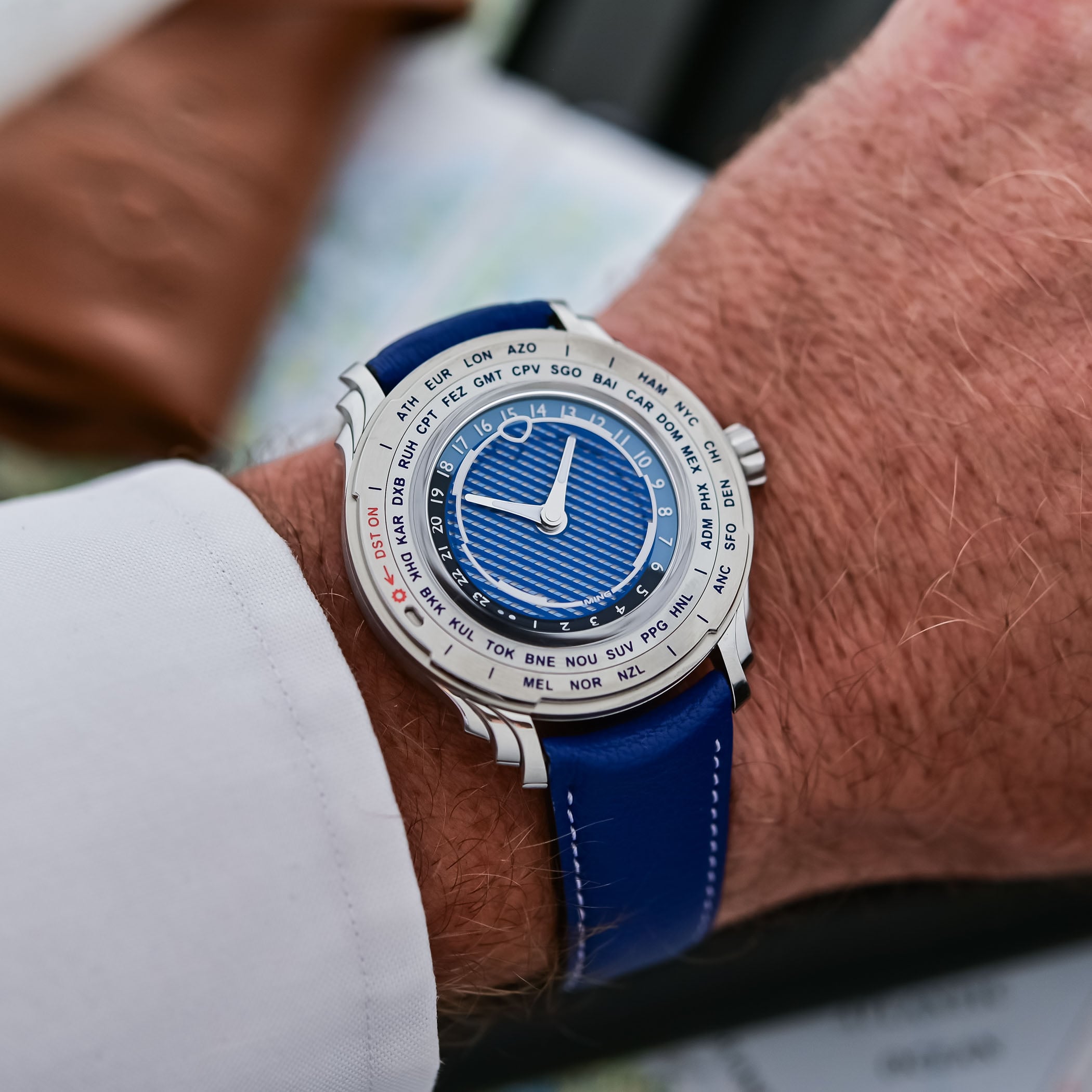
The fix is a two-part bezel, and Ming has a patent pending on it. Cities and regions that do not observe daylight saving are engraved on a fixed inner bezel. The ones that do are placed on a separate rotating outer bezel. A single click of the outer ring moves those cities forward by one hour against the 24-hour scale, so the display corrects for summer time without disturbing the places that never change. The ring locks into position with a spring-loaded ball and matching recesses, and an aperture at roughly nine o'clock tells you which state you are in: silver for standard time, red for DST. As Monochrome notes, only a handful of very high-end watches have tried to solve this at all, which makes seeing it on a steel Sellita-based piece the more interesting part.
The accessible worldtimer
Ming has made worldtimers before, most recently the 29.01 in titanium with a Schwarz Etienne micro-rotor movement. The Comet takes a deliberately more accessible route. The case is 316L stainless steel, 40mm across, 10.33mm thick and 47.8mm lug to lug, water resistant to 100m, and shaped with the brand's triple-stepped lugs, which take nine separate components per side to build. It is the first worldtime watch in Ming's fifth-generation design language, the same family as the 57.04 Iris monopusher chronograph.
A dial that moves
The name honours the de Havilland Comet, the first commercial jet airliner, and the dial carries the theme without being literal about it. Under a floating box sapphire, the twelve-hour markers are laser-engraved and filled with Ming's Polar White luminous compound. At the centre, overlapping raster patterns create what Ming calls the Comet Tail, an interference effect whose appearance shifts slowly through the day as the layers move against each other rather than staying visually fixed. The rotating 24-hour worldtime ring is coloured blue and black for day and night, and lit accordingly: blue-emission Super-LumiNova X1 for the daylight hours, orange for the night, with the DST ON indicator glowing red when engaged.
Movement, straps and price
Inside is the Sellita for Ming calibre 330.M2, an automatic worldtime movement running at 28,800 vibrations per hour with roughly 50 hours of reserve, visible through the sapphire back with skeletonised, anthracite-coated bridges over an anthracite baseplate. The Comet ships on a cobalt-blue goat-leather strap by Jean Rousseau Paris with quick-release bars and Ming's flying-blade tuck buckle, or on the brand's titanium Polymesh bracelet. It is a limited edition of 200 pieces, available to order from 27 August 2026 at CHF 6,950 on leather and CHF 7,950 on the bracelet, excluding taxes, per Ming and coverage at SJX. The clever part is not that it tells you the time in Anchorage. It is that in late October, when Anchorage falls back, the watch already knows.