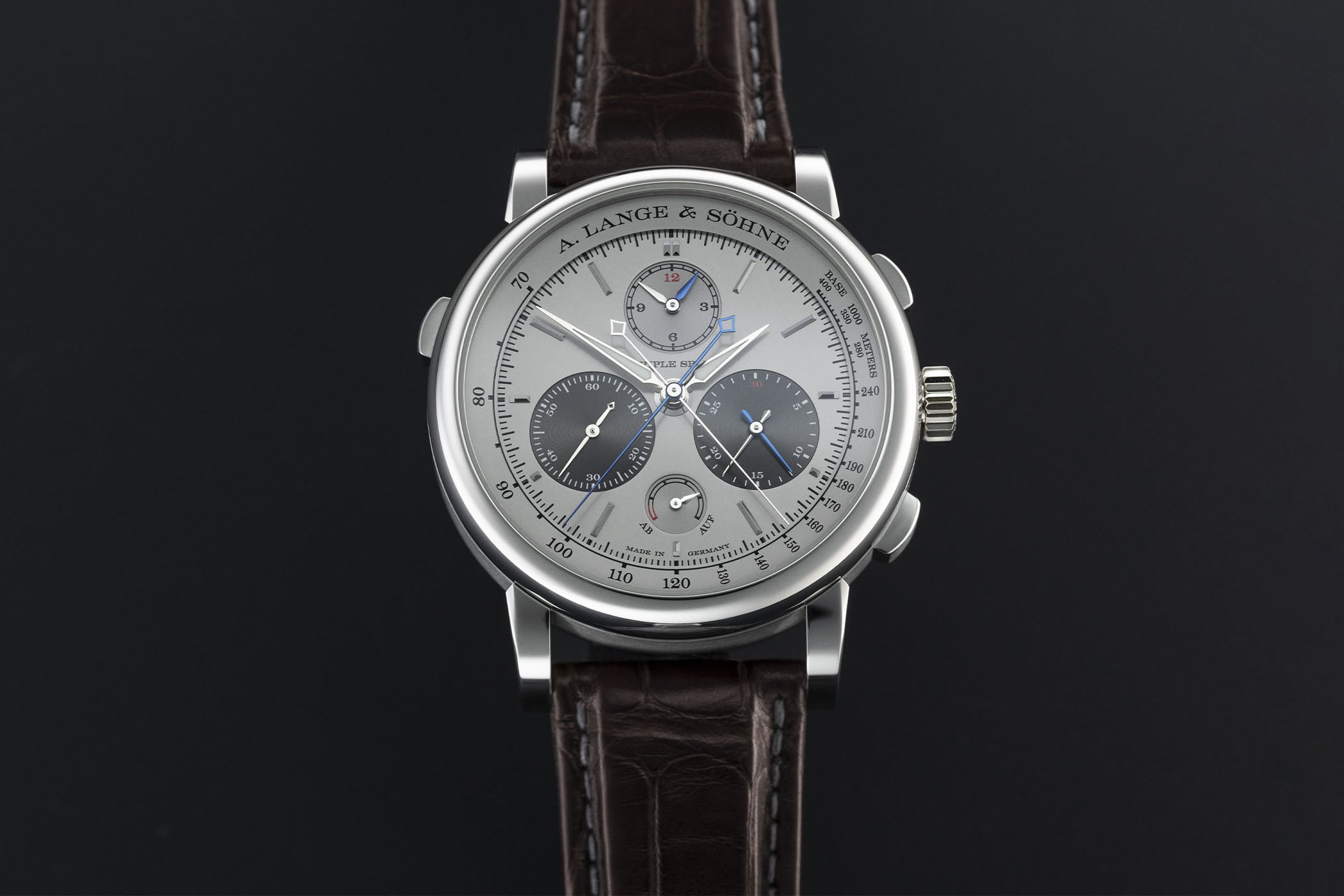
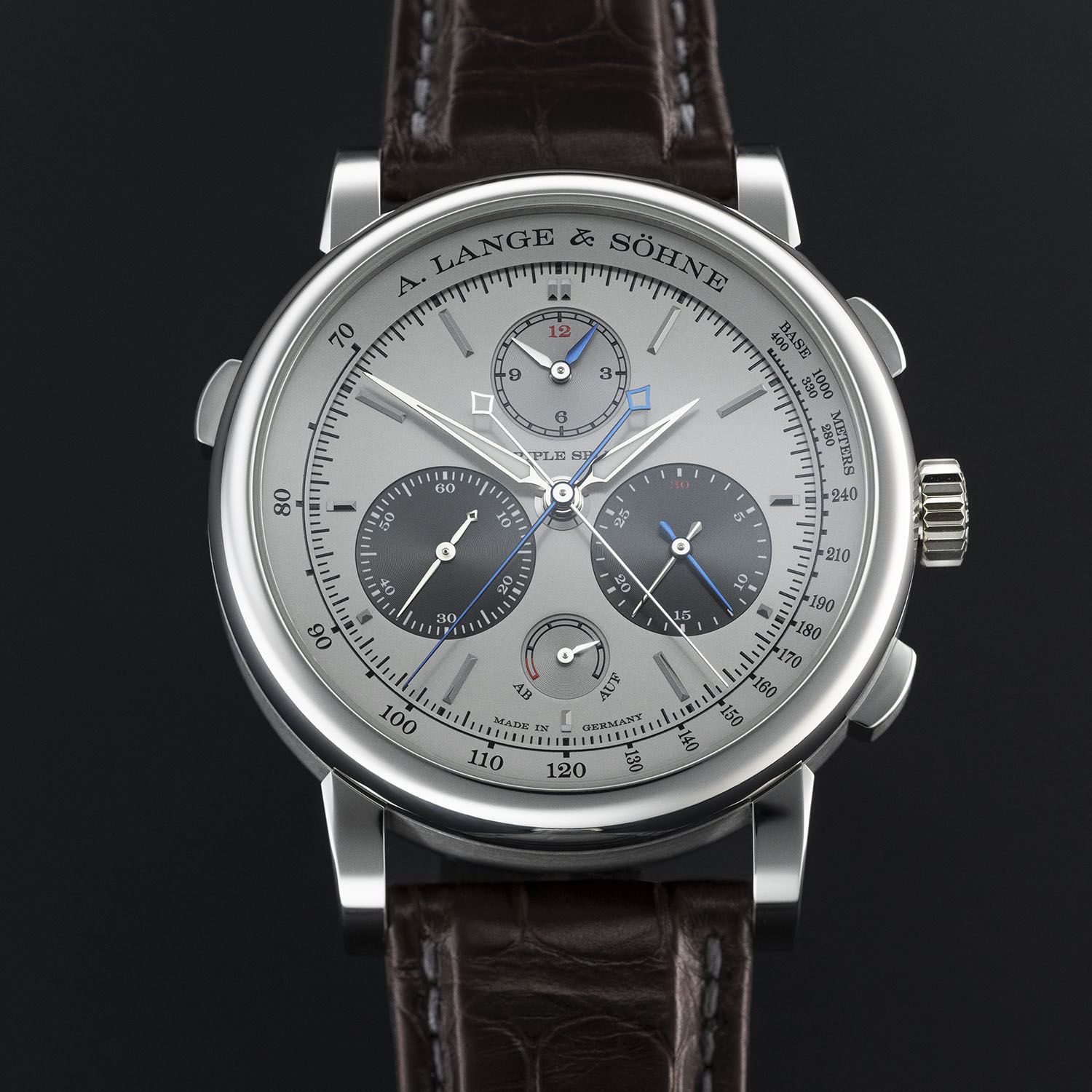
The A. Lange & Söhne Triple Split is one of the few modern watches that genuinely extends what a mechanical chronograph can do. Since its launch in 2018 it has been the only split-seconds chronograph able to measure not just intermediate seconds but intermediate minutes and hours, which lets it compare two elapsed times over a span of up to twelve hours. Lange offered it first in white gold, then in 2021 in pink gold with a blue dial. This is the third version, in 950 platinum with a rhodium-coloured dial and grey counters, and a run of 100 numbered pieces.
A cooler face for a complicated watch
The platinum case measures 43.2mm across and 15.6mm thick, dimensions set by the movement rather than by fashion, and it carries the technical look the watch has always had. Three pushers do the work: the one at 2 o'clock starts and stops the chronograph, the one at 4 handles the flyback, and the one at 10 operates the rattrapante, stopping all three split hands at once while the main chronograph hands keep running. The dial is 925 silver, with a rhodié main surface and darker grey subdials at 12, 4 and 8, showing elapsed hours, jumping elapsed minutes and running seconds. The Ab/Auf power-reserve indicator sits at 6, a tachymeter runs around the flange, and the rattrapante hands are blued steel, with small red accents and luminous treatment on the main hands and markers.
How the triple rattrapante works
A conventional split-seconds chronograph has two seconds hands that can be separated to read an intermediate time. The Triple Split adds the same trick to the minute and hour counters. When the chronograph runs, three blued rattrapante hands track their chronograph counterparts. Press the pusher at 10 and all three stop together, so you can read a full elapsed time down to the hour while the chronograph keeps measuring; press again and the three hands jump forward to catch up. It is a mechanism with very few real-world rivals, and it is the reason the watch exists.
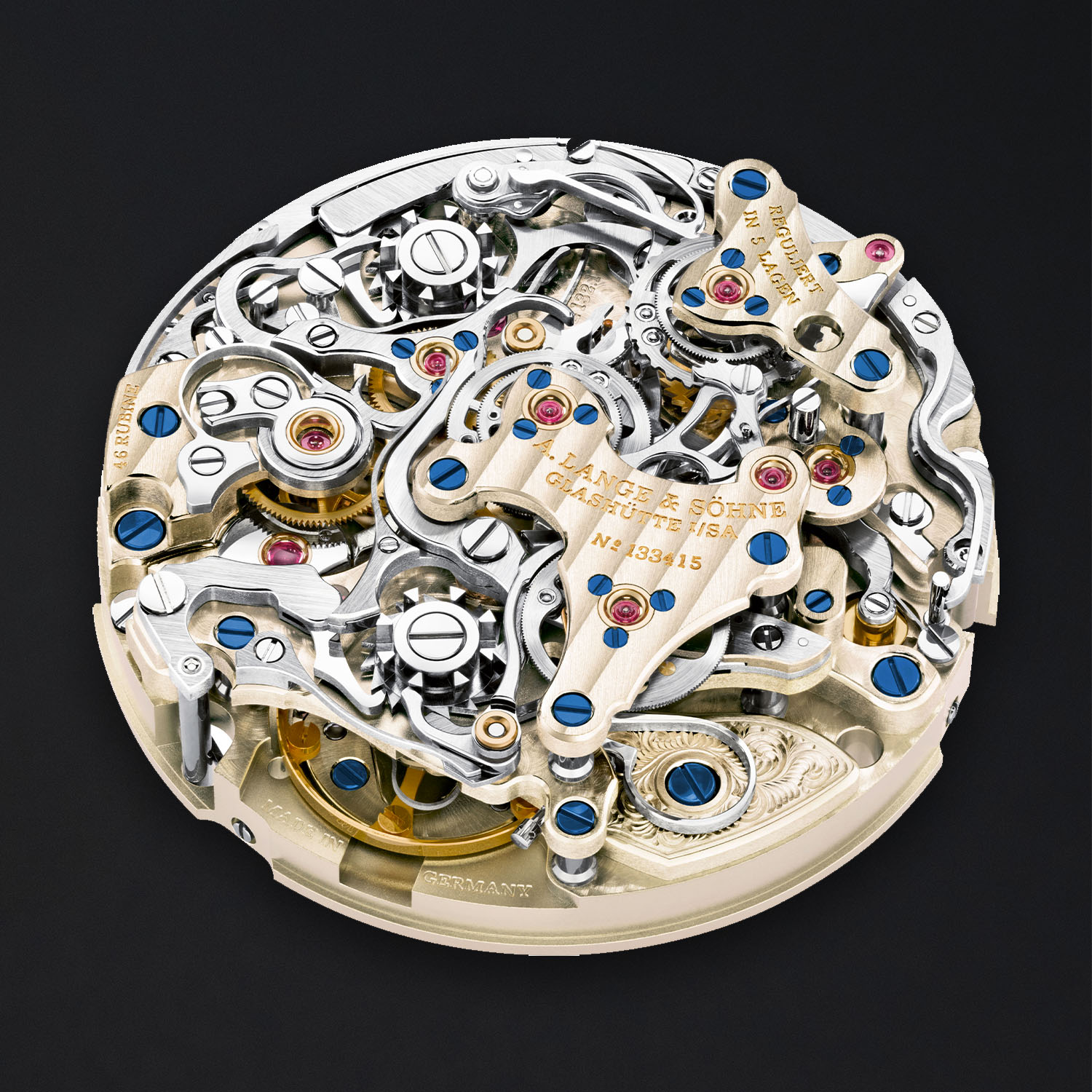
Calibre L132.1
Behind the display back is the manually wound Calibre L132.1, one of the most complex movements Lange has developed. It is made of 567 components with 46 jewels and two column wheels, and its construction is layered with the levers, springs, wheels and switching parts needed to run three rattrapante hands at once. It runs at 21,600 vibrations per hour and holds 55 hours of power. The finishing is what you would expect at this level: untreated German silver bridges with Glashütte ribbing, straight-grained and bevelled levers and springs, five screwed gold chatons and a hand-engraved balance cock.
Price and availability
The watch is worn on a dark-brown, hand-stitched alligator strap with grey stitching and a platinum deployant buckle, and each of the 100 pieces carries an engraved edition number. It was presented during the Concours of Elegance at Hampton Court Palace in early September 2026, and the reference is 424.025F. Price is on request, as it tends to be with a watch of this kind. What the platinum version adds is not a new capability but a cooler, quieter register for a movement that already does something almost nothing else can.
Sources: Monochrome Watches and A. Lange & Söhne.