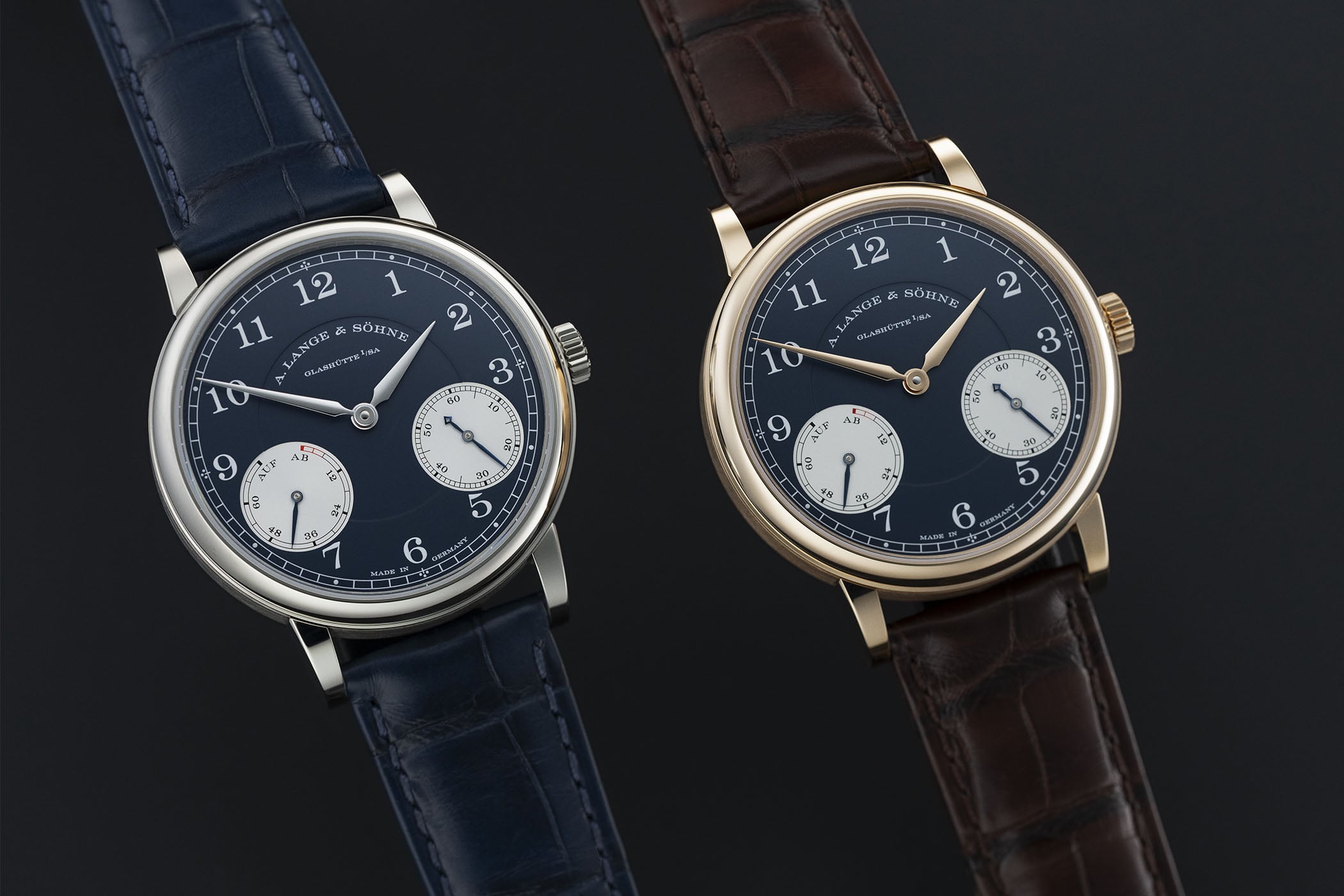
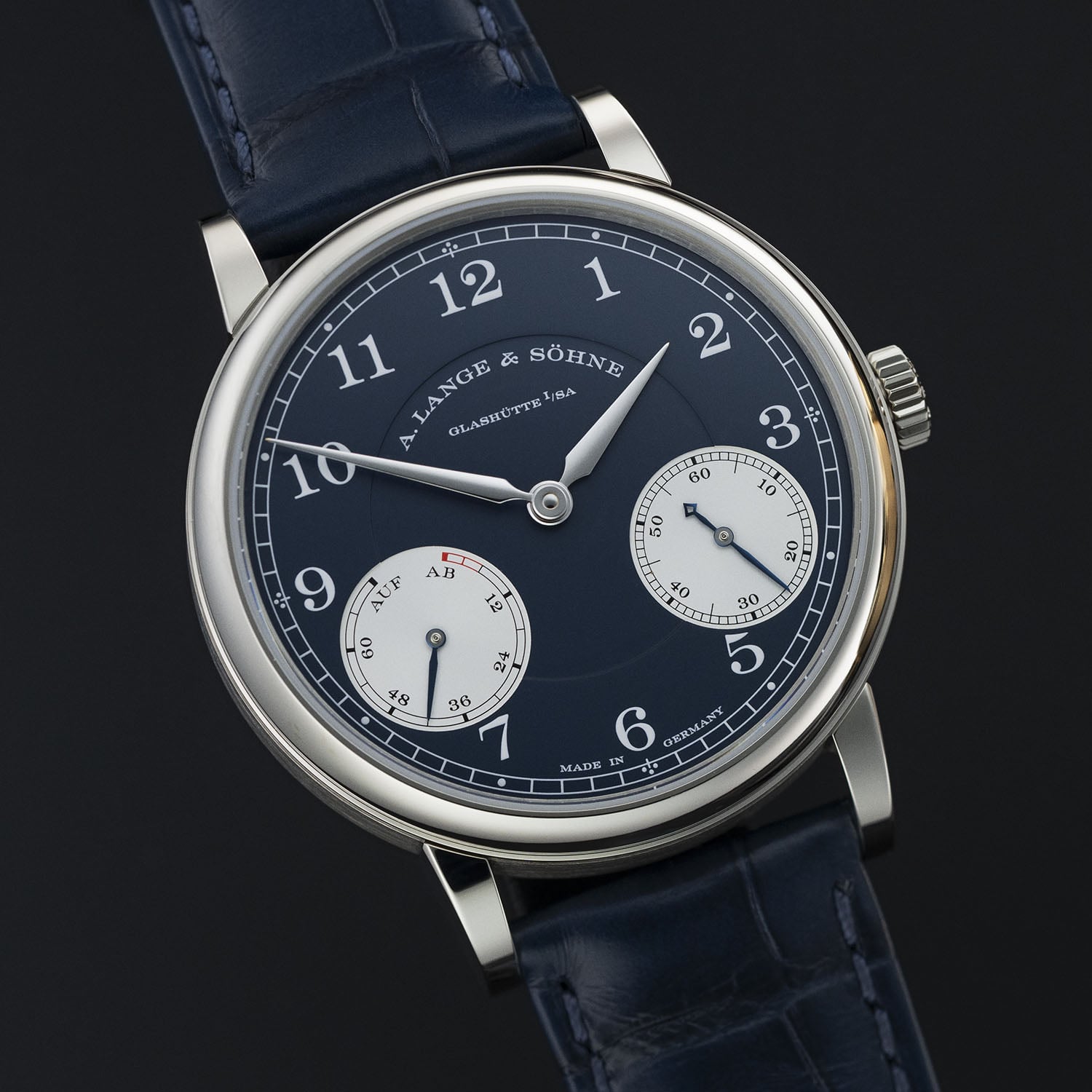
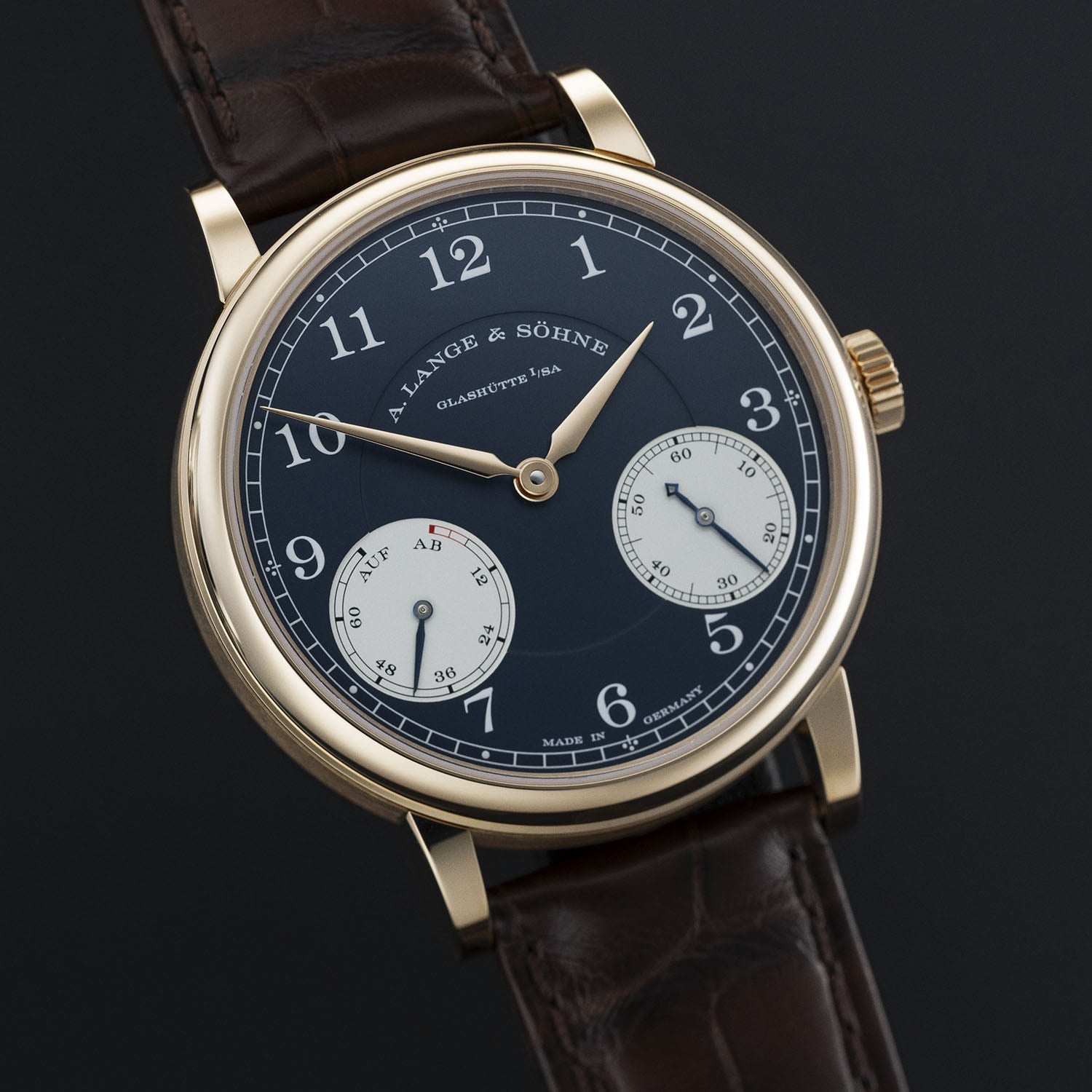
A. Lange & Söhne used the Concours of Elegance at Hampton Court Palace, held from 4 to 6 September, to introduce two new versions of the 1815 Up/Down. Both come in a 37.5mm case, one in white gold and one in pink gold, both carry blue dials, and each is limited to 300 pieces. It is a small watch with a long paper trail.
A power reserve with a patent behind it
The 1815 line is named for the year Ferdinand Adolph Lange was born, and its details are drawn from Lange's historic pocket watches. The Up/Down part is the power-reserve indicator, marked AUF and AB, German for wound and unwound. That is not a decorative flourish. It goes back to patent no. 9349, granted to A. Lange & Söhne in 1879 for a device that let the owner see whether a pocket watch was wound or run down.
The problem in the 19th century was that power-reserve mechanisms were bulky, using stacks of extra gears that fattened the movement. Richard and Emil Lange's answer was a space-efficient differential that kept the watch slim. The modern calibre works on the same principle: L051.2 integrates a planetary gear system directly into the movement rather than stacking a module on top, and that is how the finished watch stays 8.7mm thick.
A smaller case, the same dial language
At 37.5mm the new pair sits below the second-generation 39mm 1815 Up/Down from 2013. The case is restrained in the way Lange dress watches usually are: a brightly polished concave bezel, horizontally satin-brushed flanks, lugs attached to the case with a sharp downward curve, and a fluted crown for grip.
The dial is the argument for the watch. It is silver underneath with a blue finish and the recessed centre that marks the 1815 Up/Down. The power reserve sits in a snailed silver sub-dial at eight o'clock, with a black peripheral track, black Arabic numerals, a blued-steel hand, and a double red segment at the AB end to warn when the mainspring is running out. Small seconds balances it in a matching snailed counter at four. A crisp railway-style minute track runs around the edge with dots on the hours and triple dots at the quarters, and the white pad-printed Arabic numerals stand out against the blue, read by lancet-shaped hands in the case metal.
The movement and the numbers
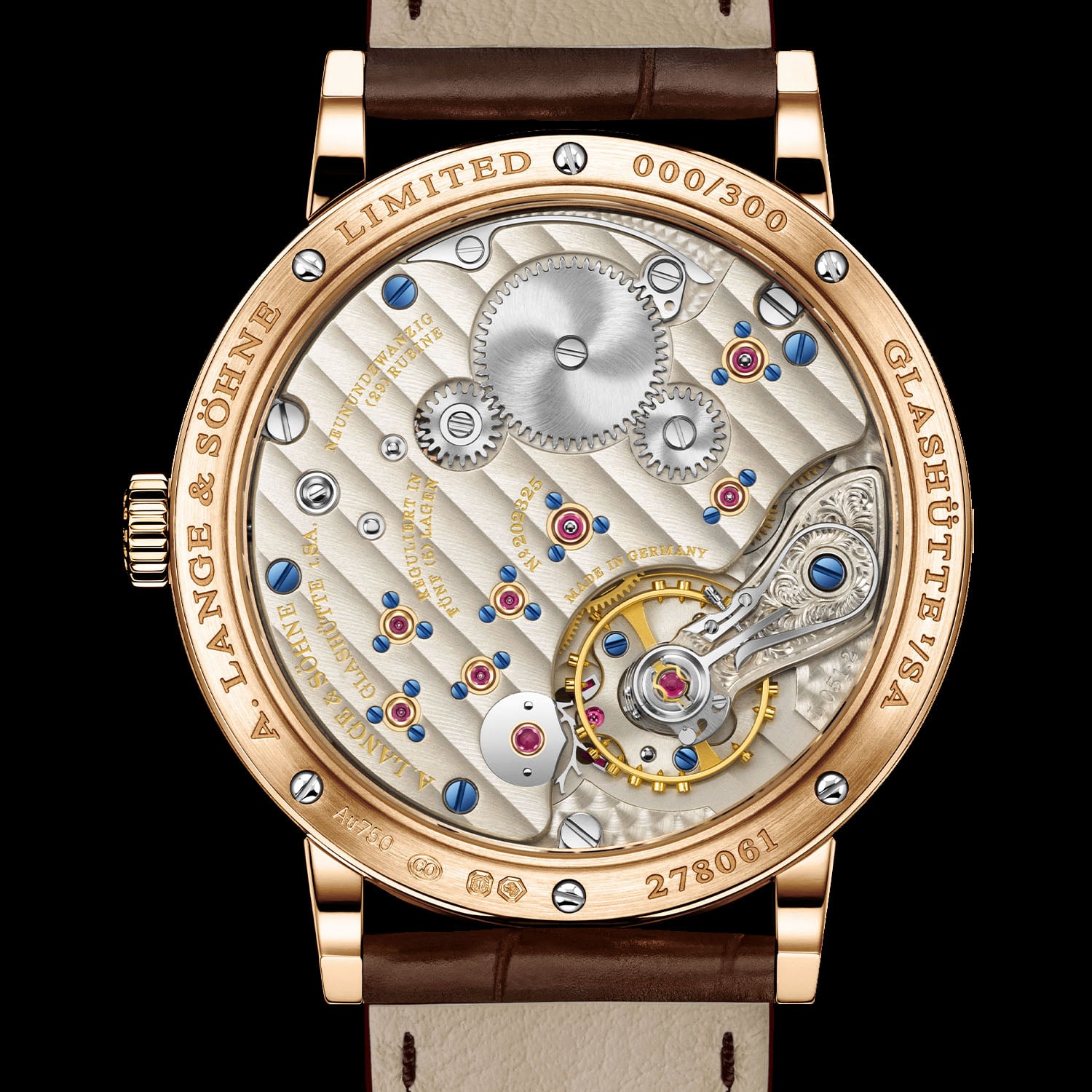
Through the sapphire caseback is the manual-winding L051.2, and it reads like a Lange should. The calibre is 30.6mm across and 4.6mm thick, built from 245 parts and 29 jewels, seven of them held in gold chatons by blued screws. It runs at 21,600 vibrations an hour for a 72-hour reserve. The German silver three-quarter plate carries the signature Glashütte ribbing, the winding wheels are finished with solarisation, the balance cock is hand-engraved, and the whole movement is assembled twice, the standard Lange practice of building it, taking it apart for finishing, and building it again.
The white gold reference is 244.028, on a blue alligator strap; the pink gold is 244.037, on a reddish-brown one, each with a matching gold prong buckle. Price is on request, which is the usual line for a run this small.
The story here is the size. Demand for smaller dress watches has been building for a while, and rather than simply shrink a case, Lange has put a 37.5mm dial on a model whose whole reason for being is a power reserve with a genuine 19th-century patent behind it. The restraint is the point.
Sources: Monochrome Watches and A. Lange & Söhne.