Konstantin Chaykin shipped the original ThinKing in 2024 as a 1.65mm-thick mechanical watch and a claim. The claim was that it was the thinnest mechanical watch ever made, edging Bulgari's Octo Finissimo Ultra by 0.15mm. The argument was contested at the time, since "thinnest" depends on which dimensions you measure and how you count the strap. The watch was real, the trick was real, and the 12-piece run sold out.
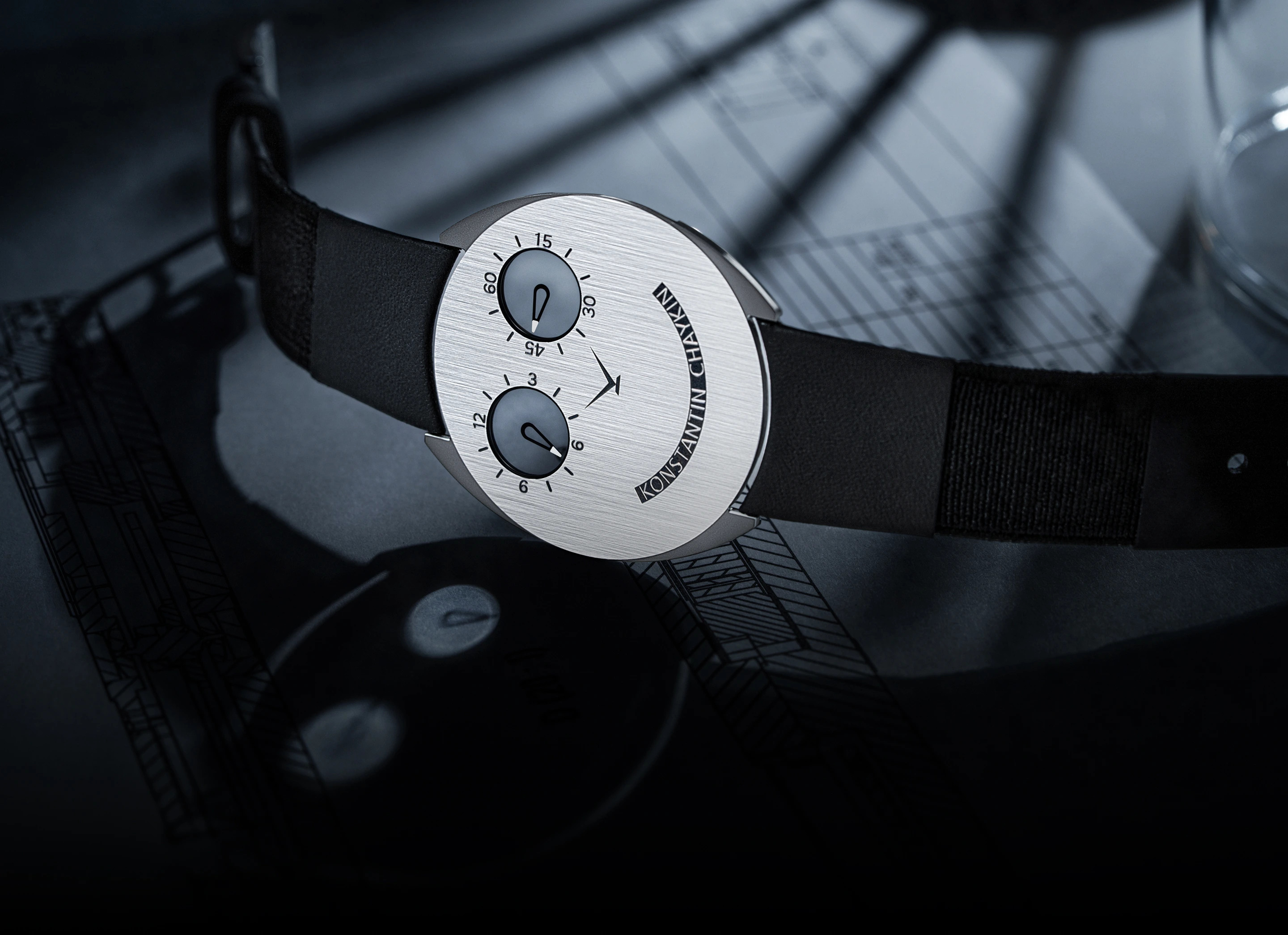
The 2026 ThinKing Mystery is the same case, the same thickness, and a redesigned dial that turns the time display into a mystery clock.
What "Mystery" means here
The traditional mystery watch, popularised by Cartier in the 1920s, hides the connection between hands and movement. The hands appear to float on a transparent disc, with no visible drivetrain. The trick is that the disc itself rotates, with the hands fixed to it.
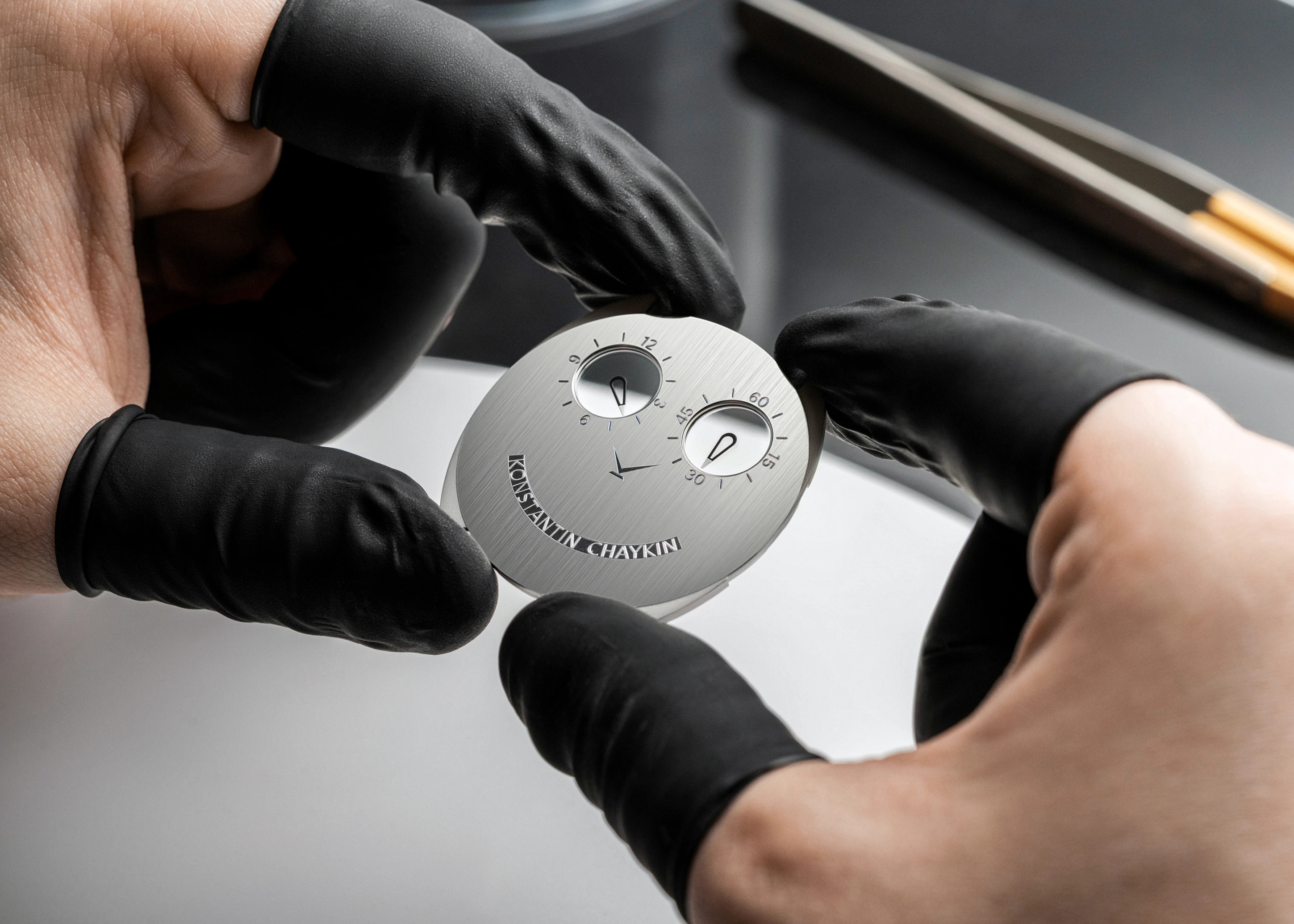
Chaykin extends the idea. As SJX Watches describes, the ThinKing Mystery has two transparent sapphire discs, one for the hour, one for the minute. Each is 10.6mm in diameter and 0.2mm thick. Each carries a single tick-mark printed on its surface. Through the dial-side aperture you see only the two ticks, advancing around their respective tracks, with no visible mechanism behind them.
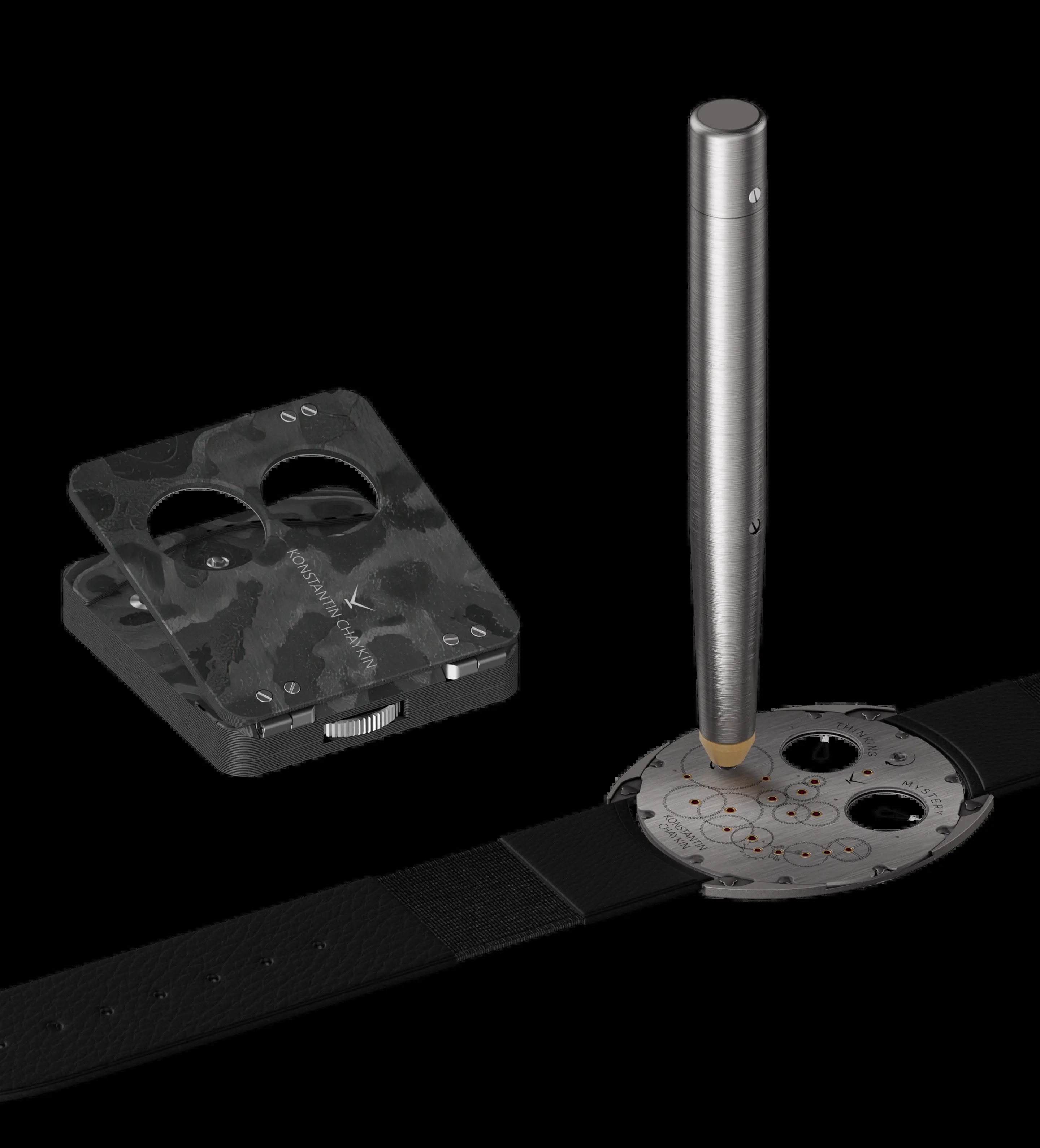
The discs sit inside a case that is 41mm wide and 1.65mm thick. The case is a non-magnetic nickel alloy, not titanium, because the alloy holds shape better in such a thin section. There is no crown. The watch winds and sets via a key, like a pocket watch, fitted into a small port on the side.
Calibre K.23-3.1: 38 hours of reserve at 1.65mm
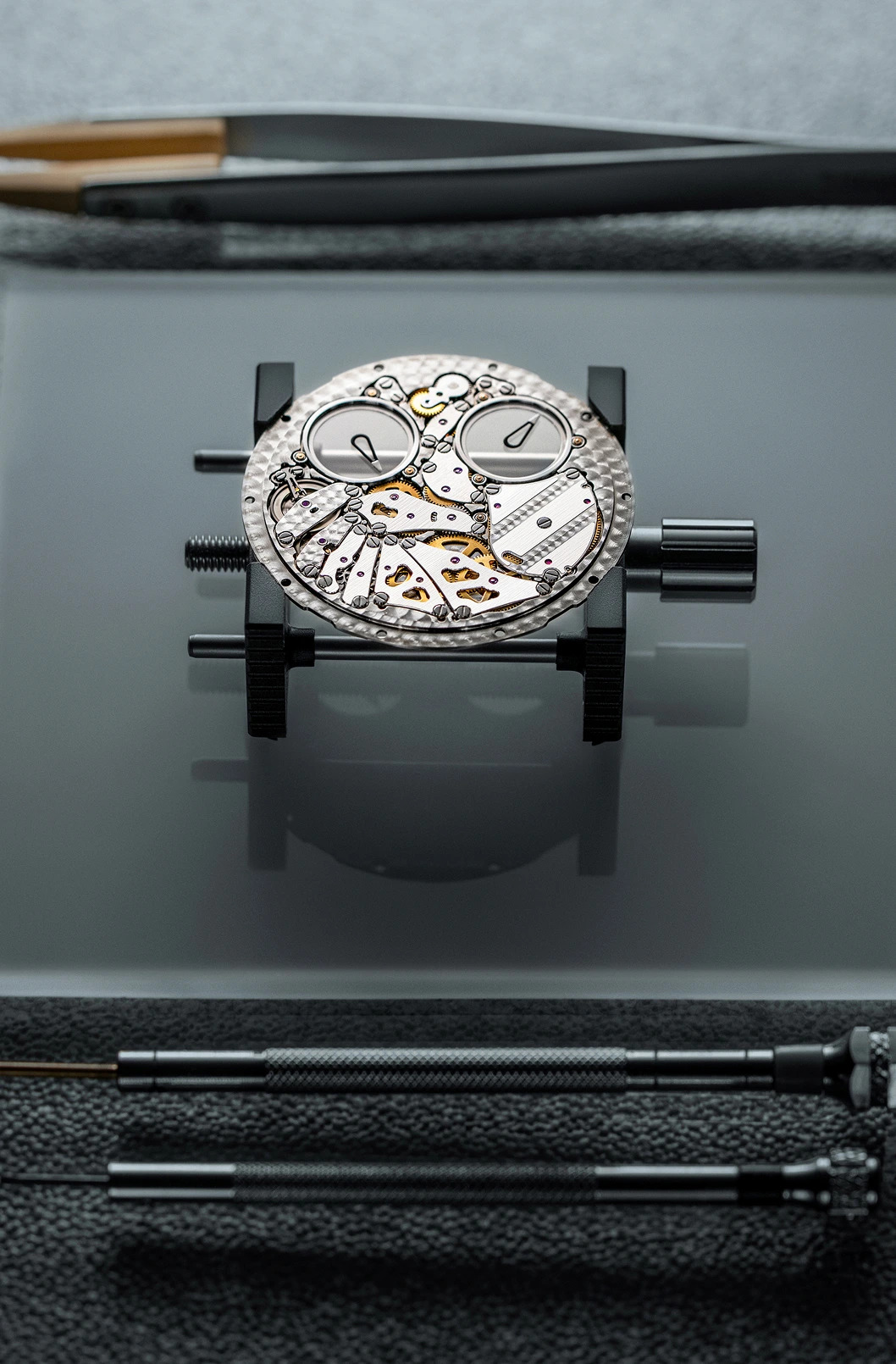
The movement is the K.23-3.1, an evolution of the calibre that drove the original ThinKing. Fratello reports it runs at 18,000 vibrations per hour, holds 38 hours of reserve, and uses the case itself as the back-plate. There is no separate movement-back; the gear train is held between the dial and the engraved caseback.
That last detail is what makes the thinness possible. A conventional thin watch would still need a base-plate at the back of the movement to hold the gears. By using the caseback as the base-plate, Chaykin removes a layer of metal that, on a 1.65mm-thick watch, would have been impossible to fit.
Where it lands
Revolution Watch's interview frames the watch as a refinement piece rather than a record-chase. The thickness is the same as the 2024 original; the contribution is the mystery dial, which Chaykin says he had drafted but considered too risky for the first ThinKing release. The 2026 version is the answer to "what would you do if the thinness was solved."
Pricing is CHF 400,000, around 420,000 euros, for a numbered run of 12. That places it at independent-watchmaker tier rather than at "thin watch" tier; the price is the price of Chaykin's signature, not the price of the case engineering.
For collectors who hold the 2024 ThinKing already, the Mystery is a companion piece, not a replacement. For everyone else, it is one of two argued contenders for "thinnest mechanical watch in the world," and the only one with a mystery dial. Twelve pieces will not satisfy demand at this price.
Sources: SJX Watches on the ThinKing Mystery; Fratello on the ultra-thin construction; Monochrome interview with Konstantin Chaykin; Revolution Watch on the design language; Konstantin Chaykin product page.