Most watches sold on a space story were, at best, near one. The Konstantin Chaykin SC02C is one of the rare ones that was actually built for the job. Shown at Geneva Watch Days 2026, it comes out of the manufacture's work with Roscosmos, Russia's space agency, and it has been tested where it was meant to work, outside the airlock.
A watch made for outside the airlock
The project started in 2018 with a mechanical chronograph intended for use beyond the orbital station. Prototypes of the resulting Space Conqueror were tested aboard the ISS, including during spacewalks, and the findings were used to refine the design. The latest generation accompanied cosmonauts on a spacewalk of more than six hours as recently as 27 May 2026. The SC02C is the version adapted for ordinary wear, keeping the solutions developed for professionals.
Built for vacuum
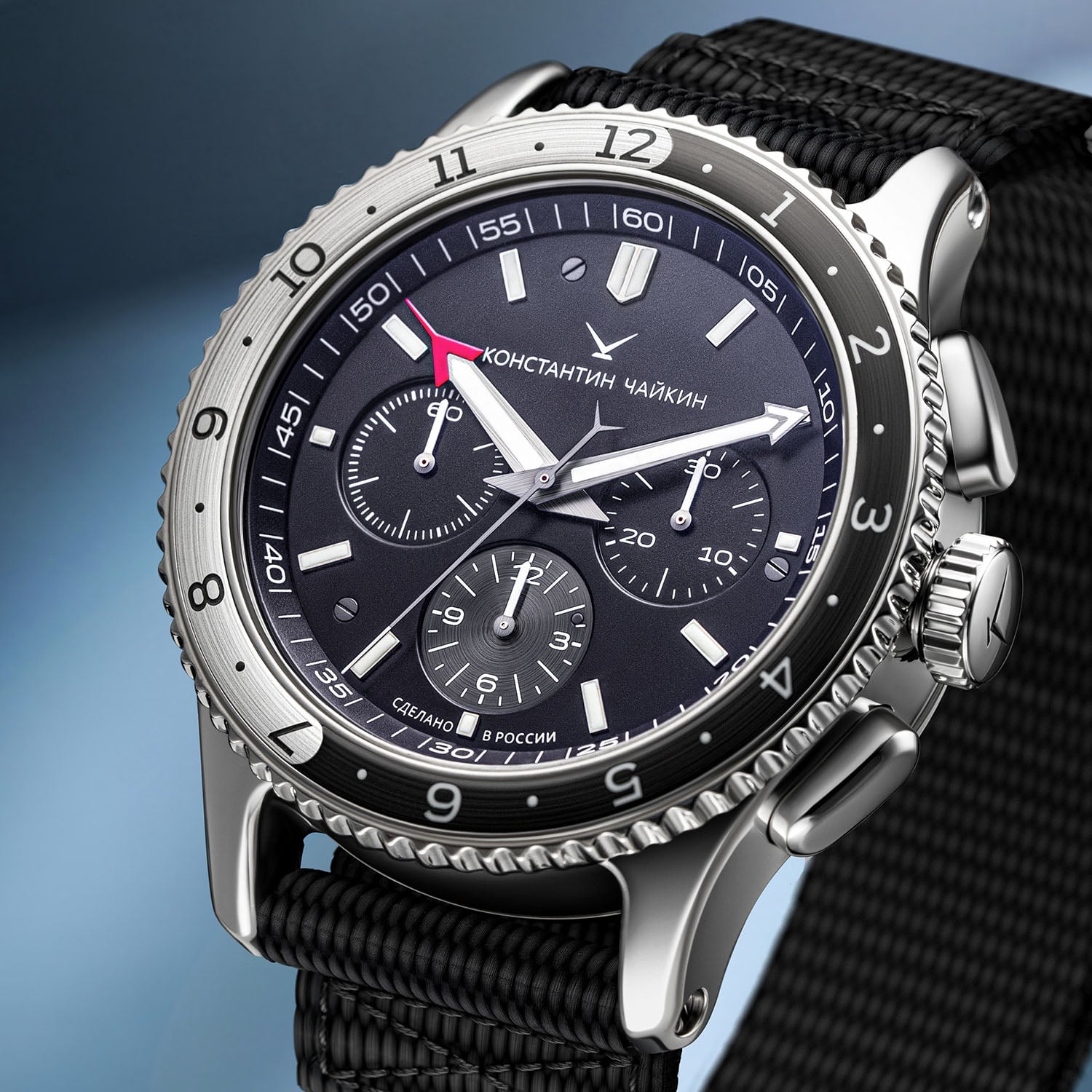
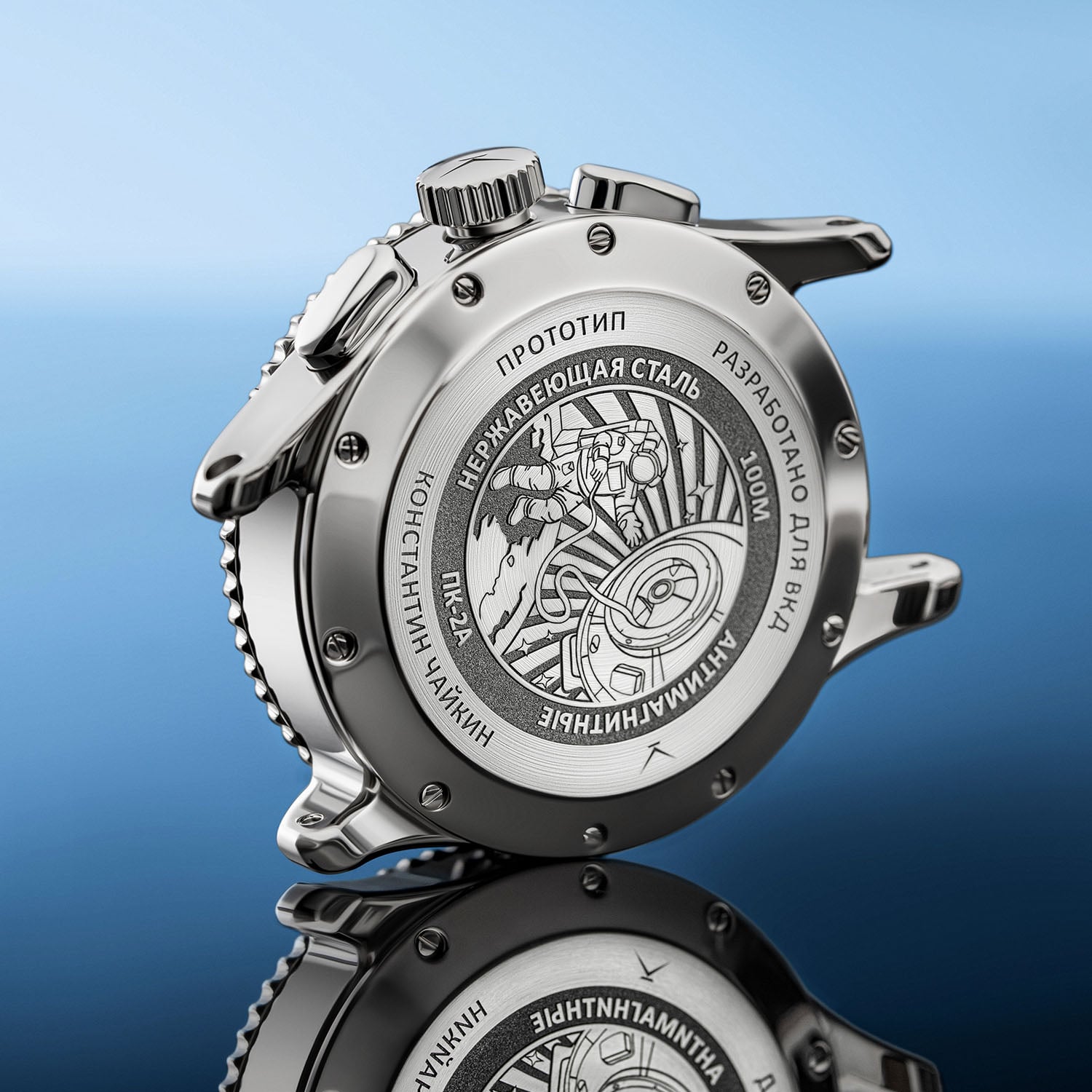
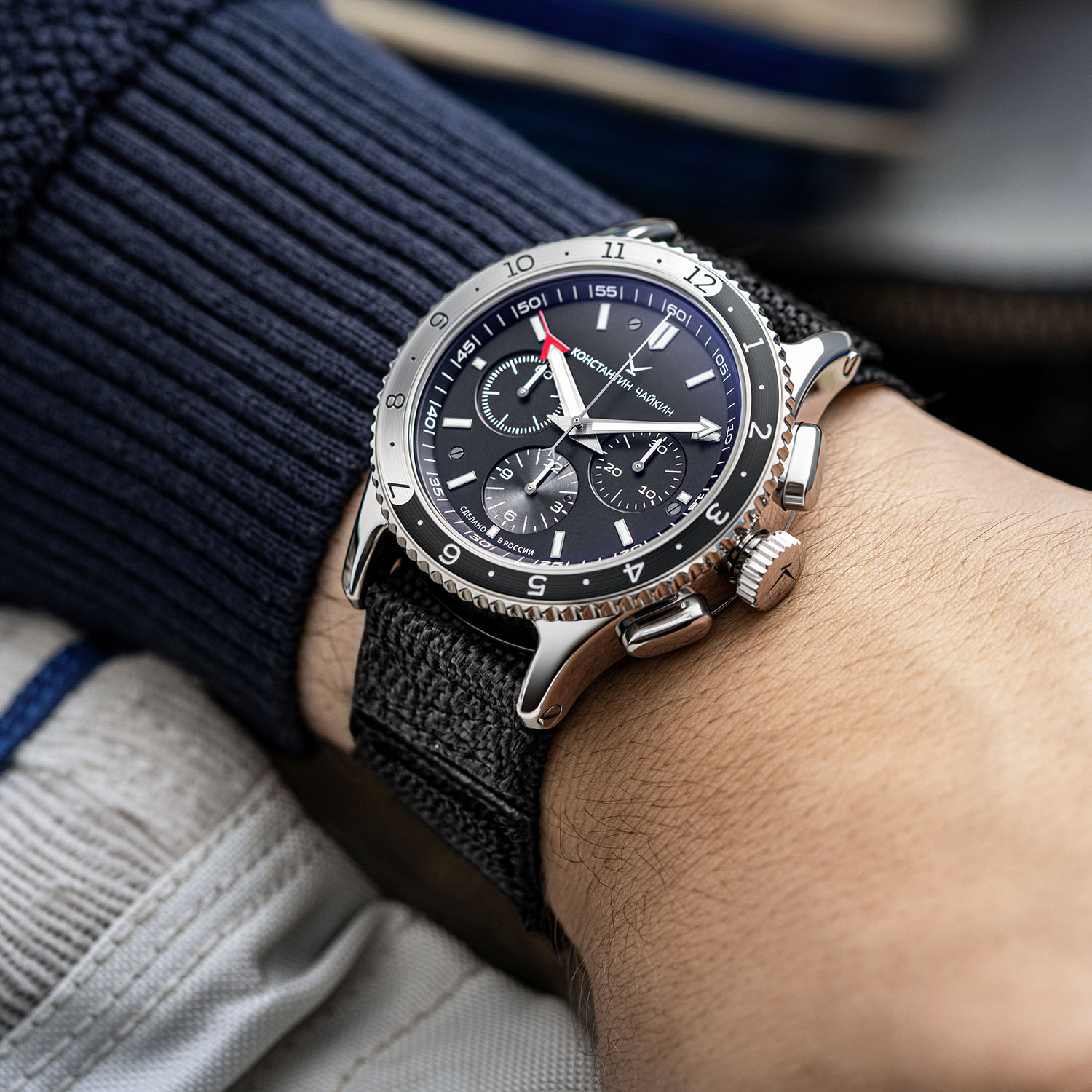
At 44mm across and 14.5mm thick, the steel case is plainly an instrument. Two rounded, polished chronograph pushers flank a large fluted crown, and a unidirectional bezel with a 12-hour scale sits over the dial. The solid caseback is fixed with ten screws and carries a 3D engraving of a cosmonaut on a spacewalk.
The details matter more than the dimensions. The sapphire crystal uses a reverse dovetail construction, its bevelled edge shaped so the crystal cannot be forced out of the case when pressure drops or loads spike. Before going up, the watches were put through centrifuge, vibration, temperature, and impact testing. The case is rated to withstand a vacuum down to one millionth of an atmosphere, carries antimagnetic protection to 4,800 A/m, and is water resistant to 100m.
The dial and the movement
The deep black dial is arranged for reading, not decoration. The minutes and seconds track sits on an inclined flange, there are three registers, and the applied markers and hands are large. The hour hand is tipped in red, a detail carried over from Chaykin's Mars Conqueror Mk3, and it has a job: it makes the bezel's 12-hour scale easier to use when timing a long interval. Hands, markers, and bezel all carry luminous material.
The engine is the hand-wound K.20-5, based on the historic Poljot 3133, with 60 components made by Konstantin Chaykin. The changes add a 12-hour chronograph counter and a stop-seconds function, and the balance is adjusted by micrometric weights rather than a conventional index regulator, with a damping ring to guard against vibration and shock. It runs at 21,600 vibrations an hour across 25 jewels, holds a 45-hour reserve, and is rated to within 15 seconds a day either way.
The lineage is the good part. The 3133 family succeeded the caliber 3017, a Venus 150 reworked by Soviet engineers, which powered the Strela worn by Alexei Leonov in 1965 during the first human spacewalk. The SC02C is the same story, sixty years on.
The catch, and the point
The watch comes on two black fabric straps, one of them extended to fit over a spacesuit. It is limited to 28 pieces, and the price is still to be confirmed. That makes it more a statement than a purchase for most people. But it is an honest one: a watch that earned its space credentials before it was offered for sale, rather than after.
Sources: Monochrome Watches and Konstantin Chaykin.