Ferdinand Berthoud is the elevated corner of Karl-Friedrich Scheufele's watchmaking. The Chopard co-president revived the name in 2015 in honour of the 18th-century horologist who left Switzerland for Paris in 1745 and built his reputation on marine chronometers, and the brand has stayed close to that founding idea of precision above all. Its third product family, the FB 3SPC, takes its cue from a decimal pocket watch with a cylindrical balance spring made in 1793 by Louis Berthoud, Ferdinand's nephew. For Geneva Watch Days 2026 the FB 3 returns in a new black ceramised titanium case, with a pair of crown guards and a textile strap that are both firsts for the line.
The part that does the work
The FB 3 was conceived as the smaller and slightly more attainable Berthoud, and it goes without a tourbillon or the fusée-and-chain constant-force system of the FB 1. What it keeps is the cylindrical hairspring. A helical spring of this kind breathes symmetrically around its axis rather than flattening to one side as a conventional flat spring does, which reduces the effect of gravity on the rate. Ferdinand Berthoud used the principle at sea; bringing it down to wristwatch scale took the team what it calls a long and tedious three years, ending in a variable-inertia balance and a cylindrical spring with two terminal curves, both shaped by hand. The brand's own claim, and a good one, is that this is the only wristwatch with a helical hairspring and a variable-inertia balance to earn COSC chronometer certification.
A darker case, the same architecture
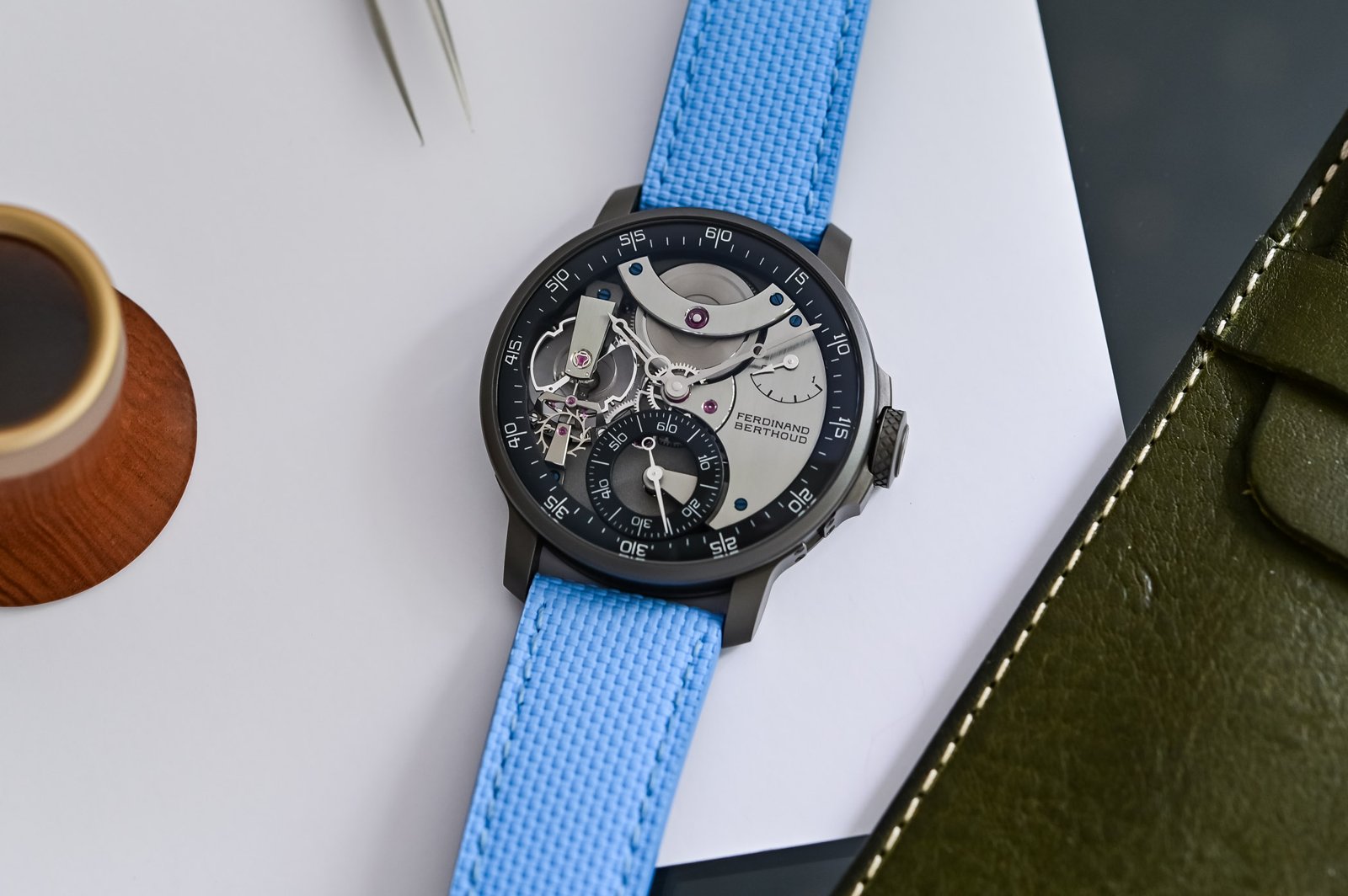
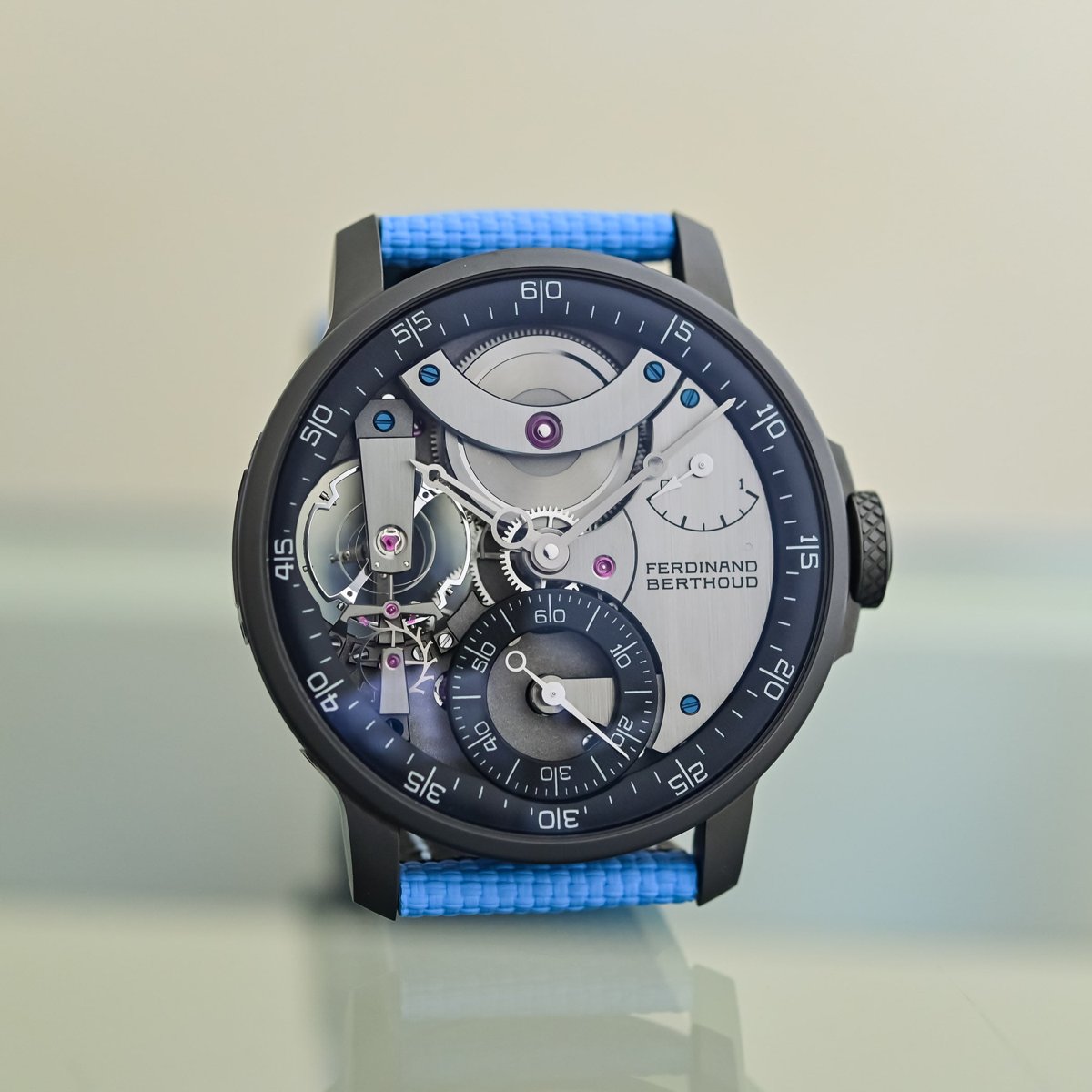
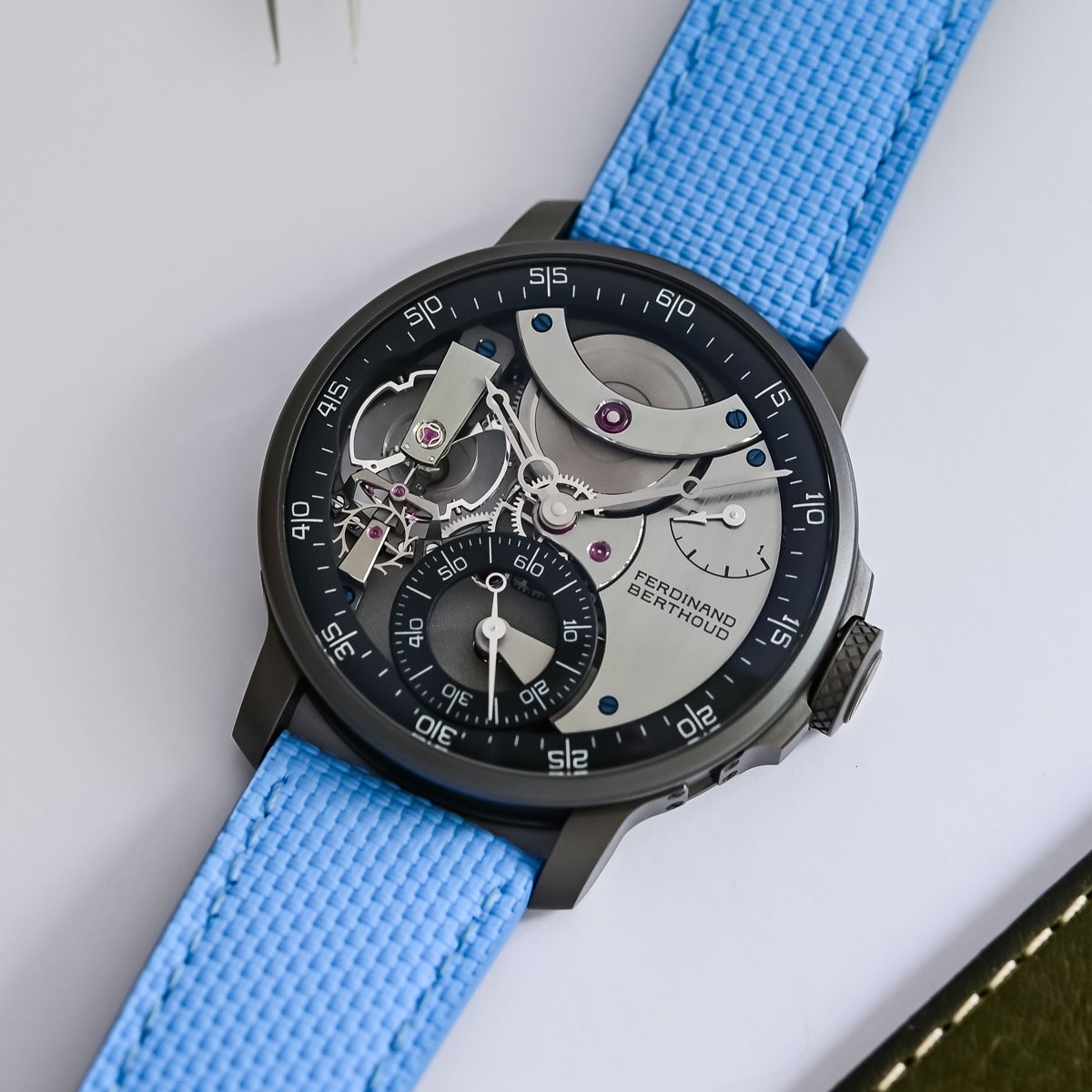
The case stays at the familiar 42.3mm by 9.43mm, now built from 57 parts in black ceramised titanium. The material is sandblasted to a dark matte finish, harder-wearing than plain titanium and just as light, and it gives the watch a more contemporary and sportier character than the white gold, rose gold, titanium and platinum versions that came before. This is the first FB 3 with crown guards flanking its large 8.5mm crown, though water resistance stays modest at 30 metres. A domed sapphire sits over the dial, another over the movement at the back, and a rectangular sapphire porthole is cut into the left flank so the balance spring can be watched from the side.
The dial is really the movement seen from the front. Hours and minutes are read off a peripheral ring in black varnished brass with grey numerals, matched by the small seconds at six. The mainplate is black-sandblasted German silver, crossed by six bridges with a vertical satin finish, and the regulating organ is left open in a well at nine o'clock, held by three separate bridges stacked from the balance down to the escape wheel. A power-reserve hand sits at 2:30, and the skeletonised, open-tipped hour and minute hands are in white gold.
The calibre FB-SPC
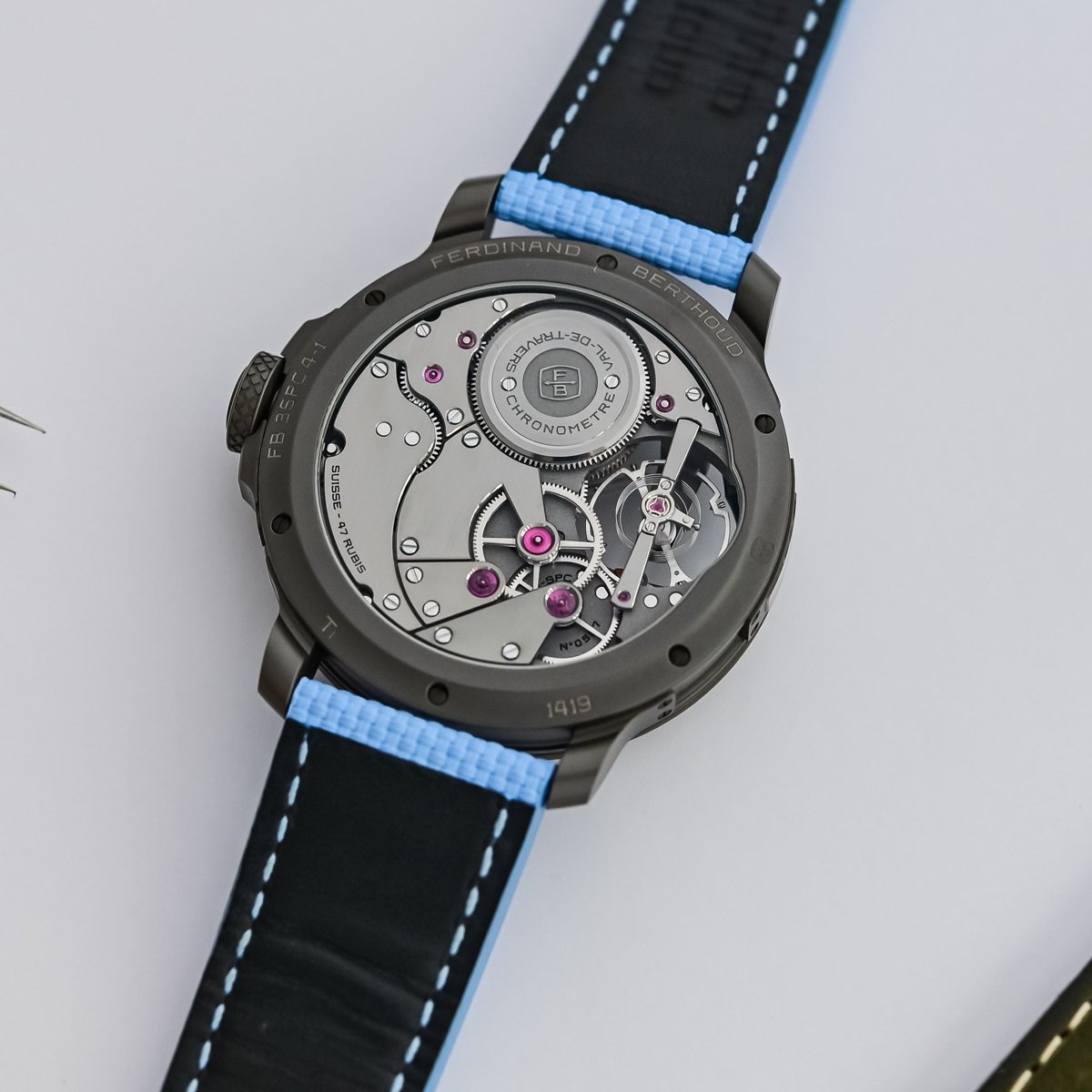
Behind it is the hand-wound Calibre FB-SPC, 34mm by 6.84mm, made of 230 components with 47 jewels and running at 21,600 vibrations per hour for a 72-hour reserve from a single large barrel fitted with a slipping bridle to guard against overwinding. The finishing is where a Berthoud earns its keep: 102 exterior and 15 interior angles all done by hand, six bridges on the dial side and ten on the back, and eight separate decorative techniques across the plate and bridges. The watch comes on a black textile strap with a titanium pin buckle, the first fabric strap the collection has offered, with a titanium folding clasp and other straps available on request. The light blue strap seen in the brand's photographs is one such option.
Price is on request. Watch Advice has reported a figure of around 171,600 US dollars, which places it where a hand-finished, COSC-certified independent chronometer of this kind tends to sit. The appeal is narrow and deliberate: not a complication for its own sake, but an old chronometry idea, done properly, and now in black.
Sources: Monochrome Watches and Watch Advice.