De Bethune helped start Geneva Watch Days, so it turns up every year, and for the seventh edition it went back to one of its own ideas. The brand first built a digital time display in 2006, an in-line calendar with jumping hours, and put a pared-down version into the DB28 Digitale in 2014. For 2026 it has moved that display onto the DB25, its rounder and more classical case, and let the decoration do the rest.
A dial that reads as a landscape
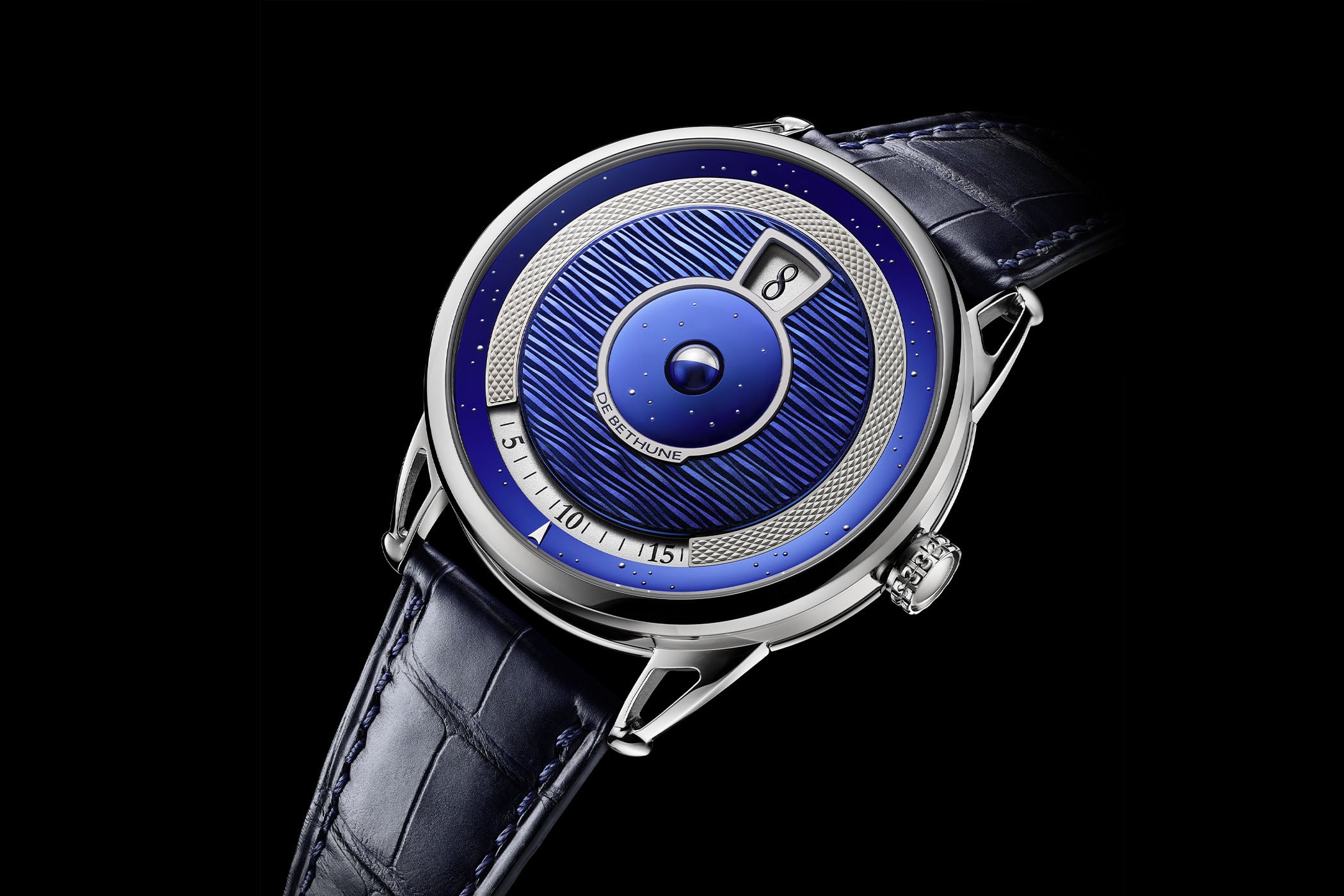
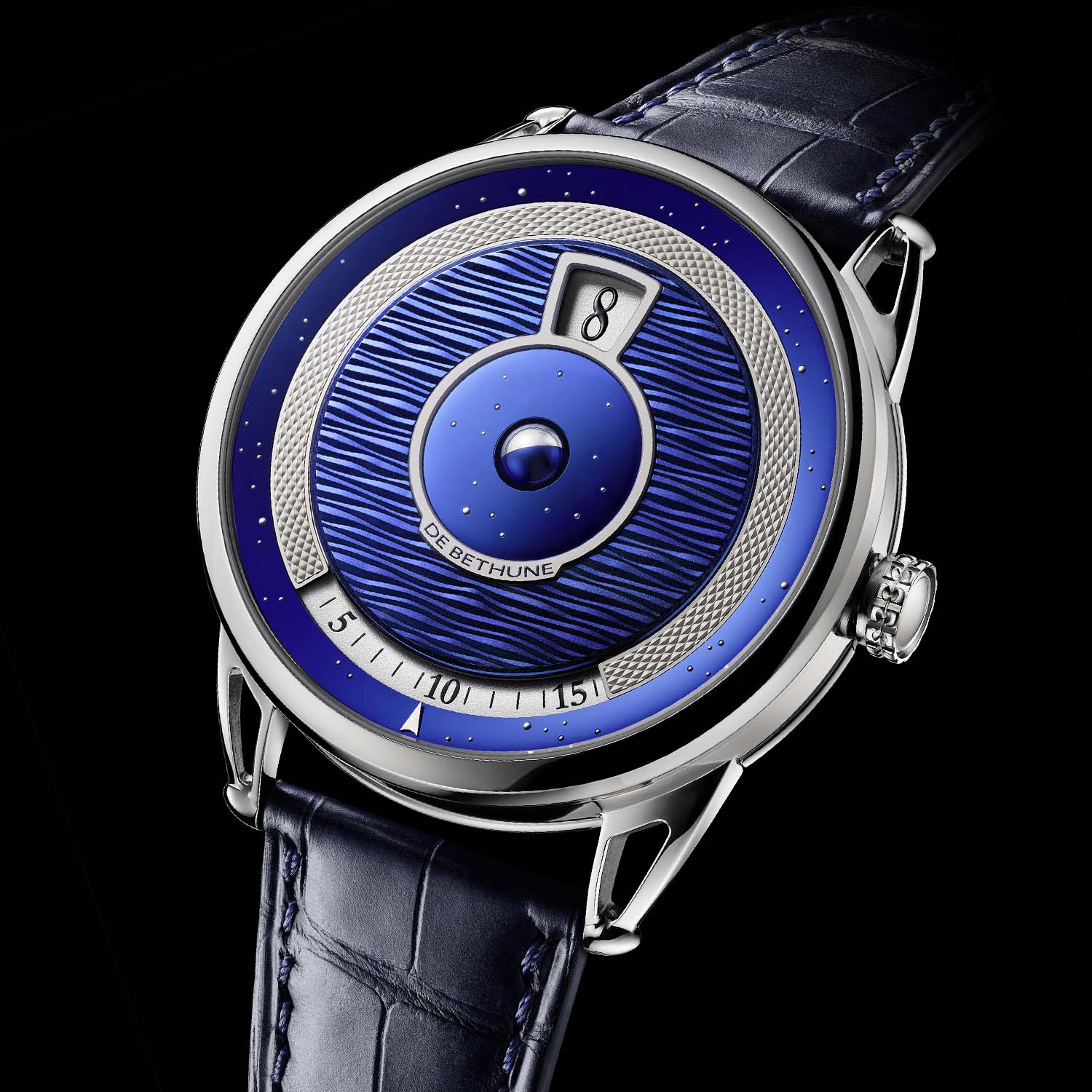
The layout is spare. A window at twelve shows the jumping hour. A rotating disc at six carries the minutes, read against a fixed arrow. In the centre sits a spherical moon phase, two polished hemispheres, one palladium and one flame-blued steel, that turns to track the moon and is accurate to within a day every 1,112 years. With no hands crossing the dial and no applied markers, the surface is left open.
That surface is the point. The main plate is heat-blued titanium cut with De Bethune's random guilloche, an irregular pattern of undulating lines the brand describes as a rippling river, first seen last year on the DB25xs Sand Winds. Around the moon is a sky the brand calls Starry Varius, blued titanium set with hand-applied grey gold pins of different sizes for the stars. A silvered ring with a traditional barleycorn guilloche separates the two, and the fixed outer ring, also blued and star-set, carries the minute arrow. The reading of a moonlit river under a night sky is deliberate, and it holds together better than that description suggests.
The case and the movement
The case is 42mm across and 11.9mm thick, mirror-polished grade 5 titanium in the DB25 shape, with the brand's hollowed bullet-shaped lugs and sapphire crystals treated with anti-reflective coating on both sides. Water resistance is 30m, which is right for a watch built around a dial rather than a bezel.
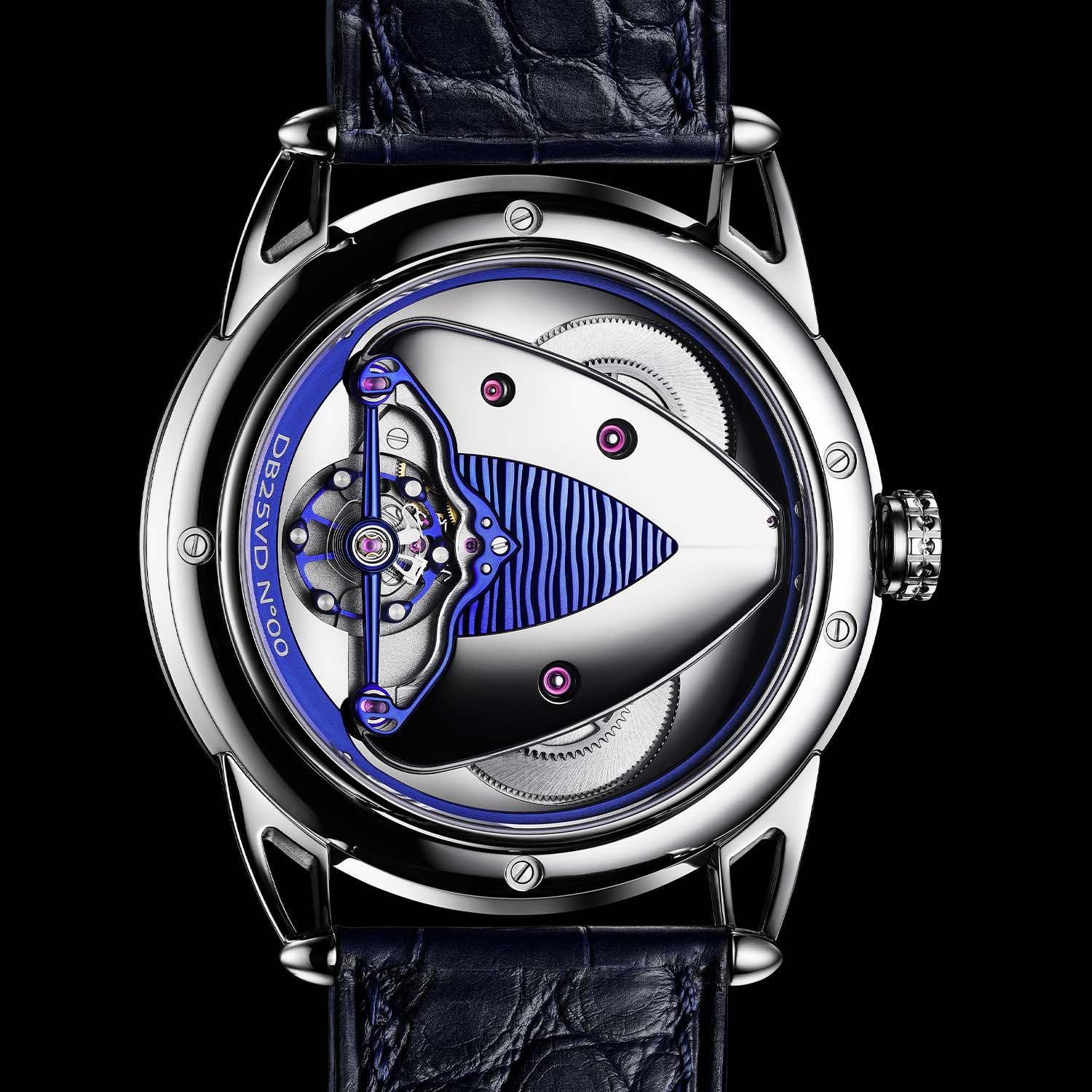
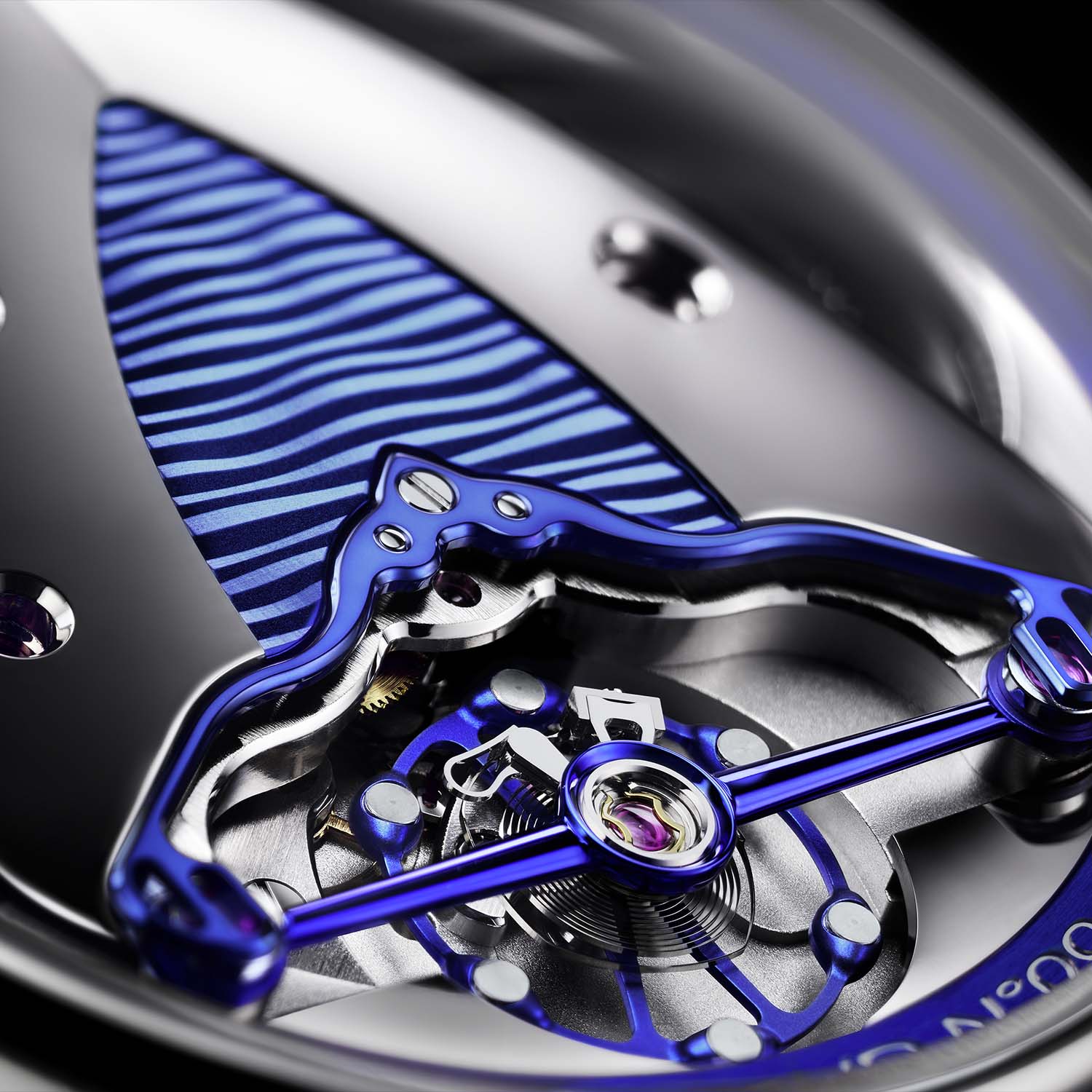
Through the caseback is the DB2144V3, the third-generation version of the hand-wound calibre that has run De Bethune's digital watches, here shielded by the brand's signature deltoid bridge, decorated with the random guilloche motif for the first time. It carries 416 components and 32 rubies, twin barrels for a five-day reserve, and runs at 28,800 vibrations an hour on a titanium balance wheel with grey gold inserts, a flat-terminal-curve balance spring, a silicon escape wheel and the triple para-chute shock system. The caseback of the first example is engraved DB25VD N° 00.
Price and place
De Bethune lists the DB25 Digitale as price on request, which is the usual line for a piece made in tiny numbers. SJX reports it at around CHF 106,000 before tax, roughly twenty percent above the DB28 Digitale of a decade ago. It is paired with a dark blue alligator strap and a polished grade 5 titanium buckle. More at debethune.ch.
Digital-display watches from independents can tip into novelty, where the reading trick is the whole watch. This one avoids that by treating the freed-up dial as a canvas for the techniques De Bethune is actually known for, the blued titanium, the guilloche and the spherical moon, rather than as an end in itself. It is a familiar mechanism in the brand's most wearable case, and the restraint is what makes it work.
Sources: Monochrome Watches and SJX.