Baltic has come a long way from its 2017 crowdfunding start. The Paris-based brand, founded by Etienne Malec, still designs in France and assembles its watches in Besançon around reliable outsourced movements, but its retro-flavoured divers and accessible prices have carried it well beyond microbrand status. The Aquascaphe is the watch that did most of that work, and its second-generation MK2 has just gained the one thing the line never had: a date. Monochrome covered the update on 5 August 2026, with the full range and pricing.
A date that does not spoil the dial
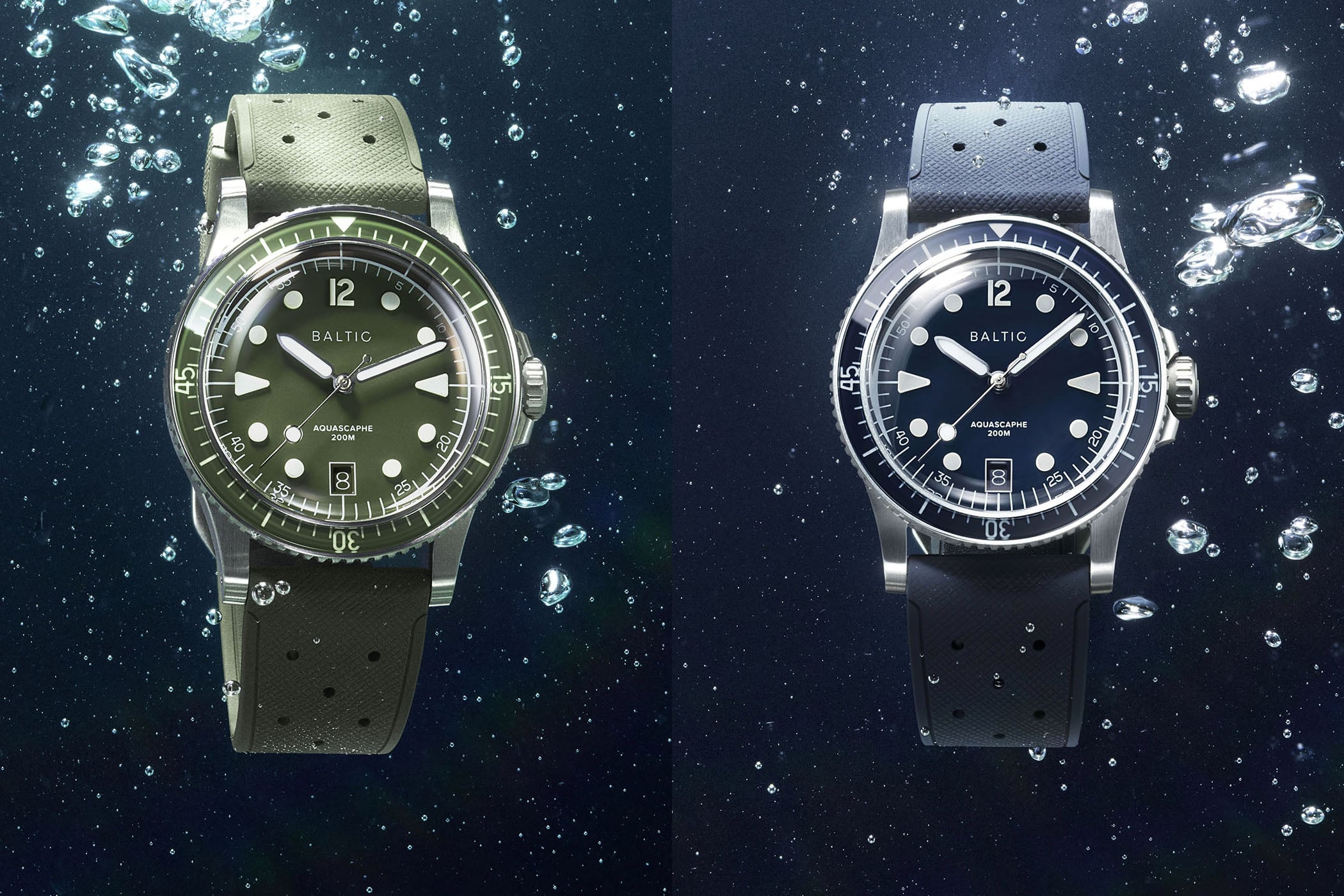
The obvious risk with adding a date to a clean vintage-style diver is that it unbalances the dial. Baltic's answer is to put the window at 6 o'clock rather than the usual 3, and to colour-match the date disc to the dial so it reads as part of the design rather than a cut-out. It is a small decision, but it is the kind of thing that separates a considered update from a lazy one.
The MK2 replaced the long-running Aquascaphe Classic last year after a full overhaul, and the new date option slots into that existing range. Both case sizes carry over, a compact 37mm and a more substantial 39.5mm, each 12.9mm thick with the domed crystal, or 10.7mm without it, and rated to 200 metres. The cases keep the flat-topped crown guards, screw-down crown, vertically brushed surfaces and drilled lugs of the 2025 redesign, along with the double-domed sapphire crystal that mimics the distortion of old acrylic.
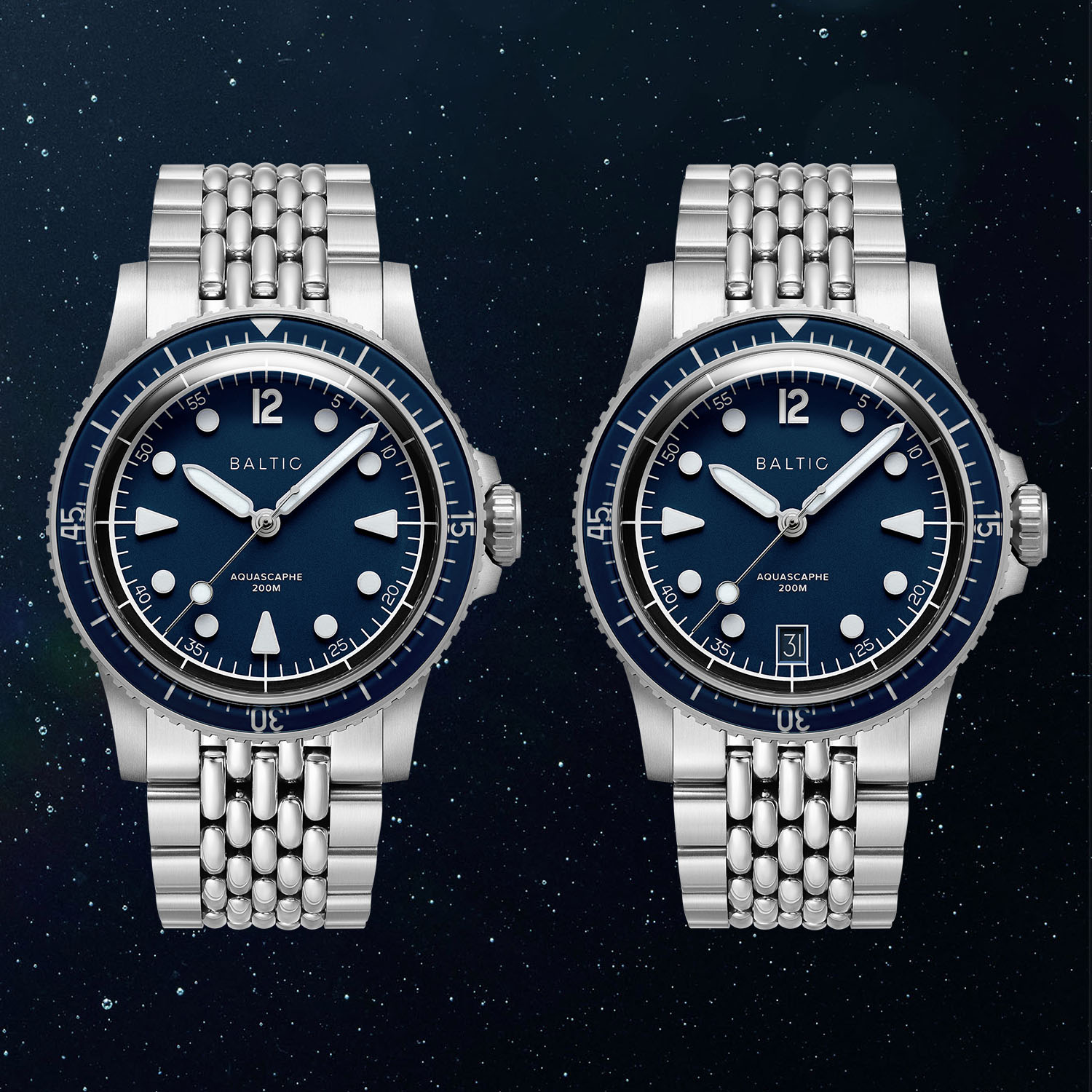
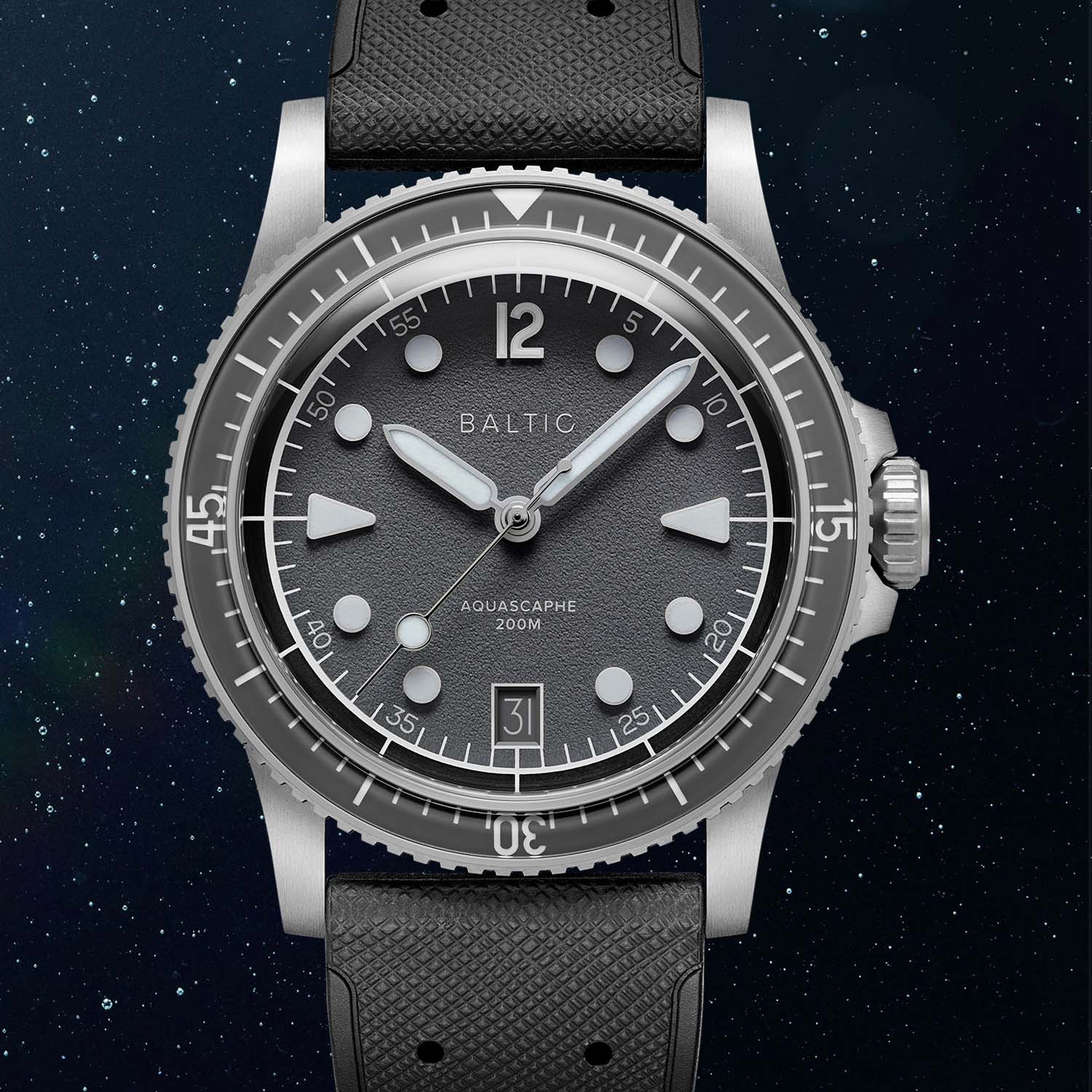
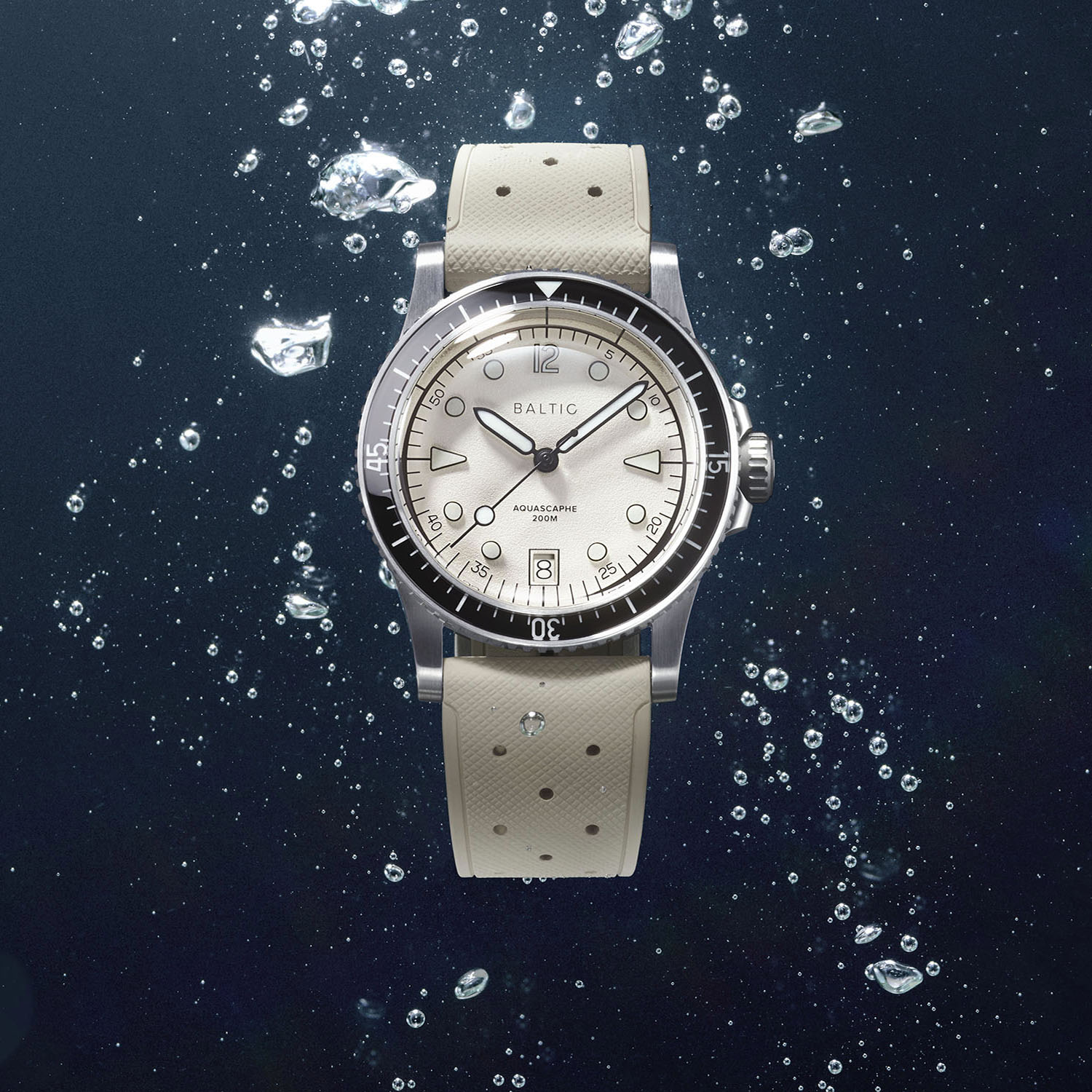
The dial itself was reworked in the 2025 update and stays as it was, a Maxi Dial layout with thick applied Lumicast indices in Super-LumiNova BGW9. Four colours are offered: grey and warm silver in a matte grained finish, blue and green with a glossy lacquer. The green, blue and grey versions get matching coloured sapphire bezels, while the warm silver model takes a contrasting black one.
Two movements, one for each version
The mechanical split is worth noting. The no-date MK2 runs the Miyota 9039, the version of Miyota's 9000-series automatic that has no date function and, importantly, no ghost date position, so the crown does not stop at an empty setting position that does nothing. The MK2 Date uses the Miyota 9015, which does carry the date. Both beat at 28,800vph, hold a 42-hour reserve and hack the seconds. It is a sensible way to handle the two variants, since it avoids the half-measure of a dateless dial sitting on a movement that still has a date wheel spinning underneath.
Still priced like a microbrand
For all that it has grown up, Baltic has kept the Aquascaphe affordable. Before tax, the no-date MK2 is EUR 630 on rubber and EUR 695 on a beads-of-rice or flat-link steel bracelet; the MK2 Date is EUR 655 on rubber and EUR 720 on a bracelet. All the straps use quick-release spring bars, so switching between the vulcanised rubber and the two steel options takes seconds.
At those prices, with the in-house-designed case, the sapphire bezel insert and now a properly thought-out date, the MK2 is a hard watch to fault on value. Baltic has spent years earning the benefit of the doubt from enthusiasts, and the date option is a small, well-judged addition rather than a reinvention. That restraint is more or less the whole appeal.