A week from today, Audemars Piguet walks back into Watches and Wonders Geneva for the first time since the fair replaced SIHH in 2020. The timing is deliberate. This is AP's 150th anniversary year, and the brand has spent the first quarter of 2026 building toward a collection that's hard to summarize in a single headline.
The centerpiece: a pocket watch with 47 functions.
The 150e Héritage
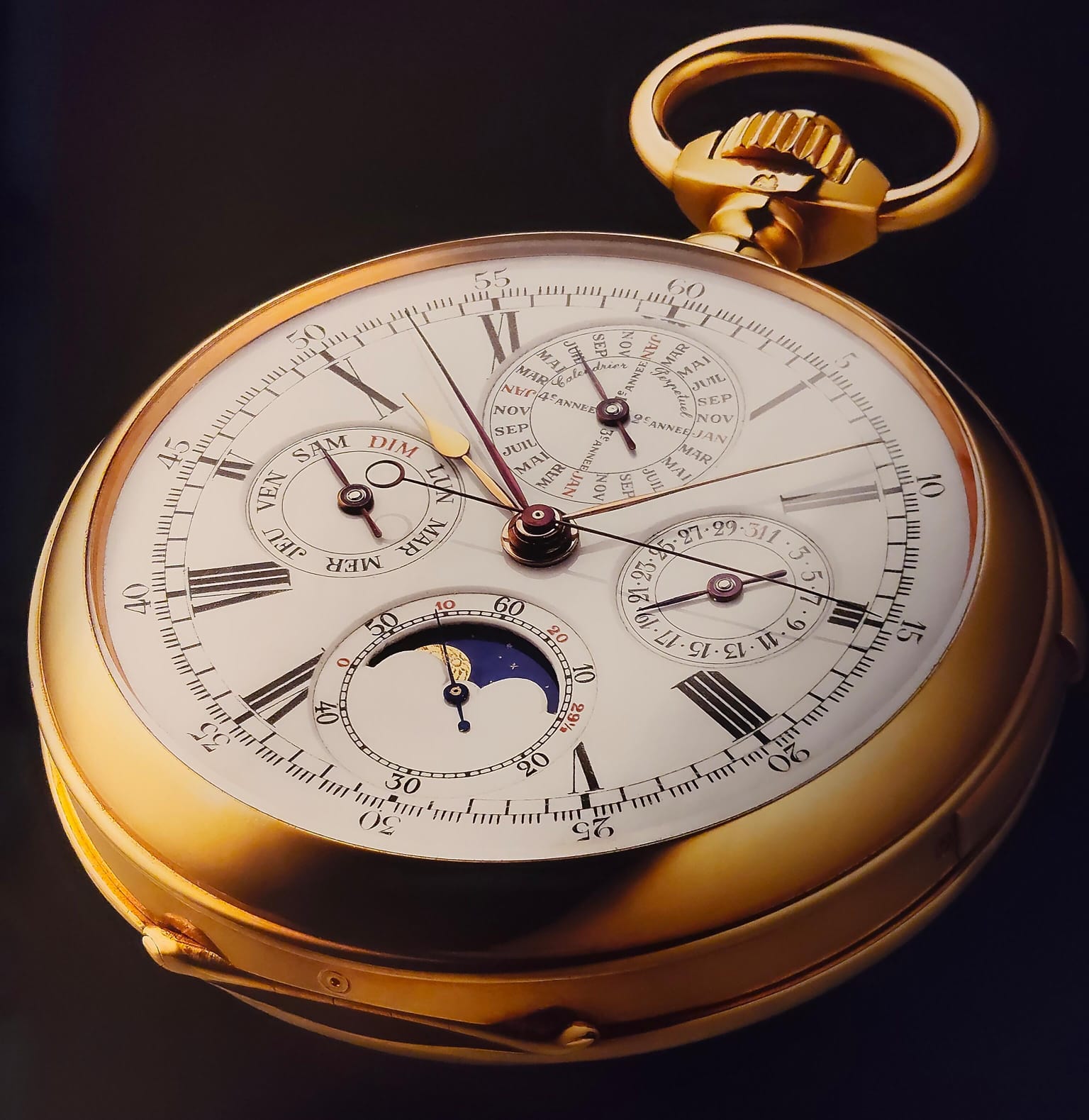
The 150e Héritage is a 50mm platinum pocket watch with hand-engraved casework and grand feu enamel dials. It spans roughly 30 complications, including a flying tourbillon, split-seconds chronograph with flyback, grande and petite sonneries with supersonnerie, and a semi-Gregorian perpetual calendar. Monochrome Watches, which covered the piece in detail, called it one of the most ambitious creations in the brand's history.
It's not a production watch. It's a statement about what Audemars Piguet can do when the limits come off. Think of it as a technical autobiography compressed into platinum and enamel.
What makes the 150e Héritage so striking is not just the number of complications, but their lineage. This watch connects directly to Le Brassus' roots as a complications house. Audemars Piguet has always been in the business of solving problems others found impossible. The Universelle pocket watch from 1899, for instance, was one of the first chronographs designed specifically for precision timekeeping under field conditions. Later, the brand introduced the Star Wheel concept, a brilliant solution to the perpetual calendar problem that many independents still use today. The 150e Héritage isn't just another grand complication. It's a continuation of a 150-year conversation about what precision timekeeping can be.
Caliber 7139: A quiet revolution for the Royal Oak
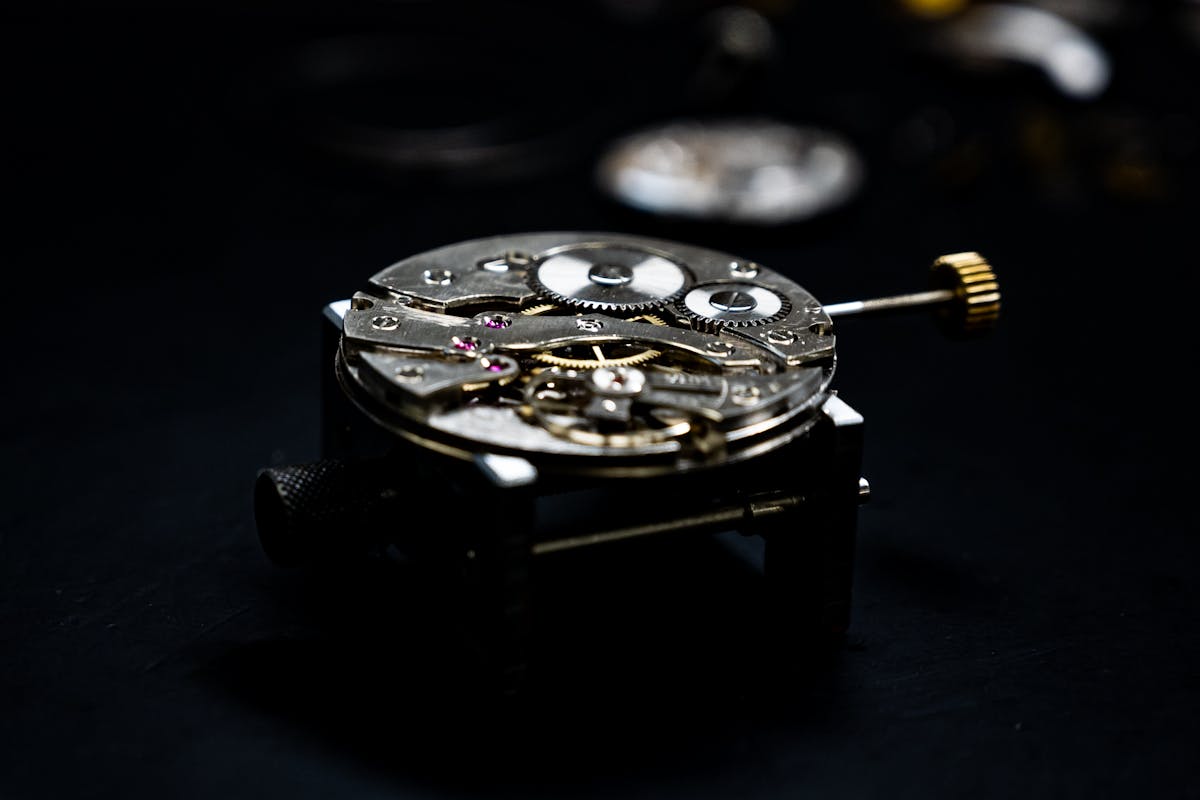
More likely to affect actual buyers is Caliber 7139, a new self-winding openworked perpetual calendar movement. It replaces the retired Caliber 5135 and introduces something collectors have been asking about for years: all calendar functions adjustable through the crown alone. No pushers, no tools. Robb Report covered five key releases from the anniversary drop, noting that the new movement appears in both the Royal Oak and Code 11.59 lines.
The technical improvement here is subtle but real. Perpetual calendars traditionally require a corrector pin, a tiny spring-loaded pusher recessed into the case side that you manipulate with a stylus to adjust the day, month, or date. It's a fiddly business, especially when you're trying not to scratch the case. Caliber 7139 eliminates that entirely by moving all corrections to the crown itself. The crown becomes a multi-function tool: pull it to the first position to set the hour, pull it further to set the date, then use different rotation patterns (clockwise, counterclockwise, rapid) to advance other calendrical functions. For anyone who's ever fumbled with a corrector pin at the end of February, this is a meaningful upgrade. It's the kind of refinement that doesn't make headlines but changes how you actually own and use the watch.
150 Years of the Vallée de Joux
The real story of the 150th anniversary isn't just about the watches. It's about continuity. Audemars Piguet is one of only three watch houses that have remained continuously active in the Vallée de Joux since its founding in 1875. (The other two are Patek Philippe and Vacheron Constantin.) But AP is unique among these three: it's still family-owned, still based in Le Brassus, the village where Jules-Louis Audemars and Edward-Auguste Piguet first set up their workshop.
The families themselves matter here. The Audemars and Piguet families haven't been the public face of the brand in decades, but they still own the company outright. No public shareholders, no private equity firm calling the shots from another continent. That continuity of ownership has allowed AP to make decisions that a public company simply couldn't justify to Wall Street. The Universelle pocket watch took three years to develop and sold in tiny numbers. The 47-complication 150e Héritage will sell maybe a handful of pieces. Neither decision makes sense from a financial perspective, but from a legacy perspective, they make perfect sense.
When AP closed itself off from the public watch shows in 2019, the decision felt bold, almost defiant. Looking back from 2026, it looks more like patience. The brand was investing in its Le Brassus manufacture, deepening its connection to the valley, and waiting for the right moment to reconnect with a broader audience. The 150th anniversary is that moment.
The Neo Frame Jumping Hour
In February, AP revealed the Neo Frame Jumping Hour, reimagining a complication from the 1920s in a modern automatic form. It's a niche piece, but it speaks to the anniversary theme: revisiting the brand's deep catalog of historic complications and rebuilding them with contemporary movement architecture. Options The Edge, which profiled the release, described it as part of AP's broader push to reconnect its avant-garde identity with its 19th-century roots.
Why the return to Watches and Wonders matters
Audemars Piguet left SIHH in 2019, opting for private events and its own AP House format. The decision was polarizing. Some praised it as a show of independence. Others saw it as an inconvenience for retailers and press who now had to make a separate trip.
Coming back in an anniversary year changes the entire dynamic. Watches and Wonders has matured significantly since AP's departure. The fair now hosts 66 brands and has expanded beyond its original venue into the Cité du Temps and surrounding Geneva landmarks. The expansion is deliberate: the watchmaking fair is becoming less of a single-building event and more of a citywide conversation about the craft. That's gravitational pull. When a house as influential as Audemars Piguet returns to that conversation, it signals something deeper than a temporary PR move. It means the fair has become essential again.
SJX Watches reported that AP plans to hold back at least one more surprise for the fair itself, something described internally as "more lifestyle-oriented." That could mean anything from a collaboration to a new case material. Either way, the brand arrives in Geneva on April 14 with momentum it hasn't had at a public fair in six years.
The rest of the industry will be watching to see whether the return is permanent or a one-off anniversary gesture. For collectors, the more immediate question is whether the new perpetual calendar movement and its crown-only correction system will trickle down to non-openworked models by the end of the year.
Sources: Monochrome Watches, Robb Report, SJX Watches, Options The Edge, Watches and Wonders official program, InsideHook.