A watch complication is any function beyond basic timekeeping. Some complications are genuinely useful. Others are purely for collectors who love mechanical intricacy. Understanding the difference helps you figure out which complications are worth paying for and which ones are novelty.
The Most Practical Complications
The date window is the most common and actually useful complication. It shows the date of the month. For a daily watch, this is genuinely convenient. You don't have to mentally calculate what day it is. The cost impact is minimal, and the value is real.
The GMT or second time zone complication shows a second hour hand or ring that displays another time zone. If you travel internationally or work with people in other zones, this is genuinely useful. It lets you tell the time in two places at once. For someone who never travels or works globally, it's decorative.
A date window and GMT combined is a practical setup for an everyday watch. You know what day it is and can see two time zones. It's not flashy, but it works.
The Chronograph
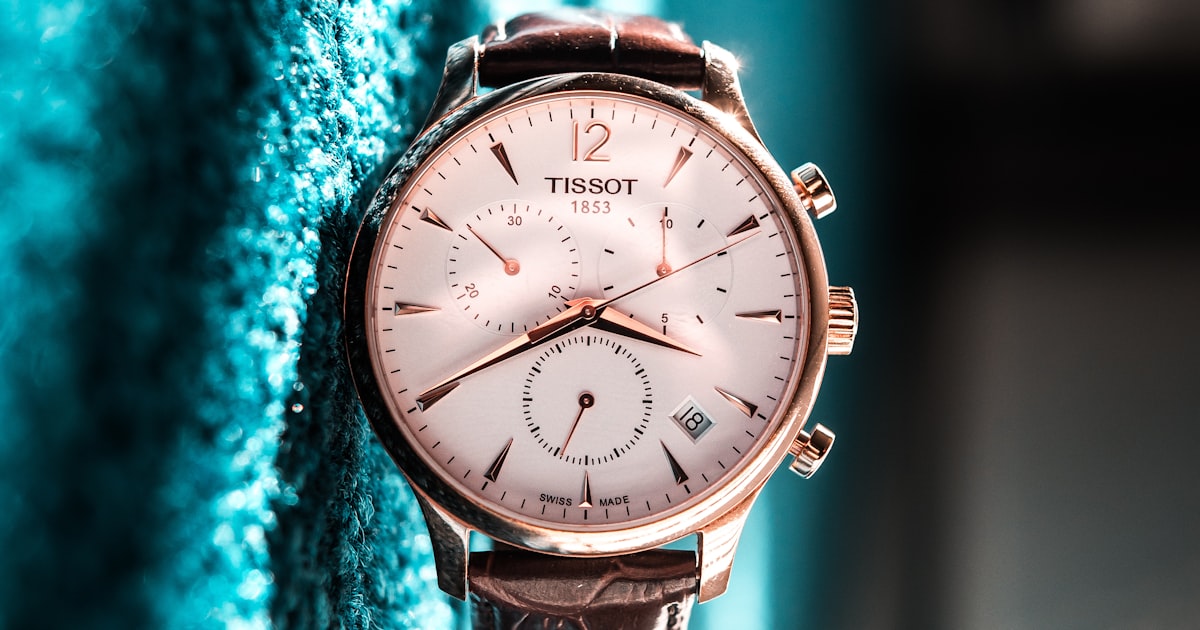
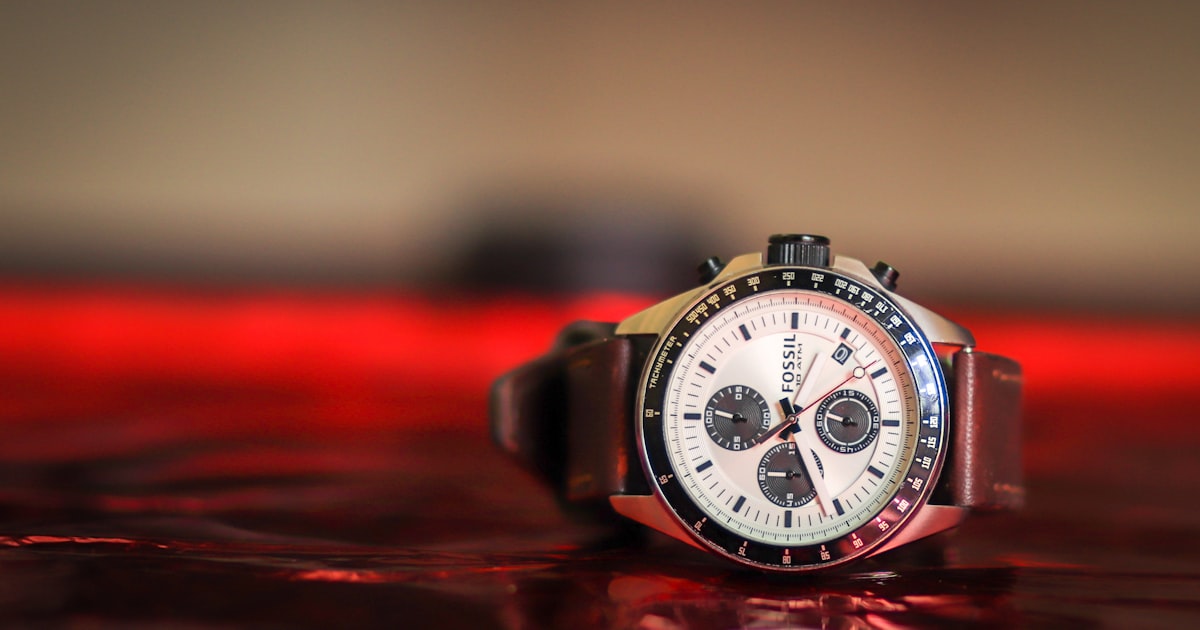
A chronograph is a stopwatch built into the watch. There are sub-dials that record hours, minutes, and seconds of elapsed time. You press a button to start timing, another press stops it, and a third press resets it.
Chronographs are practically useful if you regularly time things. They're fun to use regardless. They require more complex movements than simpler watches, so they cost more and are more prone to issues if not maintained.
Many people buy chronographs more for the aesthetic appeal than for actual timing needs. The sub-dials look complex and professional. This is fine. A beautiful chronograph is worth owning even if you rarely use it.
Moon Phase
A moon phase complication shows the current phase of the moon. It's a rotating disk with a lunar calendar illustration that advances as the days pass.
In practical terms, few people need to know the moon phase from their wrist. But if you appreciate lunar cycles for aesthetic, navigational, or personal reasons, it's a charming complication. Some people genuinely enjoy seeing their watch reflect the actual phase of the moon outside.
Moon phase watches have a higher perceived value in the collector world, so they can appreciate over time. But that's speculation. As a practical function, it's near zero.
Annual and Perpetual Calendars
An annual calendar shows the month and date correctly all year except February, which requires manual adjustment once a year. A perpetual calendar accounts for the varying lengths of months and leap years, requiring adjustment only in the year 2100.
These are genuinely impressive mechanical feats. They're expensive. And honestly, they're solving a problem that doesn't exist anymore. Your phone knows the date. But from a mechanical engineering perspective, they're remarkable.
The Tourbillon
A tourbillon is a cage that rotates constantly, carrying the balance wheel and escapement with it. The idea is that by rotating the mechanism, gravitational effects on timekeeping even out, resulting in better accuracy.
In theory, tourbillons improve accuracy. In practice, modern manufacturing has made simpler movements accurate enough that the improvement is marginal. Tourbillons are expensive to produce and are most valuable as a statement about watchmaking craft.
A tourbillon is beautiful to watch if the watch has a display caseback. The constant rotation is mesmerizing. If you love the aesthetic and appreciate the engineering, a tourbillon is worth it. If you're buying it purely for accuracy improvement, save your money. A simpler watch will keep time just as well.
The Minute Repeater
A minute repeater is a complication that sounds the time when you press a button. High notes and low notes chime the hours, quarters, and minutes. A skilled watchmaker can build one, but it's extraordinarily complex.
Minute repeaters are collector pieces. The cost is very high. The practical utility is essentially zero in the modern world. You have a phone to tell you the time. But if you appreciate the artistry and mechanical complexity, a minute repeater is a masterpiece.
The Regulator Dial
Some watches use a regulator-style dial instead of traditional hour and minute hands. You have separate sub-dials for hours and minutes instead of hands overlapping on the main dial. This layout has roots in precision timekeeping instruments.
Functionally, a regulator dial can actually be easier to read quickly, especially for time-critical situations. It's not a true complication in terms of mechanical complexity, but it's a distinctive dial layout that appeals to watch enthusiasts.
Subdials That Don't Do Anything
Not every sub-dial serves a function. Some watches have a three-sub-dial layout that looks like a chronograph but isn't. The sub-dials are just for appearance.
This is fine. Watches are objects you wear and enjoy. If a dial layout looks good, that matters. But be aware of what you're paying for. A watch with fake chronograph subdials shouldn't cost as much as one with an actual working chronograph.
Which Complications Are Worth Paying For
A date window is worth it for most people. The cost is minimal, the convenience is real.
A GMT function is worth it if you actually need to track two time zones. If you don't, it's attractive but unnecessary.
A chronograph is worth it if you think you'll use it or if the aesthetic appeals to you. Don't buy it thinking you'll start timing things regularly. But if you like the look, go ahead.
A moon phase is worth it if it brings you joy. There's nothing wrong with owning something beautiful that serves no practical purpose.
A tourbillon is worth it if you appreciate mechanical art. Don't buy it expecting better timekeeping.
A minute repeater is a luxury collectible. You're paying for artistry and mechanical mastery, not utility.
Complications you don't use or understand are worth avoiding. They increase cost, add complexity that needs maintenance, and give you the feeling of paying for something you don't actually benefit from.
The Real Value of Complications
Complications matter because they represent technical achievement. A watchmaker who can build a chronograph or a perpetual calendar has mastered their craft. That mastery costs money.
Some complications have romantic appeal. The idea of a watch that shows the moon phase connects you to something natural and timeless. The idea of a chronograph connects you to pilots, divers, and engineers who use timing tools.
The best complications are the ones you engage with. If you own a watch with a GMT hand and you actually check it, you're getting value. If you own one and never look at the second time zone, you're paying for decoration.
Collect complications that align with how you actually use your watch and what genuinely interests you. A simple watch with a date window that you wear every day and love is infinitely more valuable than an expensive piece with six complications you don't understand or use.
The artistry of watchmaking is in all of it, from the simplest movements to the most complex. Your job is finding what speaks to you. That might be a basic time-and-date watch, or it might be a minute repeater with a perpetual calendar and a tourbillon. Both are worthy. The difference is knowing what you're paying for and why.