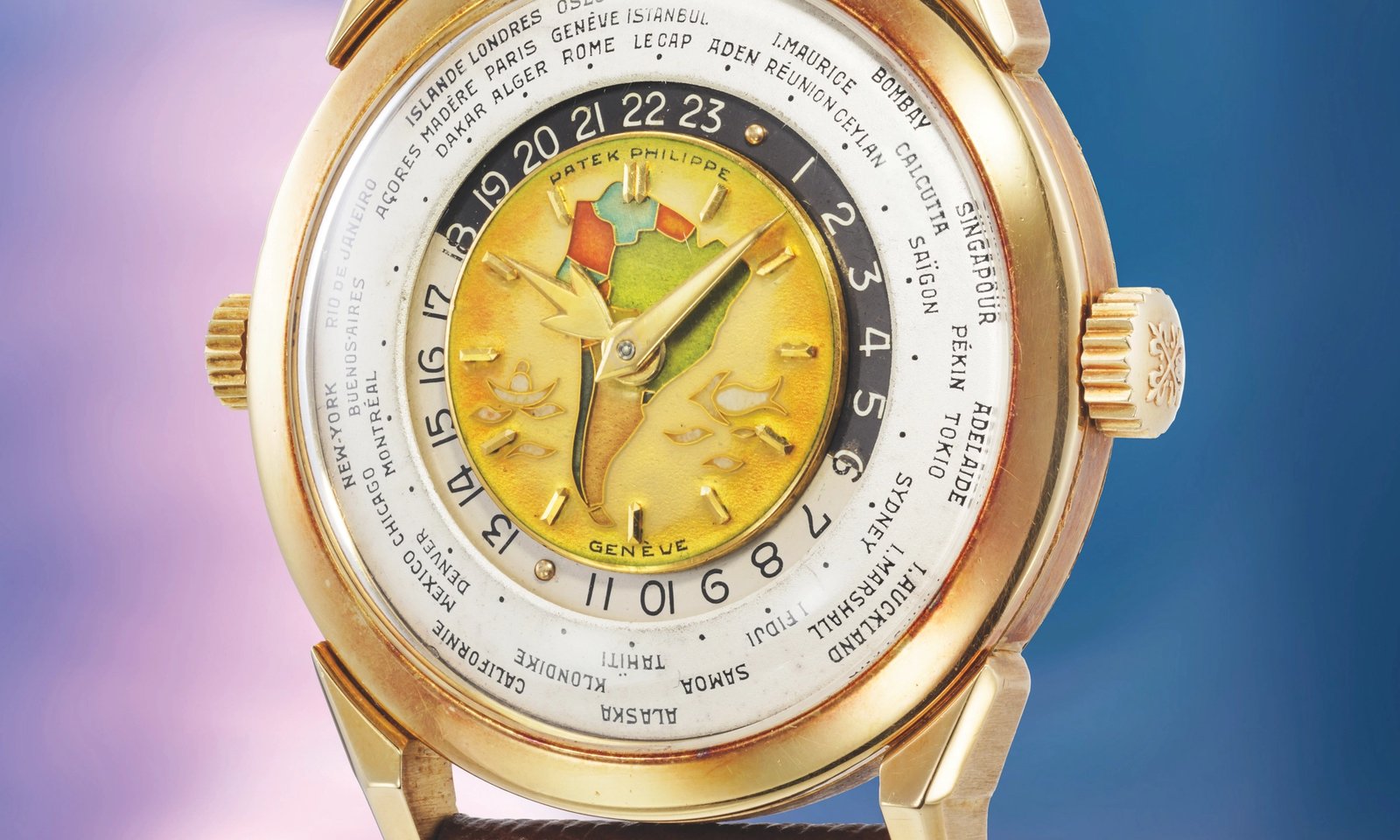
A Rolex GMT-Master II doesn't have one price. It has five. In Tokyo, the same watch that sells for 17,500 euros trades for roughly 20,000. In Dubai, somewhere in between. In London, often a touch less than the European average. These gaps aren't random. They reflect real differences in supply, demand, tax regimes, and collector culture across regions.
The watch market has no central exchange, no closing bell. Price discovery happens through thousands of individual transactions across dozens of platforms, mostly invisible to the average collector. We built Aikoscope to make that information visible and understandable.
How it works
The system starts with a catalog of 50 watches across 16 brands, from a Casio F-91W at around 15 euros to a Patek Philippe Nautilus trading north of 100,000 on the secondary market. For each watch, we generate an 18-month price history based on three factors: the baseline secondary market price, how quickly the model has been appreciating or depreciating, and how volatile its price tends to be month to month.
That last point matters more than people realize. A Rolex Daytona and a Patek Nautilus might both be appreciating, but the Daytona's price moves in tighter bands while the Nautilus swings more dramatically. The system captures these personality differences for each reference.
Recognizing what you're looking for
People don't search for watches the way databases store them. Someone types "Pepsi" and means the Rolex GMT-Master II 126710BLRO. Someone else types "snowflake" and means the Grand Seiko SBGA211. A third person just types "5711" and expects to find the Nautilus.
The search system works in layers. First, it identifies the brand using longest-match detection, so "Patek Philippe" is recognized before "Patek" can cause confusion. Then it checks a library of over 530 model nicknames and reference numbers to pin down exactly which watch you mean. If you type "casio f-91w", the system knows that's a 15-euro watch, not the 150-euro brand average.
This is how the same search bar handles everything from a 15-euro digital watch to a 350,000-euro F.P. Journe Resonance. The nickname library covers common collector shorthand: "Pepsi", "Batman", "Hulk" for Rolex bezels, "Snowflake" for Grand Seiko, "Speedy" for the Omega Speedmaster.
Five markets, five prices
Once you've found your watch, the regional pricing map shows what it trades for in five global markets: Europe, North America, Asia-Pacific, the Middle East, and the United Kingdom. Each region has its own pricing profile based on three layers of data.
The first layer is the brand tier. Ultra-luxury brands like Patek Philippe and Audemars Piguet command different regional premiums than accessible brands like Seiko or Tissot. The second layer is the watch category: sport watches behave differently from dress watches in each market. The third layer is model-specific overrides for watches that don't follow their category's pattern.
Asia-Pacific consistently commands the highest premiums for luxury sport watches, around 14% above the European baseline. That reflects genuine market dynamics: shorter inventory cycles averaging 8 days versus 18 in Europe, lower available supply, and persistently strong demand. The UK often trades at a slight discount, influenced by a mature dealer network and post-Brexit import dynamics.
The Aikoscope Index
Individual watch prices tell you what's happening to one reference. But what's happening to the market overall? The Aikoscope Index answers that question by aggregating all 50 tracked watches into a single composite number.
Not every watch has equal influence on the index. Models with more transaction data carry more weight, so heavily traded references like the Rolex Submariner shape the index more than thinly traded independent pieces. When more than 65% of tracked watches are appreciating, the market reads bullish. Below 35%, bearish. Everything in between is neutral.
The base is 1000. An index reading of 1042 means the weighted market average has appreciated 4.2% over the trailing 90 days.
What you get for free
Aikoscope is free to use with generous limits. Free accounts get the full dashboard, the Aikoscope Index, market signals linking news events to price movements, and up to 5 regional pricing lookups per month. That's enough to research a watch before you buy and compare what you'd pay in different markets.
Paid plans unlock unlimited lookups and watchlist capacity for collectors, dealers, and researchers who need to query at scale.
What comes next
The current system covers 50 watches and recognizes over 80 brands with estimated pricing. The roadmap includes expanding to 200+ watches, incorporating auction house transaction data, and building alerts that notify you when a watched reference crosses a price threshold in any region.
The watch market has operated on information asymmetry for a long time. Aikoscope is a small step toward making pricing a little more transparent for everyone.
Aikoscope is live at aikakone.io/market.